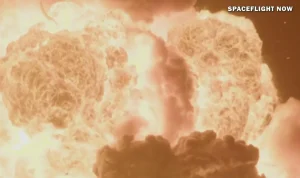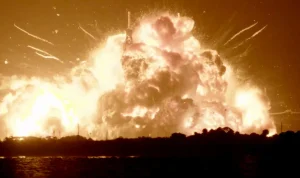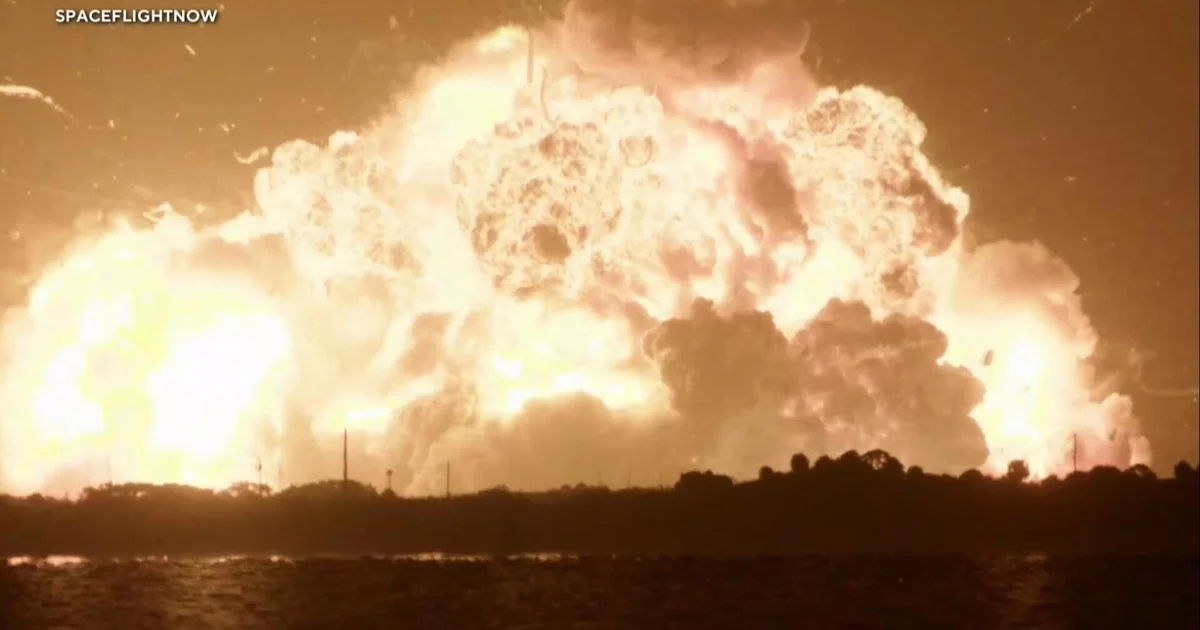
SouthernWorldwide.com – A rocket owned by Jeff Bezos’ Blue Origin experienced a dramatic failure during a test on Monday, exploding in a spectacular fireball on the launchpad at Cape Canaveral. The incident occurred during a static fire test for the New Shepard rocket, which was scheduled for its next launch in June.
The uncrewed rocket, designed for suborbital space tourism, was undergoing routine testing when the explosion happened. Video footage captured the dramatic event, showing the rocket erupting in flames shortly after ignition.
Blue Origin has confirmed the incident and stated that the rocket experienced an anomaly during the static fire test. The company is currently investigating the cause of the explosion.
Fortunately, the test was uncrewed, meaning there were no personnel on board the rocket at the time of the explosion. Blue Origin also confirmed that there were no injuries or damage to the launch site.
A static fire test involves firing the rocket’s engines while the vehicle is still secured to the launchpad. This test is crucial for ensuring the engines are functioning correctly before an actual launch.
Read more : Rep. Goldman's Bid for Victory: Rage Bait or Genuine Strategy?
The New Shepard rocket is Blue Origin’s primary vehicle for taking paying customers on short trips to the edge of space. The company has been conducting regular test flights as it prepares for commercial operations.
This incident is a setback for Blue Origin’s ambitions in the burgeoning space tourism market. The company, founded by Amazon founder Jeff Bezos, is a competitor to Elon Musk’s SpaceX and Richard Branson’s Virgin Galactic.
The explosion raises questions about the reliability of the New Shepard system. While failures are not uncommon in rocket development, a catastrophic event like this during a static fire test will likely lead to increased scrutiny of Blue Origin’s safety protocols.
The planned June launch of the New Shepard rocket will undoubtedly be delayed as the company investigates the anomaly. The outcome of this investigation will be critical for determining the future of the New Shepard program.
Blue Origin has a history of successful test flights, and this incident marks a significant deviation from their previous performance. The company has not yet provided a timeline for when the investigation will be complete or when the New Shepard program will resume flights.
Space tourism is a rapidly growing industry, with several companies vying to offer commercial flights to space. The success and safety of these ventures are paramount to their long-term viability.
This event underscores the inherent risks associated with rocket technology. Despite rigorous testing and engineering, the unpredictable nature of spaceflight can lead to unexpected failures.
The Federal Aviation Administration (FAA), which oversees commercial space launches in the United States, will likely be involved in the investigation. The FAA will want to ensure that Blue Origin addresses the root cause of the failure before allowing future launches.
The failure of the New Shepard rocket during a static fire test is a significant event in the space industry. It highlights the challenges and complexities involved in developing and operating reusable rocket systems for space tourism.
Blue Origin’s commitment to safety and transparency will be tested in the coming weeks and months. The company’s ability to thoroughly investigate the incident and implement corrective actions will be crucial for rebuilding confidence in the New Shepard program.
The incident also raises broader questions about the safety standards and regulatory oversight of the commercial spaceflight industry. As more companies enter this sector, ensuring the safety of passengers and the public remains a top priority.
The world will be watching closely as Blue Origin works to understand what went wrong and how to prevent similar incidents in the future. The success of space tourism hinges on its ability to demonstrate a strong safety record.