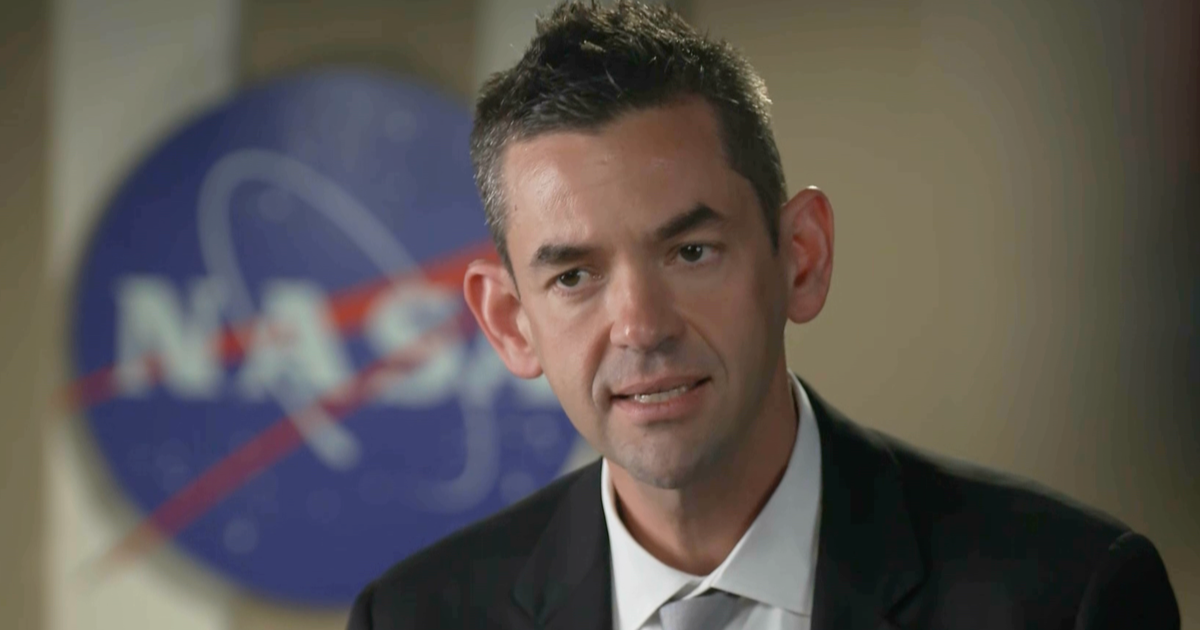
SouthernWorldwide.com – NASA Administrator Bill Nelson sat down with CBS News’ Mark Strassmann for an in-depth interview covering a range of topics, from the ambitious Artemis III mission to the long-term vision of establishing a permanent moon base.
Nelson, a former astronaut himself, conveyed a palpable sense of excitement and determination regarding NASA’s future endeavors in space exploration.
“The Artemis program is not just about returning humans to the Moon; it’s about building a sustainable presence there,” Nelson stated, emphasizing the program’s role as a stepping stone for future missions to Mars.
The conversation naturally gravitated towards the Artemis III mission, the historic undertaking that aims to land the first woman and the first person of color on the lunar surface. Nelson acknowledged the mission’s complexity and the meticulous planning involved.
“Artemis III is a monumental task. We are pushing the boundaries of technology and human endurance,” he explained, highlighting the critical role of the Space Launch System (SLS) rocket and the Orion spacecraft.
Nelson also touched upon the challenges associated with landing in the Moon’s south polar region, an area of significant scientific interest due to the potential presence of water ice.
“Landing at the South Pole presents unique challenges, but the scientific rewards are immense. We believe this region holds the key to understanding more about the Moon’s history and its potential as a resource for future space exploration,” Nelson elaborated.
When asked about NASA’s long-term plans for a moon base, Nelson painted a picture of a collaborative and international effort.
“Our vision is to establish a sustained human presence on the Moon. This includes building habitats, developing infrastructure, and utilizing lunar resources,” he said.
Nelson stressed that this endeavor would not be solely a NASA undertaking but would involve partnerships with international space agencies and private companies.
“We are working closely with our international partners, including the European Space Agency, Japan Aerospace Exploration Agency, and Canadian Space Agency, as well as commercial partners like SpaceX and Blue Origin,” Nelson noted, underlining the global nature of space exploration.
The administrator also addressed the importance of innovation and technological advancement in making a moon base a reality.
“We are investing heavily in research and development for critical technologies such as life support systems, in-situ resource utilization, and advanced propulsion,” he stated.
Nelson expressed optimism about the pace of technological progress and the potential for breakthroughs that could accelerate NASA’s timeline.
“The spirit of innovation is alive and well at NASA and within our commercial partners. We are confident that we can overcome the challenges and achieve our ambitious goals,” Nelson asserted.
The interview also touched upon the broader implications of the Artemis program for scientific discovery and technological advancement on Earth.
“The technologies we develop for space exploration often find applications here on Earth, benefiting various sectors from healthcare to environmental monitoring,” Nelson pointed out.
He concluded the interview with a forward-looking statement, reiterating NASA’s commitment to pushing the frontiers of human knowledge and exploration.
“The Moon is just the beginning. Our ultimate goal is to send humans to Mars, and the Artemis program is laying the groundwork for that historic journey,” Nelson declared, leaving a sense of anticipation for the future of space exploration.
The full interview provided a comprehensive overview of NASA’s current priorities and future aspirations, underscoring the agency’s dedication to scientific discovery, technological innovation, and the expansion of human presence beyond Earth.
Nelson’s insights offered a glimpse into the intricate planning and unwavering determination that underpin NASA’s journey back to the Moon and beyond.
The Artemis III mission, slated for a future launch, represents a critical milestone, promising to inspire a new generation of scientists, engineers, and explorers.
The prospect of a permanent moon base signifies a paradigm shift in space exploration, moving from short-term missions to long-term sustainable presence.
Nelson’s emphasis on international and commercial collaboration highlights the evolving landscape of space exploration, where shared goals and diverse expertise converge.
The administrator’s confidence in overcoming technological hurdles reflects the resilience and ingenuity inherent in the pursuit of ambitious scientific objectives.
Ultimately, the interview painted a picture of a revitalized NASA, poised to achieve new heights in its quest to understand the universe and expand humanity’s reach.
The conversation with Administrator Nelson served as a powerful reminder of the enduring human drive to explore and the transformative potential of venturing into the unknown.
His remarks conveyed a clear message: the journey to the Moon is not merely a return, but a strategic launchpad for an even grander future in space.
The dedication to scientific advancement and technological innovation remains at the core of NASA’s mission, as articulated by its leader.
The Artemis program, with its multifaceted goals, promises to yield invaluable scientific data and drive innovations that will benefit life on Earth.
Nelson’s vision for a collaborative approach to space exploration underscores the interconnectedness of global efforts in achieving common aspirations.
The interview concluded with a sense of optimism and a clear indication that humanity is on the cusp of a new era of space exploration, with the Moon serving as the vital first step.