SouthernWorldwide.com – The recent grand opening of the Barack Obama Presidential Center in Chicago has become a focal point of discussion, particularly following its opening weekend events. After an initial “land acknowledgment” that drew widespread criticism, the center featured a traditional Native American dance performance on Saturday.
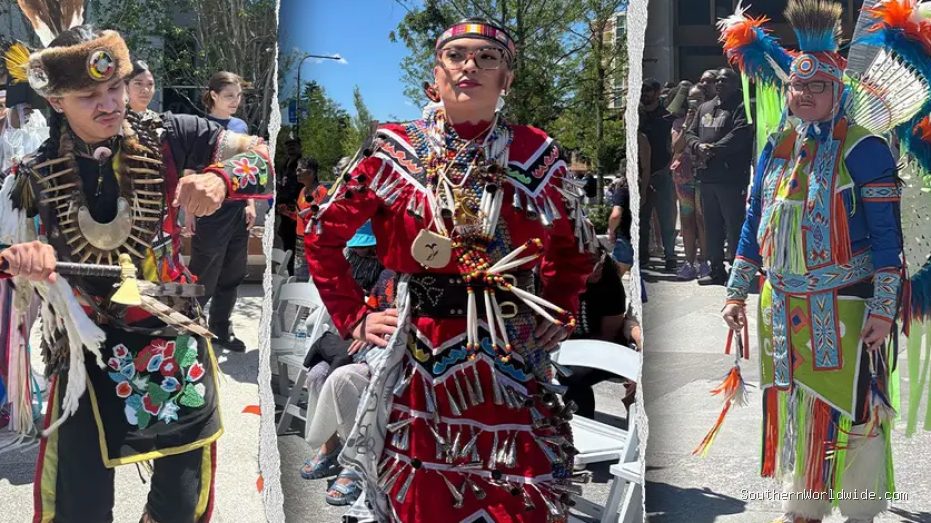
The Black Hawk Performance Company, a Chicago-based Native American dance troupe comprising dancers from various Indigenous tribes, was a featured performer. This marked the third day of the center’s grand opening, a celebration that included a diverse range of musical and cultural acts, from internationally renowned artists like John Legend to local drum lines.
The Native American performance, held in John Lewis Plaza on the center’s grounds, was a vibrant display. It included a drum circle, several traditional dances, and songs, one of which was in honor of a Native American flag. The hour-long presentation concluded with many of the hundreds of onlookers joining in the festivities.
However, the events leading up to Saturday’s performance have been met with significant scrutiny. The opening ceremony on Thursday evening began with a “land acknowledgment,” a statement recognizing the Indigenous peoples who are the original inhabitants of the land where the center is built. This practice, often associated with progressive political circles, asserts that the United States was founded on “stolen land.”
Valerie Jarrett, former senior advisor to President Obama and current CEO of the Obama Foundation, delivered the acknowledgment. She stated, “We’d also like to take a moment to recognize the original inhabitants of the land upon which we are gathered today. We honor the Anishinaabe, the Council of Three Fires, the Ojibwe, the Odawa and the Potawatomi nations.”
The inclusion of such acknowledgments has been a subject of debate, with critics often labeling them as performative or insincere gestures. Following Jarrett’s speech, numerous users on the social media platform X (formerly Twitter) voiced their opinions, with many questioning the sincerity of the acknowledgment given the center’s construction on the land.
One X commenter remarked, “Obama Presidential Center grand opening begins with acknowledging they’re on stolen land. And then they kept the land.” The sentiment was echoed by conservative commentator Glenn Beck, who criticized the “arrogance” of the Obama Foundation. He stated, “The sheer arrogance of the Obama Foundation using the $850 million Obama Presidential Center to lecture us about standing on ‘stolen land’ is HILARIOUS.”
Beck continued his critique, suggesting, “They’re basically saying, ‘Yeah, we acknowledge we stole this land. IT’S SO WRONG. But the gift shop is to your left, and tickets are 30 bucks.’ If they genuinely believe they’re holding stolen property, they should either GIVE IT BACK or shut the hell up.”
Siraj Hashmi, a senior strategist at Townhall, offered a more pointed critique, referencing Chicago rapper Chief Keef. He quipped, “Pretty disrespectful for the Obama Presidential Center to not acknowledge the current tribe leader of the South Side of Chicago: Chief Keef.”
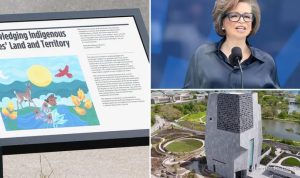
The controversy is further amplified by the fact that the Obama Presidential Center itself features a placard that explicitly acknowledges the land’s Indigenous heritage. This sign states that the Obama Foundation recognizes “the sovereign Indigenous peoples who have, since time immemorial, inhabited and stewarded the lands many of us call home.”
The placard also notes the efforts of Indigenous peoples to “combat and rightfully reverse the forces of settler colonialism.” It includes a quote from Barack Obama from 2009, where he reflected on historical injustices against Native Americans, stating, “Treaties were violated. Promises were broken.”
The juxtaposition of the land acknowledgment, the subsequent dance performance, and the ongoing debate surrounding the historical context of the land has positioned the Obama Presidential Center’s opening as a significant cultural and political event, sparking conversations about history, land rights, and contemporary Indigenous issues.