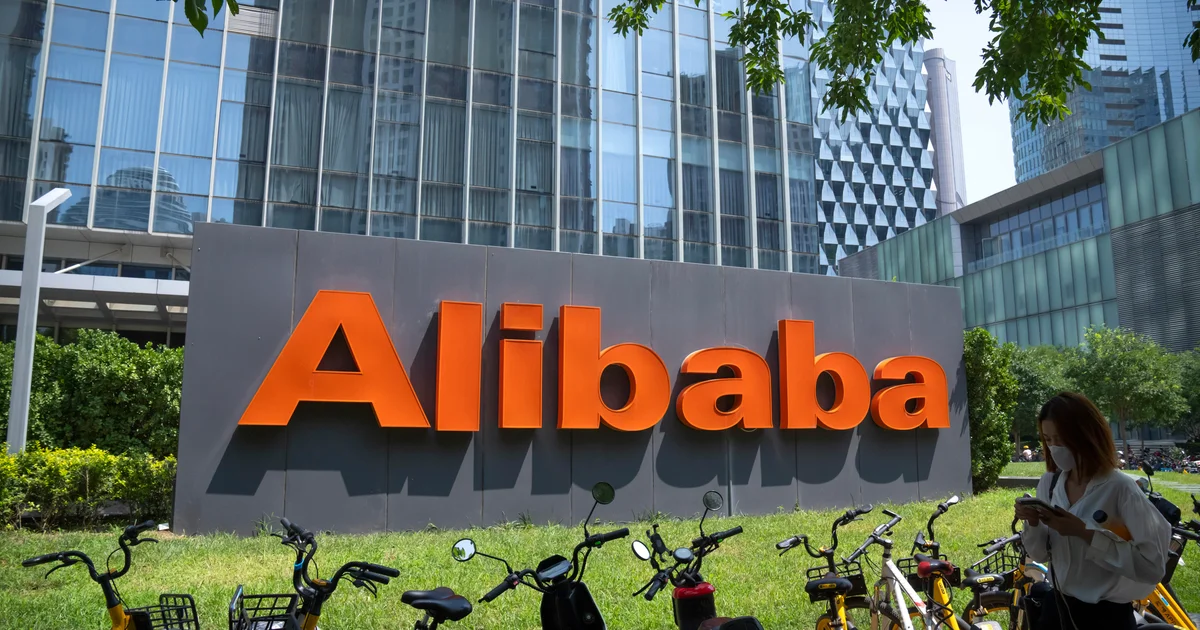
SouthernWorldwide.com – The Pentagon has officially added several major Chinese technology and manufacturing companies, including e-commerce giant Alibaba, electric vehicle producer BYD, and search engine Baidu, to its roster of Chinese military companies. This designation prohibits these entities from securing contracts with the U.S. Department of Defense.
The updated list, released on Monday, targets prominent non-state-owned Chinese firms that are not traditionally associated with the defense or security sectors. This move signifies a growing concern within the U.S. regarding China’s strategy to leverage its civilian businesses for military advancement.
Established in 2021 by a congressional directive, the list aims to identify Chinese companies perceived by the Pentagon to have ties to the People’s Liberation Army. This includes not only those directly controlled by the military and security forces but also those contributing to the nation’s defense industrial base.
In its previous update last year, the Pentagon highlighted that the Chinese military actively seeks to acquire advanced technologies and expertise from Chinese companies, universities, and research institutions, often under the guise of civilian entities.
Responding to the designation, the Chinese Embassy on Monday criticized the U.S. for “overstretching the concept of national security” and employing discriminatory practices against Chinese companies. The embassy asserted that Chinese businesses adhere to the laws and regulations of the countries where they operate.
The embassy further stated, “The U.S. should stop its wrong practice and create a fair, just and non-discriminatory environment for Chinese companies.”
The Companies and U.S. Politicians React
Alibaba, BYD, and Baidu have all refuted the claims, stating that there is no justification for their inclusion on the list. Alibaba, in a statement, declared, “Alibaba is not a Chinese military company nor part of any military-civil fusion strategy.”
Baidu, which has expanded its operations into artificial intelligence and autonomous taxi services, described the suggestion of it being a military company as “entirely baseless.”
BYD also issued a statement asserting that it is “not a military enterprise” and that the Pentagon’s determination “seriously contradicts the facts.” The company indicated its intention to “actively safeguard its legitimate rights and interests through all feasible administrative and legal means.”
This year’s list has expanded significantly, now encompassing 188 Chinese entities, an increase from the approximately 130 companies named by the Pentagon last year. Previously, the list included companies such as DJI, a leading manufacturer of consumer drones.
While companies on the list can still conduct business within the United States, they face potential reputational damage and may be subjected to further restrictions.
Following the Pentagon’s release of the updated list, the House Select Committee on the Chinese Communist Party issued a statement calling it “a warning to American businesses, all levels of government, and the American people.” The committee urged that publicly traded companies on the list be delisted from U.S. exchanges.
Furthermore, the committee advised that no American company should engage in business with entities on the list, warning that doing so would be “enabling China’s military ascendance.”
In its justification for naming Alibaba, the Pentagon cited the tech giant’s affiliation with China’s Ministry of Industry and Information Technology as a factor in boosting the country’s defense industrial base. Alibaba is currently traded on the New York Stock Exchange.
The Pentagon also stated that BYD and Baidu are affiliated with the same ministry, which is responsible for overseeing China’s technology and industrial policies. BYD holds a dominant position in the global electric vehicle market.
Notably, in January, former President Trump expressed that he would welcome Chinese carmakers like BYD if they were to establish manufacturing plants in the U.S. and hire American workers.
However, a segment of U.S. lawmakers has indicated their intention to pursue a ban on Chinese electric vehicles.