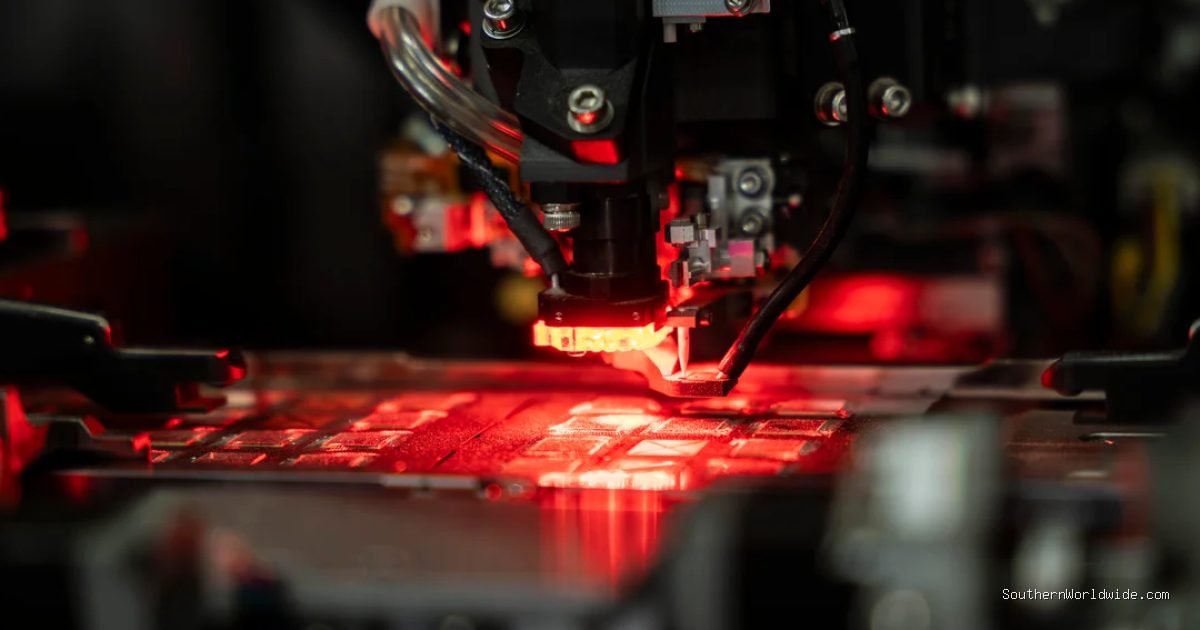
SouthernWorldwide.com – For decades, the cost of consumer electronics like computers and gaming consoles steadily decreased. However, the recent surge in artificial intelligence development has led to a global scarcity of memory and storage chips, causing these prices to skyrocket.
“The overwhelming majority of chips are being allocated to AI infrastructure and the ongoing data center revolution,” explained Dan Ives, an analyst at Wedbush Securities, to CBS News. “This leaves fewer chips available for standard consumer devices, which directly contributes to price increases.”
On Thursday, both Apple and Microsoft announced price hikes on their essential products. This includes iPads, specific MacBook models, and Xbox consoles, as the robust demand for chips escalates the cost of components for electronic devices. Analysts at market research firm International Data Corporation (IDC) suggest that Apple might also increase iPhone prices to counterbalance rising manufacturing expenses.
Nabila Popal, an analyst at IDC, noted that Apple’s price adjustments were more significant than anticipated. This indicates that any potential iPhone price increases could also be substantial, possibly reaching up to $200 for the iPhone Pro and Pro Max models.
“I believe the era of modest $50 price increases is behind us,” she stated.
The current rise in gadget prices is an anomaly, considering that the cost of personal computers and other consumer electronics has generally been on a downward trend since the 1980s. Recent government inflation data reveals a significant spike of over 14% in the past year for computer software and accessories. Prices for personal computers, including tablets, home assistants, and computer hardware, have seen a 1.3% increase.
What is driving the chip shortage?
The three leading manufacturers of memory chips—Micron Technology, Samsung Electronics, and SK Hynix—have historically supplied semiconductors for devices such as smartphones and other consumer goods like automobiles.
However, these chipmakers are now intensely focused on fulfilling the escalating demand from tech giants like Alphabet, Amazon, Meta, and Oracle. These companies, often referred to as “hyperscalers,” require substantial quantities of memory chips for the vast data centers they are constructing to support a wide array of AI services.
“Essentially, we’ve reached a point where these hyperscale companies are acquiring the entire production capacity from these suppliers,” stated Francisco Jeronimo, vice president for data and analytics at IDC, in an interview with CBS News, noting that they are doing so at premium prices.
Historically, the primary focus for Micron, SK, and Samsung has been the mass production of DRAM and NAND semiconductors, which are the standard memory chips used in smartphones, PCs, and other electronic devices. However, semiconductor manufacturers are now reallocating more resources toward the production of high bandwidth memory (HBM) chips, which are crucial for providing memory for data centers.
Jeronimo explained that HBM chips are more lucrative for semiconductor manufacturers to produce compared to those used in personal devices. Manufacturers have effectively reasoned, “What is the benefit of selling and producing memory for smartphones or PCs or any other device when we have this enormous, long-term opportunity before us?” he remarked.
Last year, for instance, Micron Technology, a chipmaker based in Boise, Idaho, ceased its production of consumer chips altogether. The company framed this decision as a necessary strategic move to address the burgeoning demand driven by AI advancements.
As the supply of memory and storage diminishes amidst the rising demand for AI, chip prices have consequently increased. This has compelled companies like Apple and Microsoft to pass these elevated costs onto consumers, Jeronimo observed, characterizing the current chip shortage as significantly more severe than the supply chain disruptions experienced during the pandemic, which were primarily caused by factory closures.
“There is no longer any surplus stock,” he emphasized. “Every single memory chip purchased costs 100% to 200% more than it did six to twelve months ago.”
Wedbush Securities estimates that the demand for memory chips from tech companies vastly outstrips the available supply, with orders being approximately 15 times greater than the number of chips available.
Furthermore, increasing chip production is a complex and costly undertaking. Manufacturers face limitations in their production capacity, and the construction of semiconductor fabrication facilities is an enormously expensive endeavor, with costs reaching up to $10 billion and completion taking as long as five years.
“It’s not as simple as snapping your fingers to produce more memory chips,” Ives commented.
What is the projected duration of the chip shortage?
Technology analysts and economists anticipate that the chip shortage will persist at least through 2027, and potentially longer. This projection is based on the significant amount of time required to expand existing or construct new manufacturing plants.
In the interim, consumers should anticipate continued price increases for electronic devices.
Gartner, a technology research firm, forecasts that PC and smartphone prices could surge by 17% and 13%, respectively, this year compared to their 2025 levels, attributed to the rising costs of chips.
Jeronimo suggests that these higher prices might lead consumers to extend the lifespan of their existing devices, potentially impacting smartphone sales.
Ives advises consumers to consider purchasing their next electronic device sooner rather than later, before prices escalate further.
“We will continue to witness price increases, particularly as we approach the holiday season,” he told CBS News.