SouthernWorldwide.com – Conservative Republicans in the House of Representatives are intensifying their stance against government surveillance programs as Congress reconvenes to debate a contentious spying initiative.
Members of the House Freedom Caucus have declared their intention to insist on the inclusion of a permanent ban on central bank digital currency (CBDC) in any legislation that extends Section 702 of the Foreign Intelligence Surveillance Act (FISA). However, this proposal faces significant opposition from Senate Democrats and is widely considered unlikely to pass in the Senate.
This inter-chamber disagreement risks hindering Congress’s ability to meet the mid-June deadline for renewing the surveillance law, which the Trump administration considers an essential national security instrument.
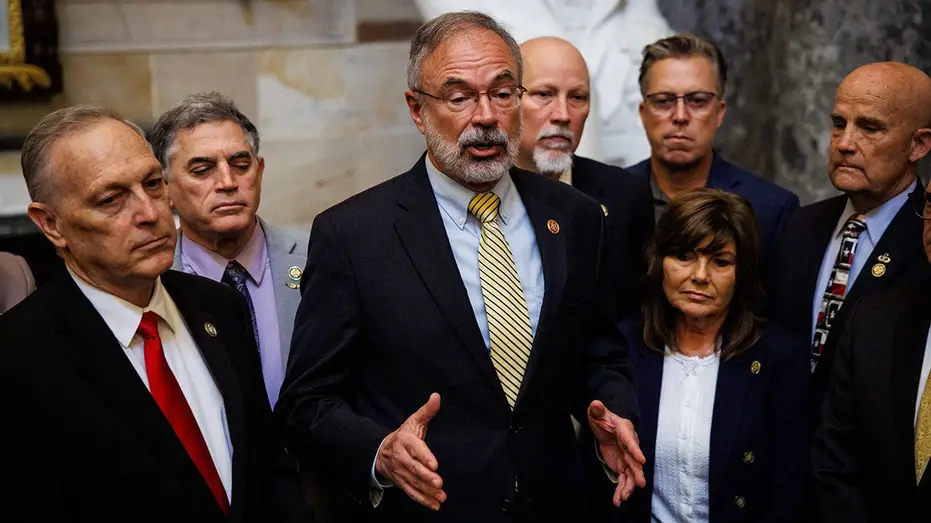
“If the Senate believes they can continue to override us, that simply won’t happen,” stated Rep. Chip Roy, R-Texas, during a press conference in late April, addressing the Senate’s resistance to incorporating a CBDC ban into a FISA renewal bill.
Both chambers of Congress approved a 45-day extension of FISA in April to allow for further negotiations. House GOP members focused on privacy concerns objected to this short-term measure, citing the absence of a CBDC ban.
“CBDC can still make it across the finish line. Let’s just push on,” the Texas Republican added. “The Senate will respond to the people if they push hard enough. I’m positive on it.”
Read more : Macron Addresses Africa Summit, Criticizes Lack of Respect
GOP proponents of privacy argue that a CBDC ban serves as a crucial safeguard against the Federal Reserve issuing a digital currency that could be exploited for surveillance purposes and potentially restrict Americans’ access to their financial transactions.
“They don’t want the government monitoring their bank accounts, telling them what they can buy, when they can buy it and when they’re not allowed to buy,” Rep. Scott Perry, R-Pa., said at a news conference, referring to the concerns of his constituents regarding a government-issued digital token.
This group has made repeated attempts over the past year to attach a CBDC ban to various legislative measures, but has not yet succeeded in presenting a permanent ban to President Donald Trump.
During his confirmation hearing, Federal Reserve chair nominee Kevin Warsh stated that he would not pursue a CBDC during his tenure, characterizing the proposal as a “bad policy choice.”
The push to ban CBDCs is part of a broader initiative by conservative Republicans to escalate their efforts against government surveillance.
“Americans don’t want Big Brother in their cars, their bank accounts, or their homes,” a spokesperson for the conservative House Freedom Caucus told Fox News Digital. “The gloves are coming off before FISA expires on June 12.”
Roy, the policy chief for the HFC, is advocating for the repeal of a provision from the Biden administration that mandates a federal agency to draft a rule requiring impaired driver technology in new vehicles. This technology could shut off cars if drunk driving is detected. The federal government has not yet begun drafting the “kill switch” regulation.
“Do you really want to put that kind of data collection mandated inside every car? At what point is there just literally no privacy at all anywhere?” Roy questioned during a hearing in late April, in support of adding a “kill switch” repeal amendment to the FISA extension legislation.
GOP privacy advocates have also supported language that would introduce a judicial warrant requirement for the FISA renewal bill. Although the law targets foreigners abroad utilizing U.S. platforms, their communications with Americans can also be intercepted and reviewed.
Privacy advocates within the Democratic Party have also long advocated for a warrant requirement to obtain information on Americans.
The Trump administration initially sought an unconditional 18-month extension of the surveillance law but quickly encountered challenges from a coalition of conservative and progressive privacy advocates.
“We’re not going to pass something that’s a long-term, clean reauthorization,” Roy stated. “I think that’s been taken off the table. We’ve demonstrated that, and we’re going to get reforms.”