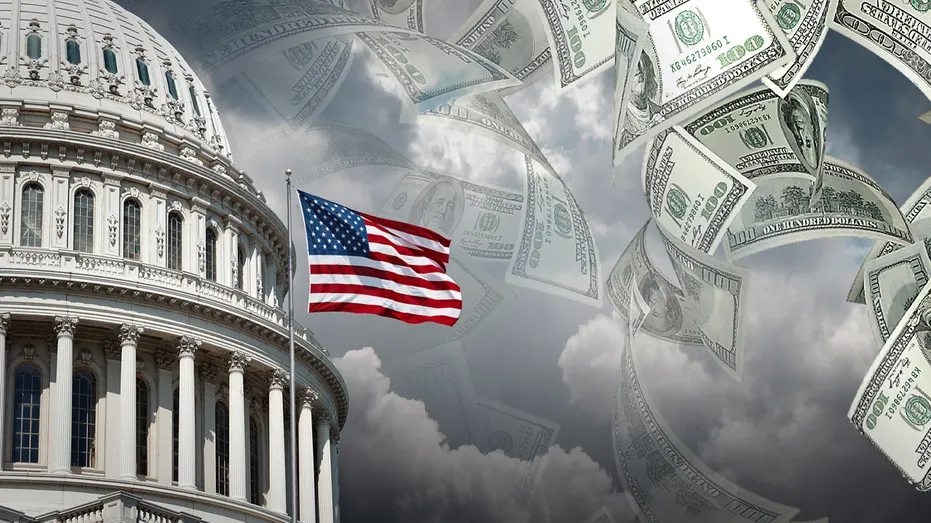
SouthernWorldwide.com – In an unexpected turn of events, the United States Senate has taken swift action to ban senators and their staff from participating in prediction markets.
This move, characterized by its uncharacteristic dispatch, saw the Senate unanimously vote to implement the prohibition.
Senate Minority Leader Chuck Schumer, D-N.Y., emphasized the gravity of the situation, stating, “This is a national security risk.” He further elaborated, “The very possibility that a member’s vote could be influenced by a bet is reason enough to slam the door shut.”
The official announcement, headlined “SENATE QUIETLY BANS LAWMAKERS FROM BETTING ON PREDICTION MARKETS,” signifies a significant shift in policy.
While one cannot predict the future, the Senate has now effectively prohibited betting on it, especially concerning real-world events.
This includes potential outcomes like stock market crashes, economic stability, declarations of war, acts of terrorism, or even the fashion choices at events like the Met Gala.
An accompanying opinion piece, “SEN DAVE MCCORMICK: PREDICTION MARKETS ARE BOOMING. WASHINGTON MUST CATCH UP,” highlights the growing influence of these markets.
The primary concern on Capitol Hill revolves around the potential for wagering on legislative outcomes or the confirmation of nominees.
There is a bipartisan consensus that speculation in prediction markets could unduly influence political decisions.
Senator Bernie Moreno, R-Ohio, articulated this sentiment, stating, “Engaging in any way in a prediction market or trying to place bets where we might have inside information deteriorates the confidence that our constituents have in us.”
Moreno was instrumental in pushing for the rule change for senators. Senator Alex Padilla, D-Calif., then proposed an amendment to include Senate aides in the ban.
Currently, this ban applies only to the Senate, with the House of Representatives yet to follow suit.
When asked about similar measures in the House, Representative Rob Wittman, R-Va., commented, “Any place where your role in Congress has a potential for individual benefit, I think needs to be tightly controlled.”
It is important to note that, under the U.S. Constitution, both the House and the Senate have the authority to establish their own rules.
This Senate action comes mere weeks after a U.S. special forces soldier was apprehended for allegedly using classified information to bet on the capture of former Venezuelan leader Nicolás Maduro.
In a separate instance, Virginia U.S. Senate candidate Mark Moran reportedly placed a wager on his own candidacy, later profiting from the bet after entering the race.
“Our constituents have to know that our only guiding light is what’s best for our state. What’s best for the people of our states. And what’s best for the United States of America,” Senator Moreno reiterated.
“We must never allow Congress to turn into a casino,” Senator Schumer declared. “Just the possibility that Members could have their votes influenced because of betting is a reason enough to prohibit members from meddling in the prediction markets.”
Schumer also advocates for extending these prediction market prohibitions to the executive branch, citing the Trump Administration’s “troubling affinity to corruption and self-dealing.”
A related report, “SENATE PASSES MEASURE BANNING LAWMAKERS FROM PREDICTION BETS,” details the legislative action.
This brings to light another area where many Congressional Democrats wish to restrict the executive branch: stock trading.
However, the issue of a congressional ban on stock trades for lawmakers and aides has been met with considerable inertia, with neither the House nor the Senate having implemented a comprehensive prohibition for years.
This issue has remained stalled for an extended period.
Former President Obama, in his January 2012 State of the Union address, famously stated, “Send me a bill that bans insider trading by Members of Congress and I will sign it tomorrow.”
Similarly, President Trump declared during his February State of the Union message, “Let’s also ensure that Members of Congress cannot corruptly profit from using insider information.”
Read more : Jacob Fatu's Heel Turn and TNA Star Leon Slater's Rise
As of mid-2026, a complete ban remains elusive.
The late Representative Louise Slaughter, D-N.Y., and former Representative Brian Baird, D-Wash., were prominent advocates for a congressional stock trading ban, dating back to 2006.
Baird’s attention was drawn to former House Majority Leader Tom DeLay, R-Texas, who reportedly made hundreds of stock trades in 1999 and 2000.
“If there is a way to make a profit on that, somebody has probably already figured out a way to do it,” Baird remarked, adding, “And it’s not illegal.”
Congress eventually passed the STOCK Act in 2012, an acronym for “Stop Trading On Congressional Knowledge.” The act was born from concerns that lawmakers, privy to financial, economic, and political intelligence, could potentially buy or sell stocks based on information bordering on “insider trading.”
However, the STOCK Act did not prohibit lawmakers from engaging in stock trading; it merely mandated additional financial disclosures regarding their trades and those of their aides.
A piece titled “TRUMP TAKES JAB AT PELOSI BY NAME OVER HISTORY OF CONTROVERSIAL STOCK TRADING” touches upon this ongoing debate.
President Obama’s 2012 plea undoubtedly spurred the approval of the STOCK Act shortly thereafter. Nevertheless, it did not constitute a ban on “insider trading” as the former president had suggested, but rather aimed for increased transparency.
The persistent stalemate on stock trading regulations continues to perplex some lawmakers.
“I don’t know why it’s been such a challenge in the House,” stated Representative James Walkinshaw, D-Va. “I think any Member saying that they should be able to trade stocks is flat out wrong. I think it degrades trust in the institution. Even for those members who are not trading on inside information.”
House Administration Committee Chairman Brian Steil, R-Wis., has introduced a bill aimed at curbing stock trades by lawmakers.
“If you want a day trade, go to Wall Street. Come to Washington to lead this country,” Steil asserted.
However, this bill remains stalled, partly due to the Democrats’ insistence on extending any congressional stock trading ban to the executive branch, a condition many Republicans are reluctant to accept.
“There is zero justification and rationale for allowing a president of any party or a vice president of any party, to be able to engage in stock trading while they have the awesome power of the presidency, vice presidency and executive branch in their hands,” declared House Minority Leader Hakeem Jeffries, D-N.Y.
Representative Yassamin Ansari, D-Ariz., believes the stock trade issue is in flux and doubts that voters will tolerate such market activity by their colleagues for much longer.
“We know there are many colleagues who do still trade stocks. I think the American public is much more informed on this topic now. And this is very unpopular. So I do think the tide is changing and it will become untenable for any member to to be supportive of it,” Ansari commented. “I think more people have more information. So what a Member of Congress was able to get away with even five years ago just is not possible today.”
As is often the case with ethics in politics, the issue extends beyond actual impropriety to the mere perception of impropriety.
Public trust in Congress is already low, with many voters believing the “ruling class” possesses privileged access to information, allowing them to manipulate the system for personal financial gain.
This distrust is likely to deepen as long as Congress fails to adequately police its own members.
While the future remains uncertain, individuals certainly have the power to shape it. Congress wields numerous tools to influence that future, but the critical question is whether lawmakers are using those tools to benefit themselves.
Therefore, when considering whether Congress will approve a stock trading ban, history offers the most reliable predictor of future actions.
In essence, don’t bet on it.