SouthernWorldwide.com – Researchers have successfully recovered 42 previously lost pages from Codex H, a significant early manuscript of the New Testament.
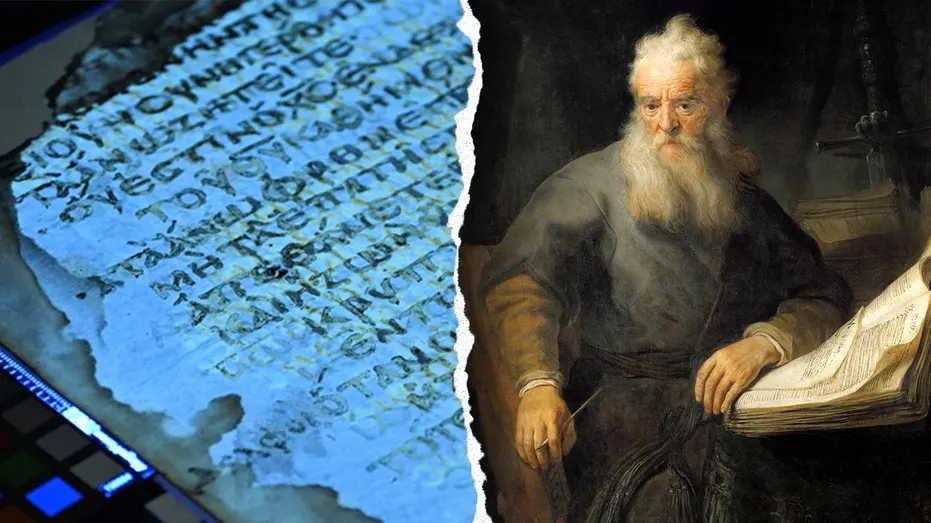
Codex H, also known as Codex Hierosolymitanus, is a palimpsest, a manuscript where the original text was scraped off and a new text was written over it.
This reuse of parchment left faint mirror-image traces of the earlier writing, which scientists were able to detect using multispectral imaging technology.
The discovery was announced by the University of Glasgow on April 24th. The recovered pages contain text from the sixth century.
This ancient text is a copy of the Letters of St. Paul. The manuscript was disassembled in the 13th century at the Megisti Lavra monastery on Mount Athos, Greece.
Over the centuries, its pages became scattered across various European libraries. Only fragments of the original manuscript had survived until this recent discovery.
A team of researchers, including those from the University of Glasgow, identified the lost pages within existing fragments. These recovered pages include ancient chapter lists.
These chapter lists differ significantly from the way the letters are divided today. This suggests variations in early organizational structures of the biblical texts.
The significance of Codex H lies in its rarity and the insights it provides into ancient scribal practices. Professor Garrick Allen of the University of Glasgow led the project.
The practice of annotating biblical texts is ancient, mirroring how readers still interact with religious texts today. Codex H preserves over a thousand years of these annotations.
“Manuscripts of the New Testament and other literature were often annotated and marked up by scribes and readers,” Allen stated.
He further explained, “We have recovered [these pages] due to the unintended results of a medieval conservationist.”
Codex H, for instance, features over 70 corrections to the text itself. These corrections were made by a scribe who compared the text with another manuscript.
Additionally, the manuscript contains numerous annotations from at least 15 later readers. These notes include prayers, poems, and grammatical observations.
“These types of notes are not unusual,” Allen noted, “but because Codex H had such a long life in many forms, its pages attracted many interested readers.”
These annotations serve as tangible evidence of the existence of these anonymous individuals. They offer a glimpse into the personal engagement with sacred texts.
Regarding the manuscript’s disassembly, Allen suggested it likely reached the end of its functional lifespan.
“Six hundred to 700 years is a long time for a book to be kept in working order,” he said. He acknowledged that at least one person attempted to conserve it by re-copying parts of it.
“In a remote location like Mount Athos, in a period where parchment was very expensive to produce, it makes sense that the monastery reused this manuscript to keep up other books in their library,” Allen explained.
Ironically, the act of breaking apart the manuscript contributed to its preservation. Its pages were reused as binding material and flyleaves within other books.
This repurposing eventually led to the pages being spread across various European collections. The book was re-inked entirely at some point to keep it usable for a new generation.
“This process makes me optimistic that many ancient manuscripts still have much more to tell us about the people who made and used them,” Allen remarked.
The manuscript was eventually disbound and used as binding material and flyleaves. This occurred when librarians at the Megisti Lavra monastery repaired other books in their collection.
It is precisely this repurposing of the ancient book that ensured its continued existence. The most striking aspect of the discovery, according to Allen, was the profound sense of awe in reading biblical texts that are no longer extant in their original form.
“We have recovered [these pages] only due to the unintended results of a medieval conservationist,” the professor reiterated.
“This process makes me optimistic that many ancient manuscripts still have much more to tell us about the people who made and used them.”
Advances in imaging technology are playing a crucial role in these discoveries. Allen believes a model for working with challenging manuscripts like palimpsests has been developed.
“Although each manuscript is by definition unique and presents its own challenges, we think that we’ve developed a model for working with challenging manuscripts like palimpsests at a larger scale,” he stated.
Read more : Parents Sue OpenAI After Teen Uses ChatGPT to Get Drug Information
He emphasized the importance of collaboration. “When manuscript and biblical scholars work closely with imaging specialists, data scientists, monastic communities, museums, and other local partners, we can really make progress in our understanding of these important documents.”