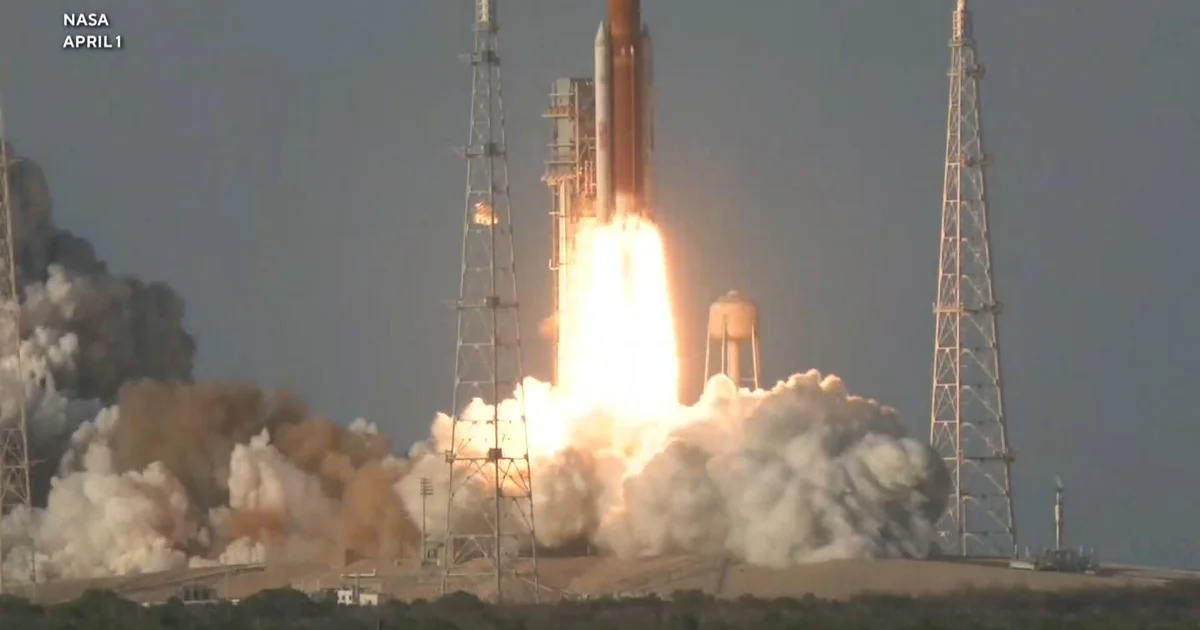
SouthernWorldwide.com – NASA’s Artemis program is charting a course for humanity’s return to the Moon, with ambitious goals set for the coming years.
While the Artemis II mission successfully sent a crew to the far side of the Moon last month, the program’s sights are set even further. NASA is planning to land astronauts on the lunar surface again in 2028.
This next phase of lunar exploration aims to establish a sustainable human presence on the Moon. It’s a critical step towards the ultimate goal of sending astronauts to Mars.
The Artemis missions are not just about planting flags and collecting rocks; they are designed to test and develop technologies necessary for deep space travel. This includes advanced life support systems, in-space propulsion, and landing capabilities.
Future Artemis missions will focus on establishing a lunar gateway, a space station orbiting the Moon. This gateway will serve as a staging point for missions to the lunar surface and eventually to Mars.
Astronauts will also be conducting scientific research on the Moon, studying its geology, resources, and potential for supporting life. Understanding the Moon’s environment is crucial for planning future human missions.
The program is also fostering international collaboration, with several countries partnering with NASA on the Artemis missions. This collaboration will share the costs and risks of space exploration and ensure a global approach to lunar discovery.
One of the key objectives is to learn how to live and work on another celestial body. This experience will be invaluable for the long-duration missions to Mars that are planned for the future.
The Artemis program represents a new era of space exploration, one that is more sustainable, collaborative, and ambitious than ever before.
The development of new technologies for the Artemis missions is also driving innovation in other fields, such as medicine, materials science, and robotics.
For instance, the advanced life support systems being developed for the astronauts will have applications in closed-loop environmental systems on Earth.
Read more : Buying a Computer? AI's Impact on Pricing.
The materials being used for the spacecraft and habitats are also being tested for their durability and performance in extreme environments, which could lead to advancements in construction and manufacturing.
Robotic systems are playing a crucial role in the Artemis missions, assisting astronauts with tasks such as construction, maintenance, and scientific exploration.
The data collected from the Artemis missions will provide invaluable insights into the Moon’s history and its potential for future human habitation.
This knowledge will be essential for planning the long-term sustainability of human presence beyond Earth.
The Artemis program is a testament to human ingenuity and our persistent drive to explore the unknown.
It’s a journey that promises not only scientific discovery but also technological advancements that will benefit life on Earth.
The successful execution of the Artemis missions will pave the way for a future where humans are not confined to a single planet.
The program’s commitment to international cooperation ensures that the benefits of space exploration are shared by all nations.
By working together, we can achieve even greater milestones in our quest to understand the universe and our place within it.
The Artemis missions are a crucial step in that ongoing journey.
The lessons learned from these lunar expeditions will be directly applicable to the challenges of interplanetary travel.
This includes developing robust systems that can withstand the harsh conditions of space and the long transit times between planets.
The Artemis program is not just about reaching the Moon; it’s about building the foundation for humanity’s future among the stars.
The upcoming missions will continue to push the boundaries of what is possible in space exploration.
This includes refining landing techniques, establishing surface habitats, and conducting long-term scientific investigations.
The ultimate goal remains to use the Moon as a proving ground for the technologies and strategies needed for human missions to Mars.
The Artemis program is a multi-decade endeavor, and each mission builds upon the successes of the previous ones.
The knowledge gained will not only advance our understanding of the cosmos but also inspire future generations of scientists, engineers, and explorers.
The potential for discovery is immense, and the Artemis missions are poised to unlock many of the Moon’s remaining secrets.
This includes understanding its formation, its resources, and its potential to host human settlements.
The Artemis program is a bold step forward, demonstrating humanity’s enduring spirit of exploration and our commitment to expanding our presence into the solar system.