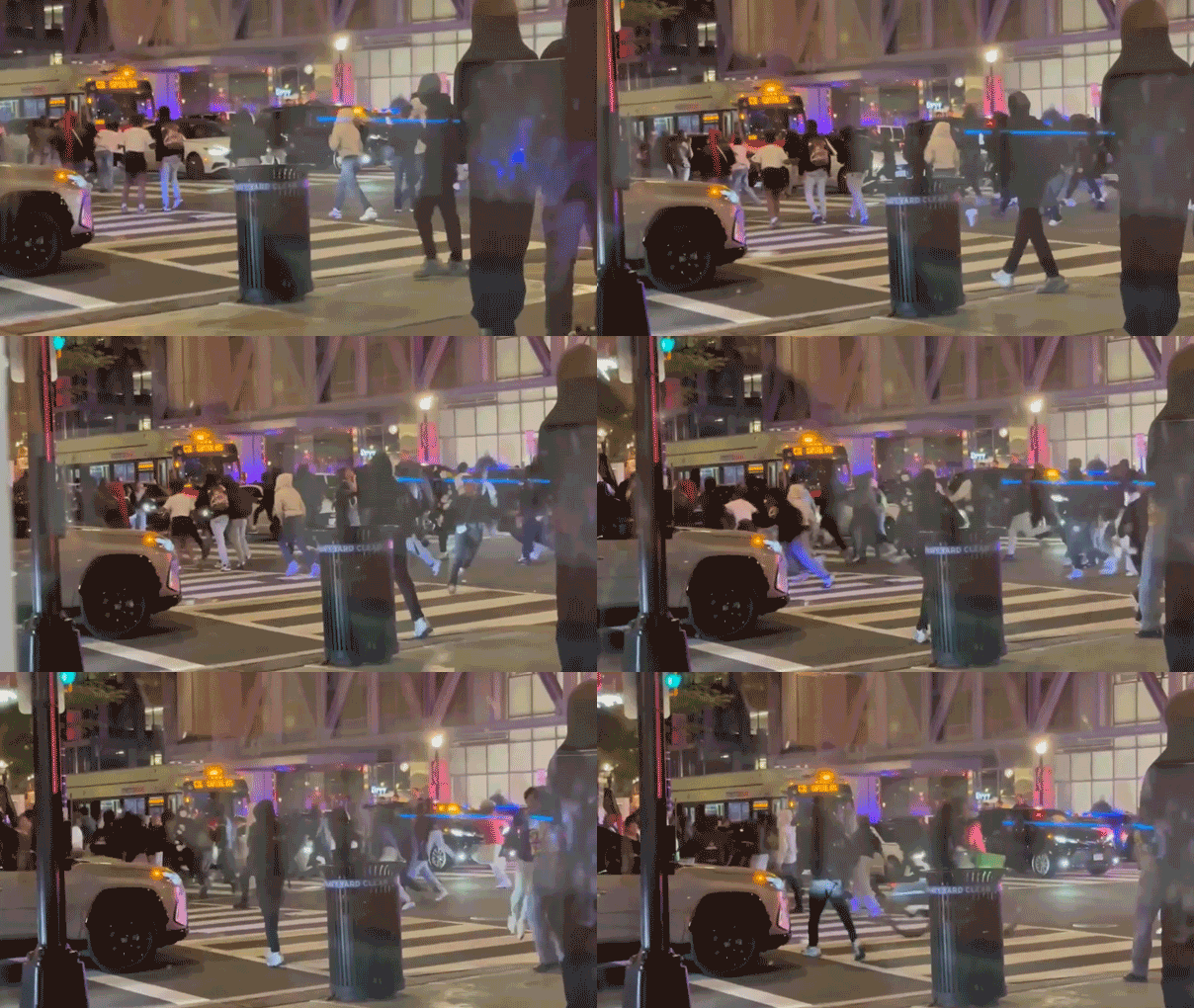
SouthernWorldwide.com – For some time now, we have witnessed a disturbing trend of chaos unfolding on our streets in various forms, often described by authorities as “teen takeovers.”
Hundreds of young people, mobilized by social media posts, descend upon areas like Chicago’s Loop or Atlanta’s gas stations. They engage in destructive behavior, including jumping on cars, looting stores, and attacking police officers.
These acts are often meticulously filmed on their phones, creating a disturbing impression of a video game with no real-world repercussions.
It is evident that a fundamental breakdown within our culture is at play. However, the most striking observation is the profound lack of fear exhibited by these youths, which serves as a primary indicator of this cultural shift.
Reflecting on childhood experiences in a rural town like Kenton, Tennessee, a sense of healthy fear was instilled – fear of God and respect for elders. This fear served as a crucial guide, keeping individuals on a righteous path.
The current generation, however, displays an absence of this foundational fear. Their actions, characterized by anarchic and free-for-all chaos, reveal a disturbing disregard for authority and justice.
These young individuals surround police cruisers, hurl objects at officers, and physically assault them, all while terrorizing bystanders and seemingly finding amusement in their actions, which they then share online.
This behavior transcends mere misbehavior; it signifies a generation acting as if no divine presence watches over them, no authority governs them, and no justice awaits them.
Attaining a state where teenagers can confront and attack a police officer with such impunity does not happen instantaneously. It is a gradual erosion of boundaries, a process that occurs when parental authority wanes, schools abandon disciplinary measures, churches cease to address sin and judgment, and the justice system fails to deliver consequences.
Focusing on the justice system, a crucial component of governmental responsibility, reveals a significant contributing factor. Over the past decade, the rise of “progressive prosecutors” has become apparent.
These prosecutors often campaign on platforms promising decarceration, a lenient approach to “low-level” offenses, and a “reimagining” of the justice system. They frequently articulate a narrative of a systemically racist nation, advocating for reductions in racial disparities within the prison system.
This perspective, often fueled by a sense of white guilt among progressive voters, leads to the election of these individuals into positions of power.
Baca juga di sini: Cal Raleigh's Hitless Streak Reaches 36 At-Bats Amidst Catcher's Decline
The consequences of these policies have been dire, impacting cities from Chicago and St. Louis to New York and Los Angeles. There has been a notable decrease in prosecutions, charges filed, and accountability for juveniles, even in cases involving serious crimes.
These prosecutors have, in essence, refused to uphold the law and have actively worked to undermine the authority of police departments.
Young people are not oblivious to these developments. They witness viral videos of mobs overwhelming city centers and hear reports that “no serious charges will be filed.”
They observe repeat juvenile offenders being apprehended for crimes such as robberies, carjackings, and violent assaults, only to be released back onto the streets shortly thereafter.
This sends a clear message: “You can commit these acts and still return home to your own bed.”
This leniency, combined with a lack of structured discipline within households and a diminishing belief in divine principles, effectively erodes the innate fear of consequences in teenagers.
It replaces a healthy apprehension of repercussions with an overconfident belief that actions will go unpunished.
Simultaneously, a perception of a two-tiered justice system has emerged. Ordinary citizens who defend their businesses may face the full force of the law, while a mob of teenagers transforming a city block into a war zone is casually described as “just kids blowing off steam.”
The shop owner is often cast as the villain, while the mob is treated as a subject for sociological study. Although not always articulated in legal terms, the public keenly feels this imbalance.
As a pastor, addressing this issue necessitates a discussion about the spiritual dimension. The law alone cannot rectify the deep-seated problems we are witnessing.
When observing young Black teenagers gleefully jumping on cars, assaulting strangers, or taunting police officers, one sees hearts that have not been taught to fear anything greater than themselves.
This includes a lack of fear of God, a disregard for dishonoring their families, an absence of respect for judicial authority, and a failure to recognize the gravity of wasting their lives.
We have, in effect, removed the guardrails and are now astonished when the vehicle veers off the cliff. We have prioritized entitlement over responsibility, therapy over repentance, and the examination of “root causes” over the imposition of consequences.
Therefore, what fundamental changes are required?
Firstly, we must re-establish the direct correlation between criminal actions and their attendant consequences. This entails electing prosecutors who genuinely believe their role is to enforce the law, not to circumvent it from behind a desk, and dismantling policies that treat violent mob behavior as a minor disturbance.
Secondly, we must unequivocally support police officers who lawfully act to restore order. No officer should face the prospect of career jeopardy the day after intervening to control an out-of-control crowd.
When we undermine officers for performing their duties, we weaken the crucial barrier that separates our neighborhoods from the encroaching chaos.
Thirdly, adults in all capacities—parents, pastors, teachers, and coaches—must regain the courage to firmly state, “This is wrong,” and to stand by that conviction.
Teen takeovers are not legitimate protests, nor are they merely a transient phase. They represent a profound moral disintegration.
This reality must be articulated plainly within our homes, our places of worship, and our political discourse. Furthermore, parents who abdicate their responsibility to intervene should also face legal accountability.
The fear I experienced in my youth—fear of God, fear of disrespecting my elders, and fear of tangible consequences—was not a burden. It was, in fact, a gift that ensured my safety and guided me through college and seminary.
It provided the focus necessary to pursue a future worthy of pride. The young people engaged in these chaotic “teen takeovers” have been deprived of this essential gift.
If we aspire to reclaim our streets and our children, we must endeavor to rebuild a culture where clear boundaries exist and laws are respected, with the understanding that transgressions will inevitably lead to repercussions.
A society devoid of the fear of consequences is a society destined for unrest. If we fail to alter our current trajectory, we will undoubtedly confront this harsh reality in the future, and by then, it may be too late to effect meaningful change.