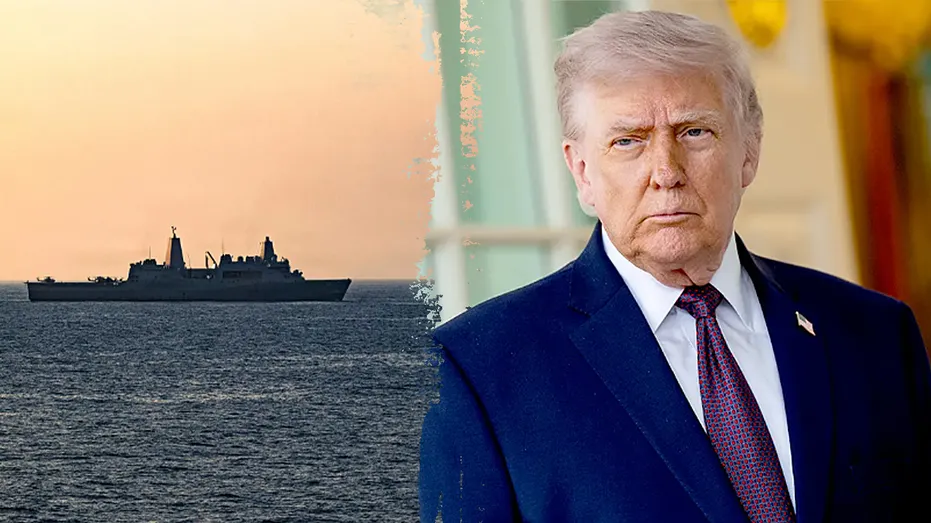
SouthernWorldwide.com – President Donald Trump has indicated that the ceasefire with Iran is in a precarious state, described as being on “massive life support.” This comes as retired U.S. commanders and national security experts are increasingly divided on whether Washington should resume military operations against Tehran or steer clear of what critics fear could escalate into another protracted Middle East conflict.
“I would say the ceasefire is on massive life support,” Trump told reporters on Monday. He likened the situation to a doctor informing a patient’s loved one that there’s only a “1% chance of living.”
Trump also dismissed Iran’s latest response to a proposed agreement as “a piece of garbage.” This statement was made amidst reports that the White House is reviewing military options in case negotiations collapse.
Retired Lt. Gen. H.R. McMaster, who previously served as Trump’s national security adviser, expressed his belief that Iran’s leadership is unlikely to make the concessions Trump deems necessary for a deal.
The central debate now revolves around a critical question for Washington: will increased military pressure compel Iran to abandon its nuclear and missile ambitions, or will renewed strikes deepen a regional conflict without yielding decisive results?
Retired Vice Adm. Mark Fox, former deputy commander of U.S. Central Command (CENTCOM), stated his view that the current ceasefire and diplomatic efforts are unlikely to force Iran to back down.
Fox argued that the U.S. military still possesses the capability to reopen and secure commercial shipping through the Strait of Hormuz, despite ongoing Iranian threats against vessels traversing the waterway.
“This is a militarily obtainable objective,” Fox asserted. He outlined a strategy that would involve guided missile destroyers, attack helicopters, drones, and enhanced aerial surveillance to establish a protected maritime corridor through the Strait.
Read more : Trump Must Hold Xi Accountable for China's Persecution of Jimmy Lai
Fox acknowledged that the U.S. Navy is smaller now compared to the 1980s tanker wars. However, he maintained that American forces still have the capacity to secure the chokepoint if Washington commits sufficient naval assets and persistent monitoring operations.
“It’s not easy,” Fox admitted. “But the geography is fixed.”
He described a potential strategy relying on destroyers, drones, and attack aircraft to create what he termed an “unblinking eye” over the strait. This would enable U.S. forces to identify and neutralize Iranian speedboats, drones, and anti-shipping threats before they could target commercial vessels.
Furthermore, Fox cautioned against allowing Iran to retain leverage over Hormuz while continuing to advance its missile and nuclear programs.
“If not now, when?” he posed. “If they had a nuclear weapon, they would use it.”
Fox, who also contributed to a recent policy paper by the Jewish Institute for National Security of America, echoed the report’s assertion that Iran is using negotiations as a tactic to buy time while preserving its military capabilities.
The paper was co-authored by several retired senior U.S. military officials and national security experts. Among them were retired Gen. Chuck Wald, former deputy commander of U.S. European Command, and retired Vice Adm. Robert Harward, former deputy commander of CENTCOM. They argued that the current ceasefire and diplomatic track “cannot reliably compel Iran” to meet U.S. demands. They also warned that Tehran was seeking to “drag out talks, erode U.S. resolve, and use the time to strengthen itself.”
The report advocated for expanded military operations targeting Iran’s maritime capabilities, missile infrastructure, and internal coercive apparatus. However, it advised against broad attacks on civilian infrastructure that could potentially trigger wider regional escalation.
However, not all experts share the view that renewed military action would lead to a better outcome.
Retired Lt. Col. Daniel Davis, a senior fellow at Defense Priorities and a consistent critic of expanded U.S. military interventions, warned that calls to “finish the job” overlook the realities revealed during recent engagements.
Davis contended that despite thousands of strikes and weeks of fighting, Iran managed to retain significant missile and maritime capabilities.
“We couldn’t knock them out with 14,000 targets hit,” he stated. “Why does anybody think that going back another time is going to have a different result?”
He characterized Iran’s geography, dispersed missile infrastructure, and asymmetric naval tactics as contributing to what he described as “a militarily unsolvable problem.”
“The only thing left is a diplomatic outcome,” Davis concluded.
This disagreement highlights a broader division emerging in Washington as officials deliberate on the course of action should negotiations falter.
Proponents of renewed military action argue that Iran is currently weaker than it has been in decades. They believe that ceasing efforts now risks allowing Tehran to regroup, rebuild its missile arsenal, and maintain leverage over one of the world’s most critical energy chokepoints.
Conversely, critics point out that even extensive U.S. and Israeli strikes failed to fundamentally dismantle the regime’s control or eliminate its military capabilities. They raise concerns that further escalation could draw the United States into another prolonged regional conflict with unpredictable outcomes.