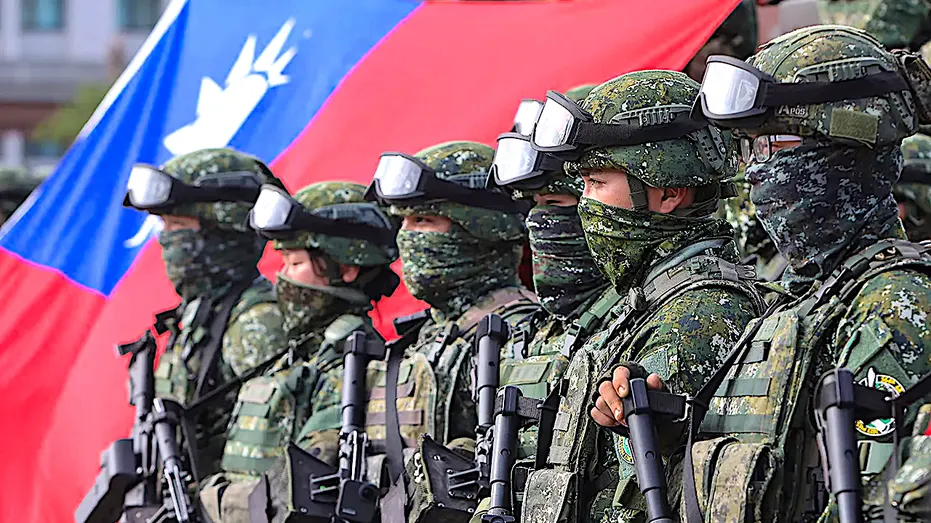
SouthernWorldwide.com – The upcoming meetings between U.S. President Donald Trump and Chinese leader Xi Jinping in Beijing are being closely monitored in Taiwan, from its presidential office and military command centers to the boardrooms of its vital semiconductor companies.
The central question on many minds is whether Trump will negotiate with China from a position of strength, or if Taiwan will be left vulnerable.
This de facto independent nation, home to 23 million people, has lived under the constant threat of the Chinese Communist Party for decades. The CCP claims Taiwan as its territory, despite never having governed it.
Observers in Taiwan warn that Xi might propose a deal to Trump. This potential agreement could involve cooperation on issues like tariffs, fentanyl, U.S. business access, or global flashpoints such as Iran and Ukraine.
In return for such cooperation, Xi might expect Trump to accept a greater Chinese role in Taiwan’s future.
Taiwan’s Deputy Minister of Foreign Affairs, Francois Wu, recently expressed this concern to Bloomberg News. He stated that Taiwan’s greatest fear is being placed “on the menu” of discussions between Xi Jinping and President Trump.
President Trump himself acknowledged China’s disapproval of U.S. arms sales to Taiwan. He indicated that this topic would be “one of the many things I’ll be talking about.”
In the week preceding the meeting, over 50 Chinese aircraft crossed the Taiwan Strait median line or entered Taiwan’s air defense identification zone.
These incursions are not viewed as a sudden escalation in Taiwan. Instead, they are increasingly seen as part of a sustained pressure campaign by China.
This campaign falls short of outright war but keeps Taiwan’s military on constant alert. China also engages in other forms of pressure, such as intentionally damaging undersea cables that provide Taiwan with internet access.
Furthermore, China frequently hacks into Taiwan’s computer systems and floods social media with content that promotes the ruling Communist Party.
Taiwan’s semiconductor industry is a significant point of concern for Washington. The island hosts Taiwan Semiconductor Manufacturing Co. (TSMC), the world’s leading producer of advanced semiconductors.
These chips are crucial components in smartphones, vehicles, artificial intelligence systems, and U.S. defense technology. Any disruption to Taiwan’s access to global markets, such as through conflict or blockade, would have widespread repercussions for American industries, consumers, technology firms, and military planning.
Despite these underlying tensions, there is no outward display of panic in Taiwan as the leaders of the two nations most closely linked to Taiwan’s future prepare to meet.
On May 8, Taiwan’s legislature approved a supplemental defense spending bill of nearly $25 billion. This move was partly intended to signal to Washington that Taipei is not solely reliant on America for its defense.
However, this package was less than the almost $40 billion requested by the administration of Taiwan President Lai Ching-te.
Taiwan’s major political parties, despite their differences in approach towards China, generally support U.S. arms purchases and agree that Beijing poses a threat to democratic Taiwan.
Chinese officials maintain that Taiwan’s status is an “internal affair.” Taiwan’s elected government rejects this assertion, as do the majority of Taiwanese, who believe that the decision regarding Taiwan’s future rests solely with its people.
According to Lee, for Taiwan’s ruling party and those who support President Lai’s efforts to assert Taiwan’s distinct identity, any shift in language that implies the U.S. does not recognize the right to self-determination for the people of Taiwan would be a significant setback.
Lee suggests that Xi Jinping would not be satisfied with mere symbolic statements from Trump. He believes Xi will seek to establish a new framework with new rules.
An example of such a rule could be preventing Taiwan’s President Lai from transiting through the United States. Xi understands that U.S. presidents change, and his objective is to secure a tacit agreement that positions Taiwan within China’s sphere of influence.
Lee points out that China has been patiently awaiting an opportune moment. The ongoing war in Iran, trade tariffs, and other challenges facing President Trump present such an opportunity.
Lee anticipates that Taiwan’s government and academic circles will meticulously examine the official translations of any agreements reached by the two leaders.
Read more : FDA Approves Expanded Alzheimer's Drug Use
He explains that if Xi Jinping agrees to facilitate Trump’s objectives, he will expect more than vaguely worded press releases. Xi will be looking for tangible evidence of a new U.S.-China framework for managing the issue of Taiwan.