SouthernWorldwide.com – As shoppers frequent stores like Home Depot and Lowe’s for everyday necessities and home improvement items, they might anticipate the presence of security cameras. However, a more intrusive technology is now raising privacy concerns: automated license plate readers (ALPRs) that capture vehicle information as customers enter or exit parking lots.
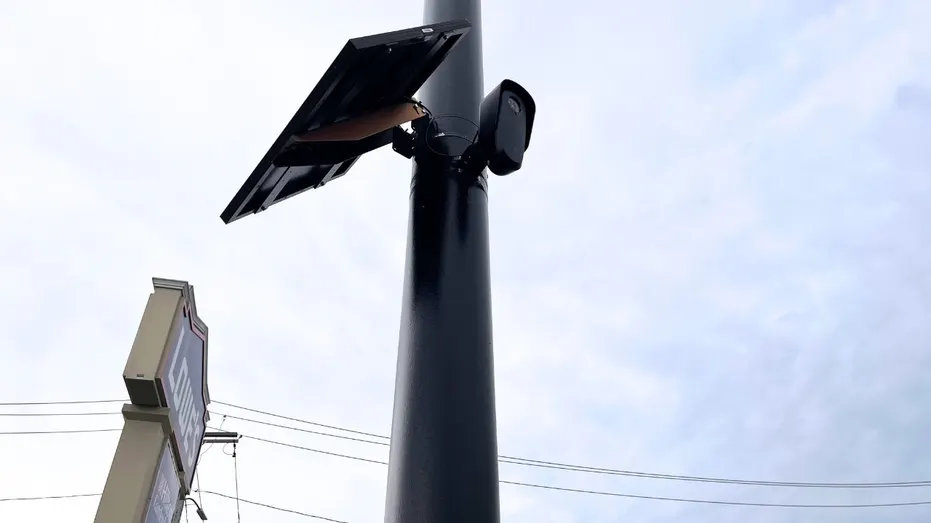
Reports indicate that these ALPRs are being deployed in some Home Depot and Lowe’s stores in Connecticut. These systems photograph the rear of vehicles, record license plate numbers, and log associated data such as the time and location of the capture.
While retailers assert that these cameras aid in deterring theft and enhancing the safety of customers and employees, and law enforcement officials highlight their utility in solving crimes, privacy advocates express apprehension. Their primary concern is that consumers may be unaware when their license plates are being scanned and who will have access to this data in the future.
Automated license plate readers employ cameras and sophisticated software to record the license plate numbers of passing vehicles. Law enforcement agencies commonly utilize these devices on roadways to identify stolen or missing vehicles and to track individuals involved in ongoing investigations.
Now, similar systems are appearing in retail environments. In Connecticut, Flock Safety cameras have been installed at select Home Depot and Lowe’s locations. Flock Safety’s ALPR technology captures vehicle details, including license plates and characteristics such as make, model, and color, within the store’s property. The company emphasizes that its system does not utilize facial recognition technology.
This deployment means that a routine shopping trip could result in a searchable data point being associated with your vehicle. Furthermore, over two dozen police departments in Connecticut already employ automated license plate readers, adding another layer to the data collection landscape.
Home Depot and Lowe’s maintain that the cameras are implemented for security purposes, to prevent theft, and to ensure public safety.
In a statement provided to CyberGuy, a Home Depot spokesperson stated, “We’ve had parking area security cameras in place at our stores for many years, as many retailers do. These cameras are used solely as a security measure to prevent theft and protect the safety of our customers and associates in our stores. We do not grant access to our license plate readers to federal law enforcement.” Home Depot also directs customers to its usage policy available on its website for further information.
While Home Depot’s statement addresses access by federal law enforcement, questions persist regarding the protocols for handling requests from local or out-of-state police agencies.
Lowe’s privacy policy indicates that personal information gathered through ALPRs may be utilized to bolster security, prevent theft and fraud, assist with parking enforcement, and contribute to the safety of individuals and property.
These justifications may seem reasonable, especially in light of recent headlines concerning organized retail theft. However, the crucial question remains: what happens to your license plate data after it has been scanned?
In certain circumstances, the answer is yes. Police officials have confirmed that law enforcement can access data from Lowe’s and Home Depot license plate cameras in Connecticut. Some local police departments have also established written agreements with retailers to gain automatic or continuous access to camera feeds at specific store locations.
When Flock Safety cameras are deployed by private businesses, the data is owned and managed by the entity utilizing the system. Flock states that data sharing is disabled by default, and any decision to share data requires an explicit action by the data owner. Flock also asserts that every search is permanently recorded in an immutable audit trail, meaning police access is not automatic through Flock. It is contingent upon the business’s willingness to share access, the defined parameters of that access, and the vetting of approved agencies.
This is where the privacy debate becomes complex. Connecticut recently enacted new regulations governing police use of automated license plate readers. The law imposes restrictions on how police can share plate data with agencies in other states, introduces data retention rules, and prohibits the use of these systems for immigration enforcement purposes.
However, the legislation primarily targets public agencies and does not directly address private companies operating similar cameras in their parking lots. Consequently, a police-owned camera on a public road may be subject to one set of rules, while a retailer-owned camera in a store parking lot might fall into a less clearly defined regulatory space. Private retailers also do not face the same public disclosure obligations as police departments.
This lack of clarity means shoppers may not know which local or out-of-state agencies have access to their data, how frequently police search this information, or what transpires when data requests cross state lines. This ambiguity is a significant concern. The issue extends beyond the mere scanning of a license plate; it involves the variability of regulations based on camera ownership.
While it’s impossible to completely prevent a camera from capturing your license plate in public spaces, several practical steps can be taken.
Look for signage at parking lot entrances or store exits. Some retailers may disclose the use of license plate readers through posted signs, on their store websites, or within their privacy policies.
Review the retailer’s privacy policy for terms such as “automated license plate reader,” “ALPR,” “vehicle information,” or “license plate.” This can help you understand the type of data the company claims to collect and its stated purpose.
If you require more definitive answers, contact customer service. Inquire about the data retention period for license plate information, the specific agencies that can access it, and the review process for law enforcement requests. Flock Safety data is, by default, automatically deleted after 30 days. Shoppers can still ascertain whether a retailer adheres to this default setting or employs a different retention policy.
Stay informed about local and state regulations. An increasing number of states are scrutinizing license plate reader data, but the regulation of private usage may still lag behind that of law enforcement applications.
Retailers seek tools to combat theft, and police desire information to aid investigations. These objectives are understandable.
The core problem lies in transparency. Individuals should be informed when their movements are being logged, the duration for which this data is retained, and who has the authority to search it later.
License plate readers are becoming more prevalent due to their utility. However, even beneficial technology requires clear guidelines. In the absence of such clarity, a simple shopping excursion can inadvertently contribute to a location data repository that most individuals were unaware existed.
This does not necessitate avoiding stores like Home Depot or Lowe’s. It does, however, suggest that some retail parking lots may collect more information than you realize. Your license plate is already visible in public. But automated scanning fundamentally alters the scenario. A person observing your plate in a parking lot is one matter. A searchable database that logs when and where your vehicle was present is an entirely different proposition. The concern ultimately centers on control and transparency.
The governing rules can differ based on who owns the camera, who manages the data, and which entities are granted access. A camera operated by local police may be subject to public reporting requirements. A system managed by a private retailer might leave shoppers uncertain about which agencies received access and the decision-making process involved.
Take my quiz: How safe is your online security?
Do you believe your devices and data are truly protected? Take this brief quiz to assess the current state of your digital habits. Covering topics from passwords to Wi-Fi settings, you’ll receive personalized feedback on your strengths and areas needing improvement. Take my Quiz here: Cyberguy.com
The implementation of license plate cameras in retail environments presents a privacy trade-off that none of us explicitly agreed to. On one hand, stores aim to deter theft and enhance the safety of their parking areas, which is a logical objective. On the other hand, one might not anticipate their license plate being logged simply for a quick trip to purchase mulch, batteries, or a new drill bit. This is precisely why transparency is paramount. If private companies are collecting this type of data and law enforcement can access it, consumers deserve to know how long it is stored, who can search it, and what regulations are in place. Security measures can be beneficial, but they should not involve a guessing game about the future destination of your personal information.
Read more : Second Top FDA Drug Regulator Departs Amid Claims of Being Fired
Would you still patronize a store if you were aware that your license plate was being scanned and potentially shared with law enforcement? Let us know by writing to us at Cyberguy.com