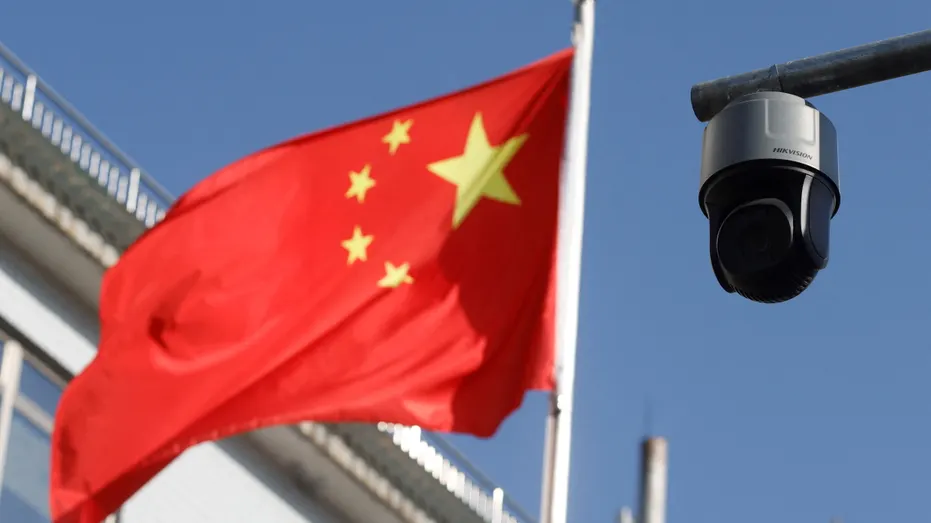
SouthernWorldwide.com – Bret Baier’s recent “Special Report” from Beijing offered a stark and unsettling look into China’s pervasive surveillance state, leaving viewers with a sense of unease about the potential implications for America.
Baier’s reporting highlighted how minor infractions in China, such as jaywalking or riding a scooter without a helmet, are instantly captured by cameras. These violations then lead to immediate digital tickets sent directly to individuals’ phones. Even Baier’s driver received a ticket for a brief, illegal parking incident.
This scenario raises a critical question for Americans: given that the U.S. government possesses the technological capability and has much of the necessary equipment to implement similar aggressive law enforcement, would America still retain its core identity if such measures were adopted?
American society currently operates with a significant degree of informal leniency regarding minor offenses. For instance, double parking during street cleaning in New York City, though illegal, often goes unpunished. Similarly, many drivers on highways exceed the speed limit by a considerable margin, and jaywalking is a common, unpenalized practice in most urban areas.
This relaxed approach to enforcing laws that do not involve violence or serious criminal activity explains why many states still have outdated laws on their books that are simply never enforced.
Examples include the illegality of selling pet fur in Delaware, the prohibition of swearing at sporting events in Massachusetts, and the prohibition of using a greased pig in a contest in Minnesota. These laws remain on the books not because they are actively considered important, but because enforcement ceased, and public concern waned.
Baca juga di sini: Senate Duo Seeks Permanent Ban on Ex-Lawmakers Lobbying
However, the landscape changes dramatically if every new law is accompanied by an AI-driven surveillance system capable of detecting nearly every violation. The question then becomes: how many speeding tickets would an individual truly deserve under a strict, literal interpretation of the law?
A significant portion of this discussion is cultural. The author recalls being in Tokyo in 2019, before the advent of instant digital ticketing, and observing a striking adherence to pedestrian signals. On a quiet, single-lane street, dozens of people waited patiently on both sides to cross, despite the apparent safety of doing so.
For the Japanese, the rule is paramount, and adherence is expected.
The growing concern surrounding the expansion of the surveillance state in the United States is that it could potentially shift American culture towards a more rigid, rule-bound system, akin to some East Asian societies. This, the author argues, would be too high a price to pay for the sake of increased safety and order.
The existing “wiggle room” in American society, coupled with a healthy skepticism towards authority, is deeply ingrained in the national character. This informal system of non-enforcement can, in effect, act as a de facto check on potentially overreaching legislation when citizens collectively disregard minor, unreasonable laws.
Despite the challenges posed by COVID-19 lockdowns and calls for greater compliance from certain political factions, millions of Americans demonstrated a spirit of defiance by disregarding what they perceived as unreasonable restrictions.
This inherent spirit of defiance is fundamental to the American identity. It is therefore crucial to carefully consider the extent of surveillance in the nation and how governmental bodies might choose to utilize this power.
With the proliferation of personal devices, smart televisions, home security cameras, and existing government surveillance infrastructure, the tools for widespread monitoring are already in place. While the U.S. government has not yet employed these tools for mass social control, the potential exists to shift towards a totalitarian approach with relative ease.
The technologies that enable pervasive state surveillance, once considered science fiction, are now a permanent fixture. Arguing against their existence is a futile endeavor, comparable to attempting to stop a bulldozer by standing in its path.
The crucial debate will revolve around the degree of autonomy granted to the state, not merely in its capacity to surveil citizens, but in its power to penalize them for minor transgressions. This presents a significant challenge, as the concept of “wiggle room” is not a defined legal term.
The fundamental question is whether Americans prefer a society where a human officer can exercise discretion, offering a warning instead of a citation, or one where an automated system rigidly enforces every letter of the law.
It appears that Americans generally favor the flexibility and discretion offered by the current system. However, the challenge of preserving this “wiggle room” in the face of advancing surveillance technology is a complex and pressing issue.