SouthernWorldwide.com – Americans continue to view Iran through an outdated lens, debating conflict as something that begins with bombs or troop deployments. However, Iran has been engaged in asymmetric warfare against the United States and the West since 1979, utilizing terrorism, proxy forces, illicit finance, ideological movements, cyber operations, criminal partnerships, and gray-zone tactics that deliberately remain below the threshold of conventional conflict.
The true danger lies not solely in Iran’s capabilities, but in our collective refusal to acknowledge the nature of this ongoing fight.
Many Americans perceive conflict with Iran as an issue confined to distant regions like Gaza, Lebanon, Syria, Yemen, the Red Sea, or the Strait of Hormuz. In reality, Iran’s infrastructure has strategically embedded itself much closer to home. This includes presence across Latin America, within cartel corridors, through illicit financial networks, migration pipelines, and operational seams within the United States itself.
AMERICAN ‘JIHAD’ FUELED BY ‘RISKY SOURCE’ INSIDE US BORDERS, WARNS NATIONAL SECURITY EXPERT
This widespread presence was not accidental; it was meticulously built over decades. This was achieved through proxies, criminal convergence, ideological networks, covert finance, and tradecraft designed to obscure attribution. In a striking example, just two days after a congressional warning about the convergence between cartel infrastructure, Iranian-backed proxies, and gray-zone warfare, the Department of Justice unsealed charges against an Iraqi national linked to precisely the hybrid threat architecture described.
The individual charged, Mohammad Baqer Saad Dawood Al-Saadi, a senior commander in Kata’ib Hizballah (KH)—an Iranian-backed Iraqi militia with ties to the Islamic Revolutionary Guard Corps (IRGC)—was accused of directing attacks against Jewish, Israeli, and American targets across Europe and North America. Notably, this included a plot targeting a synagogue in Manhattan.
The most significant aspect of this case was not merely the attacks themselves, but the operational model that underpinned them.
Al-Saadi allegedly sought to coordinate his efforts through smuggling networks linked to Mexican cartels and criminal facilitators operating across the Western Hemisphere. The attacks were promoted under a new front group, Harakat Ashab al-Yamin al-Islamiya (HAYI), which was designed to appear independent while advancing the goals of KH, Hezbollah, and the IRGC.
This layered structure provides crucial operational security, plausible deniability, and strategic distance from the actual violence, all hallmarks of Iranian tradecraft. Iran has been refining this operational model for decades. In 1983, Iranian cleric and intelligence operative Mohsen Rabbani arrived in Argentina under commercial and religious cover, tied to halal meat certification. He served as the imam of a Buenos Aires mosque while also acting as Iran’s cultural attaché.
Using mosques, cultural centers, charities, front companies, and diaspora networks, Rabbani helped establish Iranian and Hezbollah infrastructure across Latin America. The Tri-Border Area, encompassing Argentina, Brazil, and Paraguay, became a significant hub for Hezbollah financiers, smugglers, traffickers, and money launderers, operating in tandem with criminal networks. This interconnected ecosystem enabled the 1992 Israeli Embassy bombing in Buenos Aires and the 1994 AMIA bombing, which tragically killed 85 people. Argentine prosecutor Alberto Nisman’s investigation concluded that Iran directed these attacks, with Hezbollah executing them through layered proxies—a tactic mirroring those used today.
These incidents are not isolated acts of terrorism. They represent a resilient asymmetric architecture meticulously constructed to operate below the threshold that would typically trigger a conventional military response. Iran does not view threats in isolation; it sees the Houthis in the Red Sea, militias in Iraq and Syria, Hezbollah in Latin America, and cartels at the U.S. border as interconnected fronts in a multi-domain campaign that exploits the infrastructure of globalization. This includes smuggling routes, corruption networks, illicit finance, and governance gaps.
Baca juga di sini: The day after Memorial Day, America’s debt to the fallen still remains
Hezbollah networks have long intersected with Latin American narcotics trafficking, sanctions evasion, and money laundering operations. U.S. Drug Enforcement Administration (DEA) investigations, such as Project Cassandra, have extensively documented these connections. More recently, U.S. Treasury and State Department sanctions have targeted Iranian shadow banking systems, front companies, shipping networks, and a “shadow fleet” used to move illicit oil and finance proxies. These financial and logistical tools are essential for sustaining the broader apparatus of proxy warfare and criminal convergence.
BORDER AIRSPACE BREACHED: CARTEL DRONES TEST US DEFENSES AND RAISE NEW FEARS
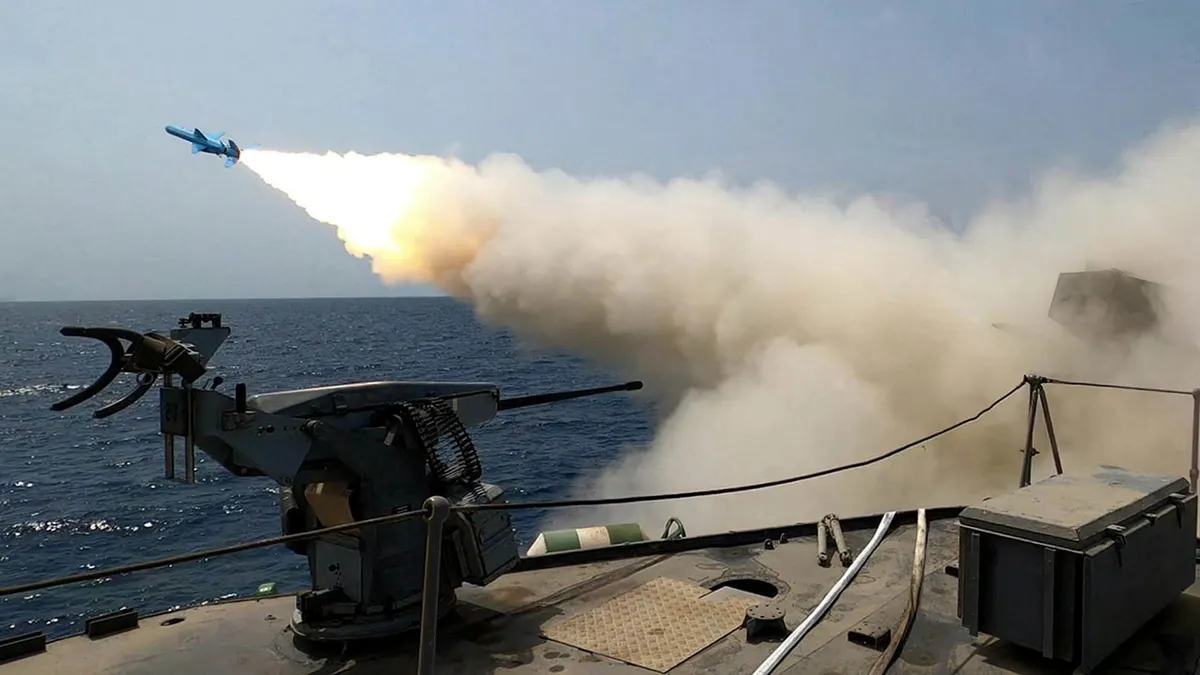
The same operational logic is evident in other regions. The Houthis, with Iranian backing and plausible deniability, disrupt shipping in the Red Sea. Iran exerts pressure on energy markets through harassment and proxies in the Strait of Hormuz. In the Western Hemisphere, Iranian influence overlaps with Venezuela’s Cartel de los Soles, transnational drug pipelines, and anti-Western networks that involve Russia and China.
While not every cartel operative works directly for Tehran, hostile actors routinely exploit the same permissive corridors for their own objectives.
This creates a growing and dangerous mismatch: adversaries wage persistent, sub-threshold irregular warfare through networks, erosion, and the exploitation of open societies. Meanwhile, America continues to operate under a binary mindset, distinguishing between “war” and “peace,” “foreign” and “domestic,” or “terrorism” and “crime.”
‘OPEN BORDERS’ UNDER BIDEN COULD HELP IRAN RETALIATE WITH US TERROR SLEEPER CELLS: FORMER FBI BOSS
The southern border is no longer solely an immigration or law-enforcement concern. It has transformed into a strategic access point into the U.S. homeland, where transnational networks exploit existing gaps in ways that mirror irregular warfare environments. Within the country, this extends beyond mere crime to encompass homeland defense and critical infrastructure security concerns.
The case involving Al-Saadi is not just another terrorism investigation; it serves as a critical warning. Iran’s war against the West did not commence with a single operation, nor will it remain confined overseas simply because Americans refuse to acknowledge its presence. Proxy networks, criminal pipelines, migration corridors, maritime logistics, covert finance, and propaganda ecosystems are continuously adapting, extending their reach while meticulously maintaining deniability.
Americans must fundamentally reframe the debate surrounding this threat. It is hybrid, networked, and is already operating within the strategic seams of the West.
Recognizing this conflict for what it truly is—a long-running asymmetric campaign that has already converged on the homeland—is the essential first step toward developing an effective defense strategy.