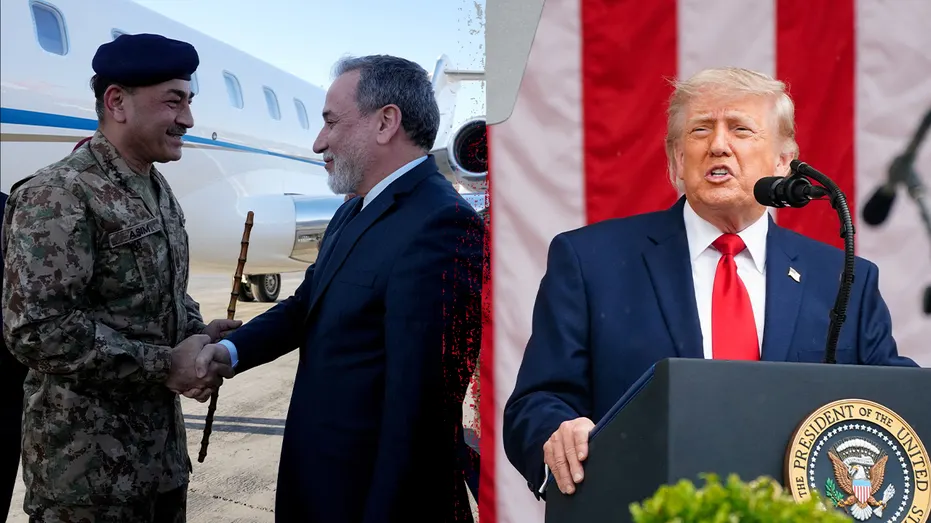
SouthernWorldwide.com – As Pakistan’s Army Chief, Field Marshal Asim Munir, stepped into the role of a key intermediary in negotiations surrounding the escalating Iran crisis, Washington found itself once again relying on a nation that American officials have accused for decades of playing a dual role in the war on terror.
Munir has emerged as a crucial link in preventing renewed conflict with Iran. This places Pakistan, despite years of accusations related to Taliban safe havens, nuclear proliferation, and Osama bin Laden, back at the forefront of U.S. diplomatic efforts in the Middle East.
The current negotiations highlight a significant contradiction in U.S. foreign policy. Washington continues to turn to Pakistan even after extended periods of tension, mistrust, and allegations that elements of the country’s security establishment have backed militant groups fighting against American troops.
ISLAMABAD DENIES SHELTERING IRAN JETS, TRUMP PRAISES PAKISTAN’S MEDIATION AS ‘ABSOLUTELY GREAT’
Pakistan’s resurgent diplomatic involvement has faced increased scrutiny and exposed divisions among Republicans. This is due to claims that Iranian military aircraft may have been moved to Pakistani territory during the recent conflict, assertions that Islamabad has firmly denied.
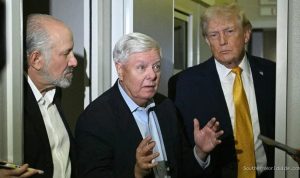
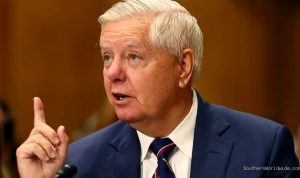
“I don’t trust Pakistan as far as I can throw them,” stated Senator Lindsey Graham, R-S.C., on May 12. “If they actually have Iranian aircraft parked in Pakistan bases to protect Iranian military assets, that tells me maybe we should be looking for somebody else to mediate.”
However, Trump offered public praise for Pakistan’s leadership on the same day.
“They’re great,” Trump told reporters on May 12. “I think the Pakistanis have been great. The field marshal and the prime minister of Pakistan have been absolutely great.”
Pakistan has long occupied a precarious position in American foreign policy.
The nuclear-armed nation shares borders with both Iran and Afghanistan. It maintains deep connections within the region’s security framework and has historically been regarded by U.S. officials as too strategically vital to completely isolate.
Even critics who accuse Pakistan of duplicity acknowledge that Washington has found it difficult to disengage from Islamabad. This is attributed to Pakistan’s nuclear arsenal, its geographic location, and its influence over regional militant networks.
However, distrust between Washington and Islamabad escalated significantly after U.S. forces killed bin Laden in Abbottabad, Pakistan, in 2011. This occurred in a military town situated near the country’s foremost military academy.
Critics and former U.S. officials have long questioned whether Pakistani intelligence could have been unaware of bin Laden’s presence in Abbottabad. Pakistan, however, has consistently denied knowingly harboring him.
Analysts suggest that Pakistan’s military establishment has for years viewed Afghanistan through the lens of its rivalry with India. They saw a Taliban-friendly government in Kabul as a means of strategic leverage against Indian influence in the region.
“They view Afghanistan as strategic depth,” noted Roggio.
According to analysts, Pakistan’s security establishment has historically distinguished between militant groups targeting Pakistan itself and those considered useful against India or in Afghanistan. Critics argue this strategy led Islamabad to tolerate or maintain ties with certain Taliban-linked and anti-India groups, even while cooperating with U.S. counterterrorism operations after 9/11.
Pakistani officials have also contended that the country paid a steep price for aligning with Washington after 9/11, citing years of suicide bombings, insurgent attacks, and instability within Pakistan itself.
Pakistan’s defense minister recently admitted that the country had performed “dirty work” for the U.S. and the West during decades of regional conflict. He argued that policies linked to the anti-Soviet war in Afghanistan and the post-9/11 era ultimately destabilized Pakistan.
Roggio asserted that Pakistan’s security establishment spent years publicly cooperating with Washington while simultaneously tolerating or supporting Taliban-linked groups fighting American troops in Afghanistan.
PAKISTAN FLIP FLOPS ON TRUMP NOBEL PEACE PRIZE NOMINATION AFTER LESS THAN 24 HOURS
Read more : ICE Under Fire for Poor Conditions at For-Profit Detention Facility
Pakistan’s most recent diplomatic engagement has also drawn renewed scrutiny following allegations that Iranian military aircraft might have been moved into Pakistani territory during the recent conflict. Islamabad has denied these claims.
Pakistan’s nuclear history has also been a source of concern for Washington for decades. Abdul Qadeer Khan, the architect of Pakistan’s nuclear program, later confessed to operating a proliferation network that transferred nuclear technology and expertise to countries including Iran, Libya, and North Korea.
Counterterrorism analysts and former U.S. officials have long cautioned that al Qaeda operatives and affiliated groups continued to find sanctuary in parts of Pakistan’s tribal regions even after the 9/11 attacks. However, the extent of these networks remains a subject of debate.
Pakistani officials have consistently denied supporting terrorist organizations. They argue that the country itself has suffered greatly from Islamist violence, including attacks by ISIS-K and the Pakistani Taliban. Islamabad has also refuted allegations that Iranian military aircraft were harbored within Pakistan during the recent conflict.
More than a decade after the bin Laden raid severely damaged trust between Washington and Islamabad, Pakistan’s military leadership has once again emerged as a critical diplomatic channel for Washington. This time, it is amid the escalating crisis involving Iran.
Trump has increasingly engaged Munir directly in recent weeks. This reinforces long-standing perceptions that Pakistan’s military, rather than its civilian government, remains the country’s dominant power center.
Munir, a former intelligence chief, has leveraged Pakistan’s long-standing relationships across the region to position himself as a conduit between Washington and Tehran.
Roggio argued that Pakistan is also attempting to improve its international image by presenting itself as a stabilizing force in the region.
“They’re trying to present an image of being a purveyor of peace in the region,” he stated.
Previous diplomatic efforts related to the Iran conflict were also held in Islamabad, enhancing Pakistan’s role as a regional intermediary.
Pakistan and Qatar appear to have emerged as complementary diplomatic channels rather than competing ones during the latest negotiations involving Iran.
Analysts suggest that Pakistan’s military leadership has increasingly positioned itself as a political and security intermediary between Washington and Tehran. Meanwhile, Qatar has remained central to the more formal diplomatic and financial aspects of regional negotiations.
Qatar, which hosted negotiations between the U.S. and the Taliban that led to the 2020 Doha agreement outlining the framework for the eventual U.S. withdrawal from Afghanistan, has again emerged as a key diplomatic channel as talks intensified over the weekend.
Pakistan also played a behind-the-scenes role in those negotiations, reflecting Washington’s long-standing reliance on Islamabad’s connections with the Taliban leadership during the Afghanistan war.
Critics of the Doha agreement argued that it sidelined the U.S.-backed Afghan government while strengthening the Taliban in the lead-up to its return to power in 2021.
Pakistan’s relationship with the Taliban has also become increasingly strained since the group regained power in Afghanistan. Pakistani officials have accused Taliban authorities of failing to prevent militants from launching attacks into Pakistan from across the border. Islamabad has also threatened military action against certain groups operating near Afghan territory.
The divergence of opinion regarding Pakistan reflects a broader debate that has shaped U.S. foreign policy for decades: whether Washington’s strategic need for Islamabad outweighs long-standing concerns over the country’s relationships with militant groups and regional adversaries.
More than a decade after the bin Laden raid shattered trust between Washington and Islamabad, Pakistan has once again become a diplomatic channel that the U.S. appears unable, or unwilling, to bypass during one of the region’s most volatile crises.