SouthernWorldwide.com – The Pope has joined forces with Bernie Sanders in a stance against Artificial Intelligence (AI), signaling a significant shift in the discourse surrounding the rapidly advancing technology.
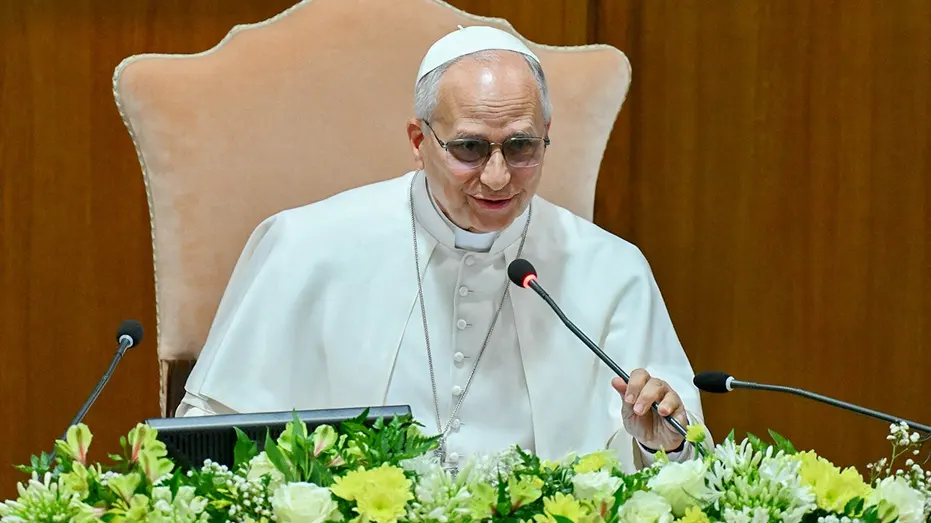
In a recent encyclical, considered his most significant policy declaration to date, Pope Leo XIV has voiced concerns that AI “threatens to normalize an anti-human vision.” He is advocating for the regulation of the burgeoning AI industry.
According to Vatican News, the Pontiff emphasized that AI technology should not be concentrated “in the hands of a few.” Instead, he believes it must be managed with a guiding principle focused on “the dignity of every person and the common good of all people,” rather than solely on profit.
Echoing the sentiments of progressive Senator Bernie Sanders, who has called for a federal moratorium on data center construction to curb AI’s rapid development, Pope Leo XIV stated that AI should not be permitted to displace workers “in the name of reducing costs and increasing profit.” Similar to Sanders, the Pope also “expresses his hopes for a renewal of labor organizations.”
The encyclical, which The Wall Street Journal suggests is “poised to define Leo’s papacy,” draws parallels to an 1891 encyclical titled “Rerum Novarum,” or “new things.” This historical document criticized the social ills that arose from the Industrial Revolution.
The current Pope, Leo XIV, signed his encyclical, “Magnifica humanitas,” on May 15, the same date his predecessor, Pope Leo XIII, signed “Rerum Novarum.” This deliberate choice of date and the inspiration drawn from his predecessor highlight a continuity of concern regarding societal impact of technological advancement.
The historical context of the Industrial Revolution is a telling parallel. While it undeniably caused significant hardship for early factory workers and urban migrants, it also ushered in an unprecedented era of improved living standards, health, and prosperity.
Before the widespread adoption of factories and machinery in production, travel, and agriculture, a vast majority of the global population endured extreme poverty and lived precariously close to starvation.
The Industrial Revolution spurred a dramatic increase in the production of essential goods like clothing and furniture, leading to lower prices for consumers. Concurrently, real wages saw a steady rise throughout the 19th century across industrialized nations, and the poverty rate experienced a significant decline.
Organizations like the Adam Smith Institute, which champion capitalism, highlight that the Industrial Revolution generated the wealth necessary for advancements in public health and sanitation. It was instrumental in overcoming not only extreme poverty but also curable and preventable diseases.
Far from exacerbating poverty and misery, the Industrial Revolution had the opposite effect, elevating the material conditions of humanity to a level and at a rate previously unseen in history.
This historical narrative of progress and improvement is, in a sense, what Pope Leo XIII lamented. In a similar vein, Pope Leo XIV appears to be opposing the progress and wealth creation that Artificial Intelligence promises.
Much like the early industrialists who pioneered innovations such as the steam engine and the spinning jenny, contemporary Silicon Valley innovators are accumulating wealth and influence through AI.
While tech leaders acknowledge that AI will automate certain jobs, they also anticipate a surge in overall productivity. This, they predict, will lead to increased leisure time, a reduction in menial tasks, and other societal benefits. Furthermore, they foresee AI driving significant breakthroughs in medical science.
Bernie Sanders and Pope Leo XIV seem to be narrowly focused on job losses, perhaps struggling to envision the broader positive implications of AI. They may not be fully considering the potential for AI to alleviate the suffering of millions worldwide afflicted by diseases such as Parkinson’s, which could soon be treatable thanks to AI’s analytical capabilities.
The case of Jorie Kraus serves as a poignant example of AI’s life-changing potential. Jorie was born with a rare genetic disorder, spending her initial 73 days in a neonatal intensive care unit and struggling to breathe and speak for her first two years.
A diagnosis facilitated by AI led to her being prescribed a common muscle relaxant used for seizure treatment. This intervention proved transformative, with her mother describing the change as a “light switch” moment, regaining control of her little body.
The medical community is also leveraging AI’s power to identify new uses for existing drugs. Research from Harvard Medical School, utilizing an AI model, identified nearly 8,000 approved drugs that could potentially be repurposed to treat 17,000 different diseases.
AI’s benefits extend beyond healthcare. Large language models can optimize complex operations, such as air traffic control and TSA procedures, enhancing flight safety and travel efficiency. AI can also aid in tracking and eliminating fraud and waste in government spending.
Many time-consuming tasks, including drafting legal documents or creating financial spreadsheets, can be expedited by AI. Moreover, weather forecasting accuracy could improve, enabling better preparation for natural disasters.
Critics of AI, including Senator Sanders and the Pope, are concerned that AI’s ability to perform tasks faster and cheaper than humans poses a threat to employment prospects. Young people, in particular, express anxiety about their futures and exhibit growing skepticism towards the AI industry.
AI developers have been criticized for not adequately addressing these concerns. They are encouraged to promote AI literacy among students, teaching them how to effectively use and master the technology, thereby enhancing their skills and opportunities.
The impact of AI criticism is evident. A Morning Consult survey indicated that AI ranks among the top 10 most distrusted categories, placed just above social media. Interestingly, Americans appear to be growing less enthusiastic about AI even as their usage increases.
This skepticism towards AI seems largely confined to English-speaking developed countries. In contrast, residents of other nations tend to have a more positive outlook on technologies like ChatGPT and Gemini.
While AI creators may be exceptionally skilled, their efforts to promote the technology to the American public have been less successful. They need to improve this by demonstrating AI’s tangible benefits and by supporting regulations, akin to those considered by the Trump White House, that can alleviate public concerns.
Baca juga di sini: Jerome Bettis Offers Advice to Jaxson Dart and Abdul Carter Amid Trump Rally Controversy
Failure to do so could result in AI being curtailed by figures like Sanders and the Pope, potentially leaving the field open to countries like China. These nations might implement fewer safeguards for humanity, a prospect that presents a far more concerning scenario.