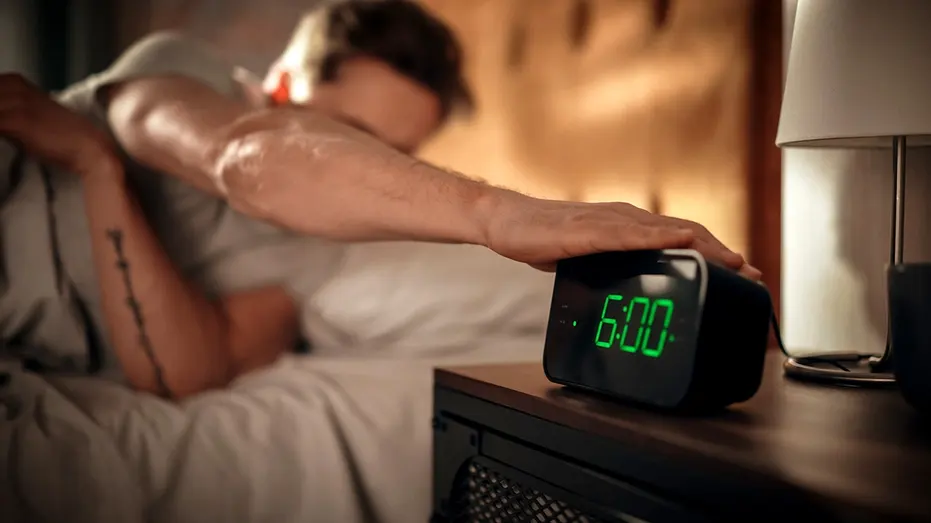
SouthernWorldwide.com – The debate over ending the biannual clock changes in the United States is gaining momentum, with the Trump administration reportedly reconsidering a permanent shift to Daylight Saving Time (DST), often referred to as the “summer clock.”
Legislation supporting this move has seen progress, as the House Energy and Commerce Committee advanced a bill with a decisive 48-1 vote. This action is part of a broader, bipartisan effort aimed at discontinuing the practice of adjusting clocks twice a year.
While the prospect of extended daylight in winter evenings might seem appealing, health experts are raising concerns. They warn that making DST permanent could significantly disrupt the body’s natural circadian rhythms, impacting overall health and well-being.
TRUMP CHAMPIONS BID TO NIX CLOCK CHANGES BY ADOPTING PERMANENT DAYLIGHT SAVING TIME
“Most sleep scientists and the public would likely welcome an end to the biannual clock change,” stated one expert. “The disruption caused by ‘springing forward’ each March is demonstrably linked to negative health outcomes, including an increase in car accidents, heart attacks, and sleep deprivation.”
However, this expert cautioned that permanent DST is “not supported by science.” Instead, the evidence “strongly supports” the adoption of permanent standard time, or the “winter clock,” according to their assessment.
Leading sleep medicine organizations, such as the American Academy of Sleep Medicine, have previously expressed their preference for permanent standard time over permanent DST.
HERE’S WHY 90% OF AMERICANS DON’T SLEEP THROUGH THE NIGHT, ACCORDING TO EXPERT
“Standard time aligns more closely with human circadian biology,” the expert explained. “This means the natural interplay between light, darkness, and our internal biological clocks remains undisturbed.”
“Permanent DST, on the other hand, simply shifts an hour of morning sunlight to the evening. This trade-off comes with significant health and safety costs.”
The United States did experiment with permanent DST in the early 1970s. However, the initiative was ultimately abandoned, partly due to the negative “morning consequences” observed during that period, as highlighted by the sleep expert.
Human circadian rhythms are primarily regulated by “morning light,” according to the expert. Under a permanent DST system, many individuals would find themselves waking up before sunrise for work or school. This scenario creates a “chronic misalignment between the body’s internal clock and the external world.”
FORCING AN EARLY WAKE-UP TIME COULD HARM YOUR HEALTH, SLEEP DOCTORS WARN
“It is not possible to override this fundamental biology by simply adjusting external clocks,” the expert asserted. “The result is a population that is, in effect, waking up during their biological night, every single day.”
Public opinion has often favored having more daylight during winter evenings. This preference is partly driven by the potential to alleviate mental health conditions like seasonal depression.
Proponents of permanent DST argue that later evening daylight could encourage more outdoor activities, recreational pursuits, and increased consumer spending after work or school hours.
While acknowledging that light is a “powerful regulator” of sleep and mood, the expert pointed out that not all light exposure offers the same benefits. “Morning light is crucial for regulating sleep, alertness, and supporting mental health. This essential benefit would be sacrificed with permanent DST,” they noted.
CLICK HERE FOR MORE HEALTH STORIES
In certain regions of the U.S., such as Utah, residents might not experience sunrise until around 9 a.m. during the winter months. Some research has linked this lack of early morning light to higher rates of depression and seasonal mood challenges.
TEST YOURSELF WITH OUR LATEST LIFESTYLE QUIZ
“While more evening light might feel pleasant, often because we associate it with enjoyable summer evenings, permanent DST does not equate to permanent summer,” the expert emphasized. “It simply means we will have less morning sunlight and more evening sunlight.”
“Exposure to light in the evening further delays circadian rhythms, making it more difficult to fall asleep and harder to wake up in the morning.”
Permanent DST could exacerbate existing habits of “bedtime procrastination,” deepen existing sleep deprivation, and contribute to the widespread public health issue of insufficient sleep, as identified by the Institute of Medicine, according to the expert.
Numerous studies have indicated that people generally sleep less during the summer months compared to winter. This trend is particularly concerning in a society where one in three individuals already experiences insufficient sleep.
“This is especially alarming for teenagers, a demographic that the U.S. Surgeon General has identified as being in a mental health crisis,” the expert cautioned.
For instance, a teenager waking at 6:30 a.m. for an 8 a.m. school start time under permanent DST would biologically be waking at 5:30 a.m., which is “in the middle of their biological night,” the expert pointed out.
Read more : A Pope Embraces AI's Future While Cautioning Its Power
“Framing permanent DST as a solution for seasonal depression fundamentally misinterprets the scientific evidence,” they concluded.