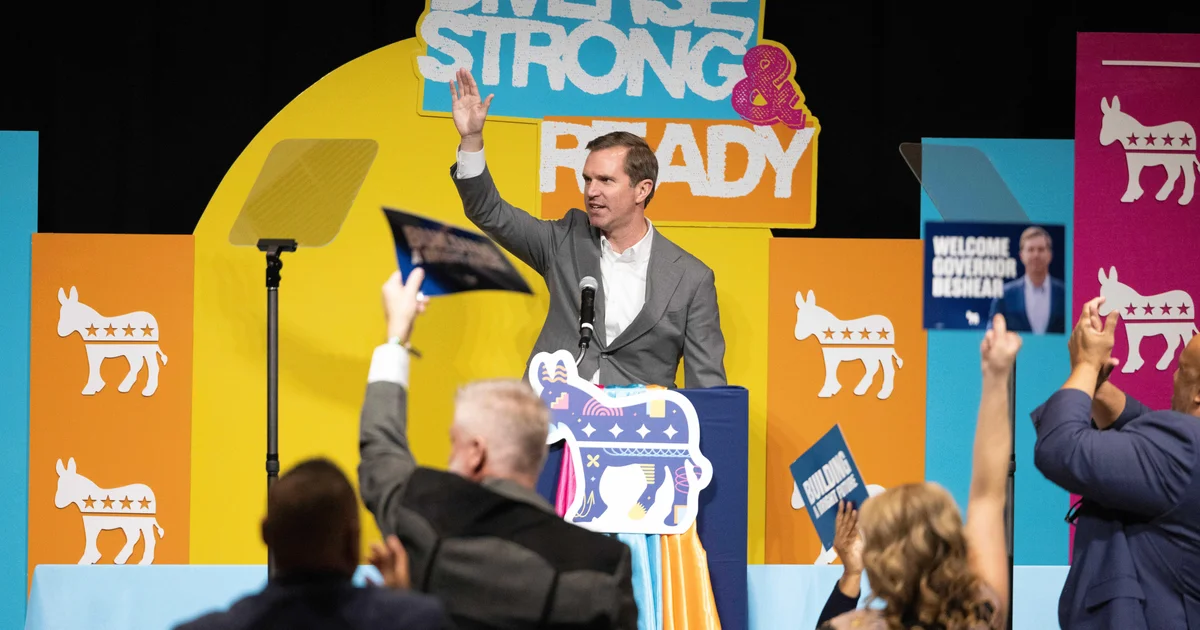
SouthernWorldwide.com – Kentucky Governor Andy Beshear has carved out a unique political niche in the predominantly Republican state, winning statewide elections as a Democrat amidst a landscape of Republican dominance.
He is now stepping into a significant national role that could shape the future of the Democratic Party’s electoral strategy.
With a potentially favorable national political climate anticipated for the 2026 midterm elections, Beshear is at the helm of the Democratic Governors Association. His leadership aims to secure victories in states where the party has faced setbacks or needs to retain critical seats.
“A signing in the Rose Garden is no longer a tangible reality for people,” Beshear stated in an exclusive interview with CBS News during a recent party gathering in Arizona. “The vote on a resolution or an amendment, let alone a bill, has lost its impact. What Democratic governors achieve are concrete results that people can see, touch, and feel.”
This focus on tangible achievements is being viewed as a potential pathway for Democrats to overcome the national political challenges they faced after a series of losses in the 2024 presidential election, which saw them lose the White House, the Senate, and fail to regain control of the House of Representatives.
As leaders grapple with the first year of a second term for Republican President Donald Trump, there’s a palpable frustration among Democrats in Washington. This situation could create an opportunity for governors to redefine the party’s future direction, a scenario not seen since Bill Clinton’s centrist approach helped end a 12-year Republican presidential winning streak in the late 20th century.
Discussions among governors at meetings in Phoenix, Arizona, revealed a strong belief among Democrats that the party’s presidential nominee in 2028 will emerge from their ranks.
“I am absolutely convinced that the candidate in ’28 will come from the pool of current or former Democratic governors,” stated Kansas Governor Laura Kelly, who led the Democratic Governors Association during the recent elections, to reporters.
However, identifying which of these governors might resonate with the broader American public remains a complex question. Beshear is not the only leader facing speculation about future presidential ambitions. Other potential candidates include California Governor Gavin Newsom, Minnesota Governor Tim Walz, and Michigan Governor Gretchen Whitmer. All four have been measured in their public statements about their political futures, despite actively participating in party-building events over the weekend in Arizona.
“Looking at the current state of our nation and what is needed moving forward, the solutions are being spearheaded by the governors,” Whitmer, who is collaborating with Beshear on midterm strategies as the vice chair of the Democratic Governors Association, exclusively told CBS News.
Both Beshear and Whitmer have successfully served two terms as governors in their respective states. They currently face Republican leaders who are largely skeptical of Democratic policies or critical of their governance.
Kentucky GOP Chairman Robert J. Benvenuti III asserted in a statement that while “Democratic governors from blue states have made their choice, Kentuckians have chosen Republican leadership and Republican policies over the radical and anti-American policies of the left.” In Michigan, Republican Senate Leader Aric Nesbitt, who is running for governor, accused Whitmer of being “more concerned with her public image and public relations across the country than she is with solving Michigan’s most pressing problems.”
The 2026 gubernatorial races are drawing significant attention due to the prominent role governors play in contemporary politics. Some Democrats have focused their leadership on addressing the impact of the Trump administration on various state-level issues, including public safety, the economy, cost of living, and quality of life. President Trump’s trade policies, housing and grocery prices, and the lack of affordable childcare have emerged as key issues likely to influence Democratic campaigns in the midterms.
“I believe we need an executive who can step in and help rebuild the federal government that this President has dismantled,” Beshear commented. “I think the American people are desperately seeking swift results, and that is precisely what Democratic governors deliver.”
Following a year of internal party disputes and infighting at the national level after the Democratic Party’s 2024 election setbacks, decisive victories in the New Jersey and Virginia gubernatorial races last month have provided a much-needed boost to the party heading into the following year.
However, the contests in 2026 are anticipated to be considerably more challenging than the open races that took place in those two more reliably Democratic-leaning states this year.
Democrats are aiming to win the Georgia governorship for the first time in decades and are also supporting Governor Katie Hobbs’ bid for re-election in Arizona. Both of these races hold national political significance, especially considering that Donald Trump won both states in 2024, after they had swung to Democratic President Joe Biden four years prior.
National Democrats are also keen to maintain their hold on power through open races in the crucial battleground states of Michigan and Wisconsin. They face a tougher challenge in unseating a Republican incumbent in Nevada and securing a third consecutive Democratic term in the Kansas governorship. Additionally, they are exploring potential pickup opportunities in open races in Iowa and Ohio, states that have become more reliably Republican over the past 15 to 20 years.
“My advice to our candidates is to get your hands dirty, to make sure you are showing up in places where Democrats may not have been seen for a very long time,” Beshear advised during a briefing with reporters.
For several governors, including Beshear, Whitmer, and Newsom, their public profile and the impact of their 2026 efforts on the party’s future may become intertwined with potential presidential aspirations. Newsom’s assertive approach in countering Donald Trump this year has offered the Democratic base a clear alternative to the perceived cautious strategies of the party during the Biden administration. Speaking at a press briefing during the Arizona meetings, he shifted the conversation to the midterm elections, emphasizing his views on party building by framing it as a responsibility to act rather than merely preach.
“The playbook is being rewritten in real time, and we must be the authors of our own success. We are not victims,” Newsom declared. “That’s another point. I simply dislike the victim mentality surrounding this. I dislike the perception of this party as weak. More than any other issue, that’s the issue that, to me, defines so much of our struggle.”
Earlier the same day, when asked by reporters about potential 2028 plans, Beshear and Whitmer responded. The Michigan governor began by stating, “I will not share anything other than I believe we should have a Democratic governor as our candidate for president in 2028.” When pressed on whether either of them would be among the potential candidates, Whitmer offered a response characteristic of this ambiguous period between political seasons, where a party seeking a return to national power searches for answers without making definitive promises about who might lead the charge.
Read more: Suspect in press gala shooting no longer on suicide watch
“Who knows,” Whitmer replied.