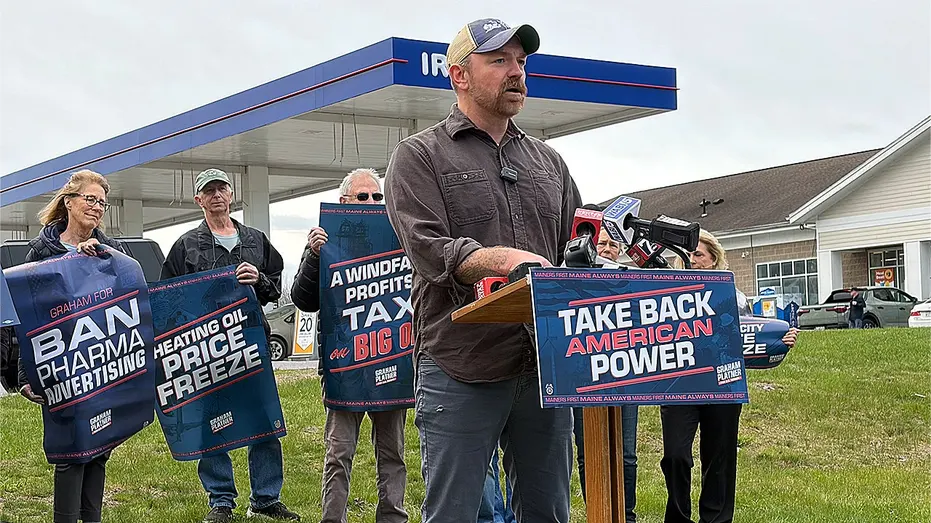
SouthernWorldwide.com – Maine Democratic Senate candidate Graham Platner has cultivated a national image as a fervent opponent of corporate influence. However, campaign finance records reveal a different narrative, showing he has accepted substantial contributions from lobbyists and executives who represent the very corporations he publicly criticizes.
These donations, it is noted, were made by individuals personally, not directly by the corporations themselves.
Platner has been vocal about his commitment to reforming the healthcare system. He posted on X on March 24, stating, “Our new ad speaks to one of the most urgent issues I hear on the campaign trail: our healthcare system is collapsing.” He further elaborated in a campaign ad, promising to confront the pharmaceutical industry if elected, declaring, “We should shut down Big Pharma, not our hospitals.”
Adding to this stance, the Senate hopeful signed a pledge on March 25. This pledge committed him “to put patients over profits” by rejecting “contributions over $200 from the executives, lobbyists, and PACs affiliated with the corporate health care industry, including private insurers, pharma corporations, and private hospitals who are organizing to take over our health care system.”
Despite this commitment, records indicate that several months prior to his pledge, Platner accepted a $1,000 donation. This contribution came from a lobbyist at Cornerstone Government Affairs who was actively lobbying for AbbVie, a major pharmaceutical company. Furthermore, shortly after his prominent post on X, Platner received another $1,000 from a lobbyist at Brownstein, a firm representing prominent drug manufacturers like Novartis and Moderna.
Platner has also been critical of his opponent, Senator Susan Collins, for attending events he described as “literally funded by Big Pharma.” Ironically, Platner himself later attended a coffee fundraising event organized by healthcare lobbyists.
Academic research supports the notion that such contributions can influence policy. Studies have found evidence suggesting that donations to members of Congress can increase access to their offices, implying that lobbyist donations are often motivated by a desire to shape legislative outcomes.
Defense contractors have also been a significant target of Platner’s anti-corporate rhetoric on the campaign trail.
His campaign page explicitly accuses defense contractors of perpetuating “massive waste in procurement” and engaging in “war profiteering.”
The campaign website further states, “We need to take the funds currently paying for mansions in Virginia and Maryland for defense contractors, and reinvest them into closing the massive shipbuilding gap.”
However, campaign finance and lobbying records present a conflicting picture. These documents show that Platner has accepted thousands of dollars from lobbyists who represent major defense contractors, including prominent companies such as RTX, Boeing, and Anduril.
Regarding the banking sector, Platner has criticized Senator Collins for allegedly prioritizing the interests of large banks over those of her constituents. Simultaneously, he has accepted donations from lobbyists representing financial giants like UBS, Visa, and Citigroup, and has also received contributions from a Bank of America executive.
On the subject of technology, Platner has pledged to dismantle large tech firms like Amazon and Google. He has also vowed to “come after” Jeff Bezos to ensure he contributes more in taxes. Despite these strong statements, Platner has accepted contributions from lobbyists representing Blue Origin, a space technology company founded by Bezos, as well as individuals working for Amazon, Google, and Salesforce.
It is important to note that the lobbyists from the banking, tech, pharmaceutical, and defense industries who donated to Platner all work for third-party lobbying firms. These firms are contracted by major corporations to represent their interests in Washington D.C. For instance, Google, as a company, does not exert control over the political donations made by these third-party lobbyists using their personal funds.
Similarly, large corporations generally do not dictate the political contributions made by their executives using their personal finances.
Beyond accepting funds from individual lobbyists, Platner has also received donations from executives and partners associated with multiple lobbying firms.
For example, a partner at Forbes Tate, a firm representing clients such as AMD, Amgen, AstraZeneca, Blackstone, Eli Lilly and Co., General Atomics, and PhRMA, contributed $1,000 to Platner’s campaign at the end of March. These are all industries that Platner has been critical of.
He also received $2,350 from senior leadership at Pioneer Public Affairs, a firm that represents the tech company LG and various energy interests. Furthermore, he accepted thousands of dollars from executives at the Sony Group Corporation.
While Senator Collins also benefits from considerable support from corporate lobbyists, PACs, and executives, she has not adopted the same level of vocal criticism against corporations that Platner has. The current campaign finance records only extend up to March, suggesting that Platner may have accepted even more financial support from lobbyists and executives than publicly available documents currently indicate.