SouthernWorldwide.com – A new wheeled robot named Stretch 4 from Hello Robot is poised to enter homes before many humanoid robots are ready for everyday use. This innovative robot takes a different approach by rolling instead of walking.
While the idea of a rolling robot might initially seem less exciting than a walking humanoid, wheels may prove more practical for navigating the complexities of a real home. Homes are filled with obstacles such as rugs, cords, pets, narrow hallways, tight corners, and furniture that often obstruct movement.
A robot capable of carefully maneuvering through these challenges and reaching for objects could ultimately be more helpful than one that simply looks impressive in a social media video.
HOME ROBOT AUTOMATES HOUSEHOLD CHORES LIKE ROSIE FROM ‘THE JETSONS’
Stretch 4 prioritizes safe movement, effective reaching, and practical assistance within homes and workplaces. This focus could position it as one of the more realistic options for developing a robot that genuinely aids people in their living spaces.
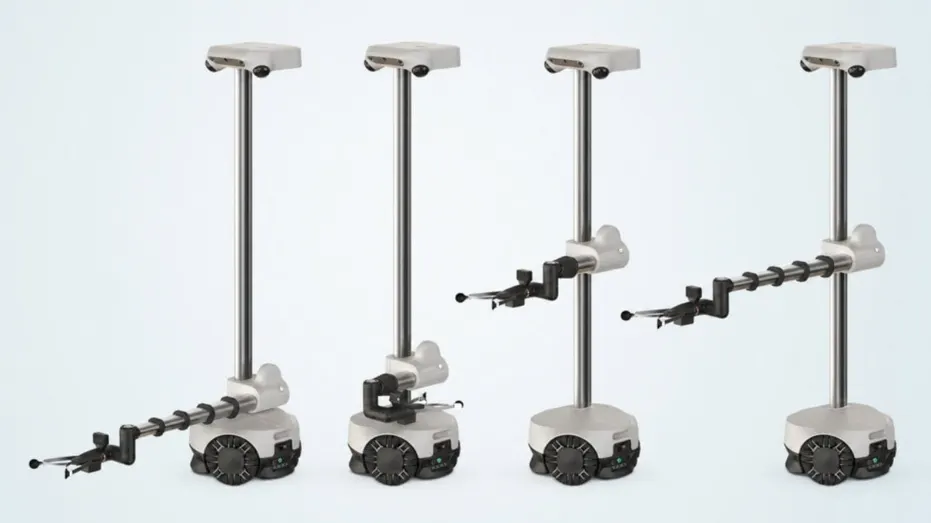
Stretch 4 is designed as a mobile robot specifically for indoor assistance. Its appearance is more akin to a slender, rolling assistant rather than a humanoid robot, a deliberate design choice. The robot features a wheeled base, a lifting column, and an arm capable of reaching for objects. It is equipped with tools for mapping, navigation, self-charging, and demonstrations of Vision-Language Model (VLM) grasping.
Hello Robot describes Stretch 4 as calibrated, portable, and deployable. However, its technical specifications indicate that it is currently intended for research, development, and laboratory use. Researchers and enterprise clients can purchase it now, and the company also plans to conduct pilot deployments in real homes. This real-world testing is crucial, as a staged demonstration can look impressive online, but a hallway with a rug, a laundry basket, and a dog presents a much more rigorous test.
HUMANOID ROBOTS ARE GETTING SMALLER, SAFER AND CLOSER
Humanoid robots garner significant attention due to their familiar, human-like appearance, making it easy to envision a machine moving around the house like a person. However, the addition of legs introduces inherent risks and complexities.
A bipedal robot must maintain balance, manage numerous moving parts, and constantly avoid falling near people, furniture, and pets. Stretch 4 opts for a simpler, more stable approach by utilizing wheels.
This choice makes logical sense for many homes, particularly those adapted for individuals with mobility challenges. If a person already uses a wheelchair, their home environment is likely already well-suited for a rolling robot. Therefore, the fundamental question arises: why design a robot to walk when rolling serves the purpose more effectively?
WHEELED WONDER ROBOT DOG SHOWS OFF CRAZY DANCE MOVES IN ALL KINDS OF TOUGH TERRAIN
One of the most significant advancements in Stretch 4 is its omnidirectional base. This feature allows the robot to move in any direction without needing to turn first, which can be a substantial advantage in confined spaces.
Consider a robot attempting to navigate near a bed, chair, kitchen island, or wheelchair. A machine capable of sliding sideways would be easier to control and potentially safer to position.
Hello Robot dedicated several months to developing this new base, incorporating advanced omnidirectional wheel technology derived from powered wheelchairs. This connection aligns perfectly with the robot’s mission, as a home assistive robot should draw inspiration from designs that already enhance human mobility.
THE NEW ROBOT THAT COULD MAKE CHORES A THING OF THE PAST
Stretch 4 also features an upgraded sensor array. While earlier versions had a smaller, movable head, Stretch 4 now employs lidar and cameras with a broader field of view. Additionally, it includes a wrist-mounted depth camera to assist with reaching and grasping tasks. These sensors enable the robot to better understand its surroundings, avoid obstacles, and handle objects with greater precision.
Hello Robot appears to be prioritizing richer sensor data over a more basic camera-only setup. This approach could lead to safer operation in dynamic home environments where conditions change constantly. A cord might lie across the floor, a rug could bunch up, or a threshold might present an obstacle. An effective home robot needs the visual acuity to react appropriately to such variations.
While Stretch 4 incorporates autonomous capabilities, Hello Robot maintains a human element in its operation. This can involve direct human control or a scenario where a person supervises while the robot handles specific actions independently. This blended approach seems particularly realistic for home care applications.
Fully autonomous home robots still face significant hurdles. Homes are inherently personal, unpredictable, and often cluttered environments. Furthermore, people require time to build trust in a machine that operates in close proximity to them daily. With Stretch 4, human involvement remains possible, which could enhance safety and practicality during initial home use.
Stretch 4 may find its most impactful early applications among individuals with severe mobility impairments. This is precisely where a home assistive robot can offer substantial value. For someone with limited movement, picking up a dropped item can become a considerable challenge, as can moving an object across a room or reaching for something on a shelf. These seemingly small tasks can have a profound impact on a person’s independence.
Hello Robot has collaborated with Henry Evans, an individual who is paralyzed and unable to speak. Evans utilizes a computer to control robots and has spent years testing assistive robots in his home. His perspective cuts through the hype: for someone who cannot walk, a robot with legs may offer minimal benefit, whereas a stable wheeled robot could perform the necessary tasks more effectively.
Safety is likely to be a deciding factor in which robots ultimately find their way into our homes. A robot operating in a factory environment functions within a controlled space. In contrast, a robot within a home operates in close proximity to people, pets, furniture, and potentially medical equipment, significantly raising the stakes.
Stretch 4 is equipped with safety features such as force limiting, collision avoidance, tilt avoidance, and a dedicated emergency stop button. A humanoid robot faces a more complex challenge; if it loses balance or stops abruptly, it could fall, posing a genuine concern for older adults, caregivers, and individuals who cannot move quickly.
This inherent risk might explain why a less ostentatious robot could reach homes sooner. A robot that provides safe assistance is ultimately more valuable than one that merely looks impressive in a video.
Stretch 4 is priced at $29,950, a considerable sum, especially when considering its potential application in the average home. However, this current iteration is not yet targeted at the general consumer market.
Hello Robot states that Stretch 4 is currently certified only for laboratory and research use, as the company works towards obtaining additional certifications. The company also notes that certain purchases may be subject to restrictions under the DoD 1260H designation, depending on the source of government funds used.
For the time being, Stretch 4 is more likely to attract researchers, care organizations, and pilot programs interested in exploring the practical capabilities of a wheeled robot.
BERKELEY LAUNCHES A LIGHTWEIGHT OPEN-SOURCE HUMANOID ROBOT
These initial deployments could provide Hello Robot with valuable insights to refine the system before a future version becomes available for home use.
The first truly effective home robot may not resemble a human at all. It might roll into the room, utilize a single arm, and appear more like a tool than a character from a cartoon. This unconventional appearance could prove to be advantageous.
A home assistive robot should be capable of performing practical tasks, moving safely, reaching with precision, and operating within the existing spaces that people use.
For families caring for individuals with limited mobility, this could be transformative. A robot that assists someone in retrieving an object or completing a simple task can significantly enhance their independence at home.
For the rest of us, Stretch 4 serves as a reminder that the first truly useful home robot might not be the one that most closely resembles a human. It may be the one that can safely assist with the small, everyday tasks that make life easier.
Stretch 4 may not win any beauty contests among robots, nor will it walk through your house like a person. It will not resemble the humanoid robots dominating social media feeds. Yet, it might be closer to what you actually need. Hello Robot appears to be focused on a more pragmatic goal: to build a robot that can provide safe assistance within real homes. While this might sound less sensational than a humanoid helper, it could hold far greater significance for someone requiring daily support. And if Stretch 4 proves its worth in homes, companies developing humanoid robots may face a more challenging question.
Would you prefer a robot that looks human, or one that can safely assist you at home? Let us know by writing to us at Cyberguy.com