SouthernWorldwide.com – You might be accustomed to observing empty robotaxis navigate city streets, a driverless vehicle on its own mission. These autonomous cars sometimes head to pick up passengers, while at other times, they embark on “deadhead miles”—empty journeys back to distant depots for cleaning, charging, or maintenance before their next fare. This period of driving without a paying passenger consumes time, energy, and road space inefficiently.
A startup from Redwood City, California, named Aseon Labs, is proposing a solution to bring these service depots closer to the robotaxis themselves. They are developing robotic service pods, roughly the size of a parking space, designed to clean, charge, inspect, and reset these driverless vehicles in proximity to where riders actually need them. While Aseon refers to these as modular “reset pods,” their appearance near parking lots, gas stations, or busy streets might lead many to perceive them as compact, automated pit stops for robotaxis.
This innovative concept has the potential to significantly reduce wasted mileage and ensure driverless cars remain operational. However, it also sparks a crucial debate for urban planning and neighborhood integration: determining the optimal locations for these substantial service units.
ZOOX ROBOTAXI REDESIGN BRINGS BIG RIDER UPGRADES
Free live CyberGuy class: Sick of Spam? Join us July 22
Don’t miss out on a free CyberGuy Live class on Wednesday, July 22, at 1 p.m. ET, dedicated to helping you combat robocalls, spam texts, junk email, and other unsolicited messages. Kurt “CyberGuy” Knutsson will provide step-by-step guidance on simple methods to filter spam, declutter your inbox, and identify messages that could compromise your personal information. No prior technical expertise is required. Attendees will also receive a valuable spam-stopping checklist, and all registrants will gain access to a recording of the class.
Secure your complimentary spot today by visiting CyberGuyLive.com.
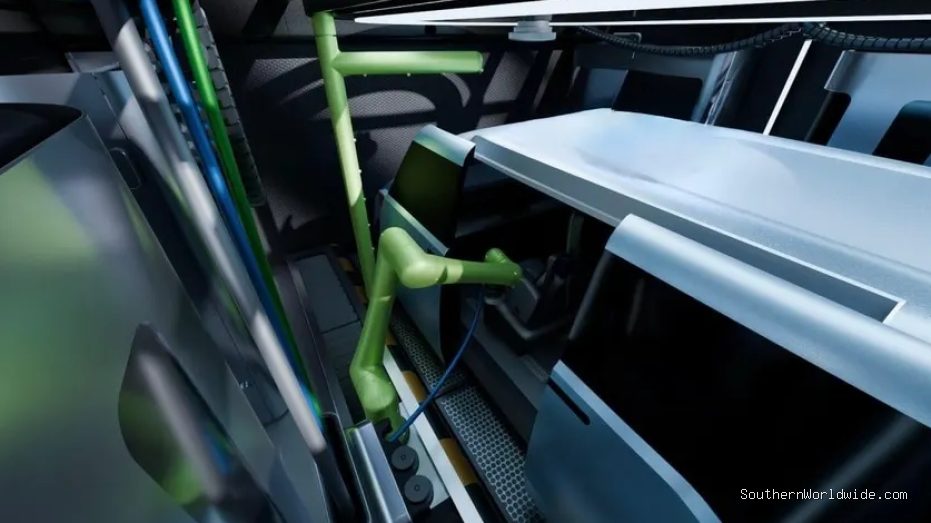
Aseon Labs envisions its system as a self-contained “depot in a box” specifically for self-driving cars. Rather than routing robotaxis back to large, centralized depots often situated away from bustling urban cores, the company aims to deploy smaller, automated pods in locations nearer to where passengers require rides. These pods, comparable in size to a standard parking space, are engineered to perform vehicle inspections, interior cleaning, and charging for robotaxis between fares. Aseon also highlights the pods’ capability to manage vehicle reset operations, data synchronization, recalibration, and the handling of lost and found items.
Imagine these pods as compact service stations for autonomous fleets. A robotaxi would pull in, the pod would conduct a swift inspection, and prepare the vehicle for its next assignment. This could dramatically alter the economics for robotaxi companies. A vehicle idle at a depot is not generating revenue, and a car traveling empty across town represents a similar financial loss.
Robotaxi operators grapple with a complex financial equation: vehicles must remain on the road during periods of high demand. Yet, each vehicle requires regular cleaning, charging, and inspection. Currently, much of this essential maintenance occurs at depots, which are often located in areas with lower real estate costs, typically outside dense city centers.
Aseon estimates that fleets might travel between 10 to 15 miles each way to reach these centralized depots. This can transform a routine vehicle reset into a lengthy, empty journey precisely when the car could be serving a waiting customer. The company’s objective is to position these service pods within approximately one mile of robotaxi operational zones. If successful, Aseon projects that servicing could be up to 15 times closer to rider waiting areas.
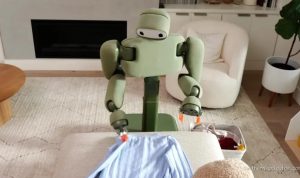
Aseon’s pods utilize advanced camera systems for robotaxi inspections. Robotic arms are employed for interior cleaning and to retrieve any misplaced items from the cabin. A key feature of the company’s design is the portability of these pods, allowing for relocation if a particular site proves less effective, thereby avoiding the commitment to a permanent, fixed facility.
According to Aseon, each reset pod is engineered to fit within a single parking space and requires no permanent construction. The company also states that the pods can be transported via flatbed truck and become operational within 24 hours. Initial deployments are anticipated to have on-site staff, with a long-term goal of achieving a more autonomous operational model.
The pods are designed to connect to existing power infrastructure through collaborations with electric vehicle charging companies. Depending on the location, they can also utilize mobile power sources, such as propane generators. Aseon further notes that the pods can integrate with existing DC fast-charging networks, potentially increasing the utilization of underused charging stations.
This adaptability is advantageous for widespread deployment. However, it also introduces potential concerns for local residents, urban planners, and business owners.
If these robotaxi service points begin appearing in U.S. cities, they will undoubtedly draw attention. A passerby might wonder about their purpose: Is it a charging station? Is it recording data? Is it occupying valuable parking space? Is it encroaching on curb space already contested by delivery drivers, cyclists, or neighboring businesses?
These questions are significant. Urban curb space has become one of the most fiercely debated areas in contemporary transportation. Ride-hailing services, delivery vehicles, bicycle lanes, outdoor dining areas, electric vehicle chargers, and public transit all vie for limited street access.
Now, consider the addition of automated robotaxi service units to this complex urban landscape. Even if these pods help reduce empty travel, cities will need to establish clear guidelines for their placement. A parking lot might be a more suitable location than a residential block, and a commercial corridor could be more appropriate than a narrow street. In some areas, the deployment of these pods may simply not be feasible.
Aseon characterizes its pods as temporary structures, a designation that could streamline the permitting process and facilitate their relocation. Nevertheless, “temporary” does not equate to being unnoticeable. If a pod occupies a parking space for an extended period, local residents may focus on the immediate loss of space rather than its potential for future relocation.
WAYMO RECALLS ROBOTAXIS OVER CONSTRUCTION-ZONE RISK
Local governments will likely face the challenge of balancing competing interests. A pod could reduce instances of empty robotaxi trips, potentially alleviating congestion caused by vehicles returning to remote depots. Conversely, the pod itself introduces a new element of street infrastructure, necessitating municipal regulations concerning its placement, noise levels, power consumption, aesthetic impact, and proximity to residential or commercial properties.
A commendable aspect of Aseon’s strategy is its acknowledgment that the pod cannot address every service requirement. The company states that its system can employ computer vision and artificial intelligence to identify situations necessitating human intervention. For instance, if a camera detects a chocolate stain on a seat, the robotic arm might refrain from cleaning it to avoid exacerbating the stain.
In such scenarios, the vehicle would be directed to a central depot where a human technician could handle the issue. This highlights the current limitations of the technology: while robotaxis are driverless, their operational support system still relies on human oversight and judgment.
Aseon Labs has successfully secured $10 million in seed funding and is in the process of building five prototypes, indicating an early-stage development phase rather than widespread deployment. The company has not yet publicly announced any confirmed robotaxi customers. However, Aseon is actively engaged in discussions with autonomous vehicle operators, electric vehicle charging network providers, and commercial real estate partners, with initial pilot deployments reportedly in development.
The business model itself is a significant factor. Aseon intends to manage the deployment, maintenance, and daily operations of these pods, rather than simply selling them. This approach could simplify the expansion of service points for robotaxi companies, eliminating the need for them to establish their own extensive depot networks across cities.
While these automated service boxes are not expected to materialize on every street corner imminently, Aseon’s ambition extends far beyond a few test units. The company envisions deploying thousands of these reset pods across major metropolitan areas, strategically positioned to maintain robotaxi operational efficiency without requiring lengthy returns to distant depots.
As robotaxi services expand in your vicinity, you may not only observe an increase in driverless vehicles but also the underlying infrastructure that supports their continuous operation. This could manifest as automated pods situated near shopping centers, transit hubs, parking facilities, or active pickup zones.
For passengers, this could translate to cleaner vehicles and reduced waiting times. For cities, it might mean fewer instances of empty vehicles traveling back to remote maintenance facilities.
However, for local residents, the implications could be perceived differently. Questions may arise about why robotaxi companies are granted curb access when parking is already at a premium. Clear information regarding camera usage, noise pollution, and the duration of pod occupancy in a specific location will likely be sought.
The appeal of this concept for robotaxi companies is evident: if a driverless car can be serviced and recharged closer to passengers, it minimizes unproductive travel time across town. Nevertheless, significant public resistance is also anticipated. The challenges of finding parking in congested urban areas are well-known, and the prospect of a large automated service unit occupying space near homes, offices, or popular establishments could be met with opposition. This does not necessarily invalidate the idea, but it underscores the critical need for cities to exercise caution before allocating valuable public space to robotaxi support infrastructure. Aseon asserts that its reset pods can reduce costs, minimize downtime, and keep driverless cars readily available to riders. While these benefits are compelling, the fundamental question of who determines the placement of these units remains central to their successful integration.
Would you be amenable to a robotaxi pit stop on your street if it contributed to reducing the number of empty driverless cars traversing your city? Share your thoughts by contacting us at Cyberguy.com.