SouthernWorldwide.com – An old smartphone gathering dust in a drawer might have more potential than initially perceived. While one might see a depleted battery, an outdated camera, or a screen no longer deemed valuable, Google and researchers at the University of California San Diego see something else entirely: a compact computing device with residual processing power.
This innovative concept is known as phone cluster computing. Instead of classifying retired smartphones as electronic waste, researchers are extracting their motherboards and repurposing them as components within a low-carbon computing system.
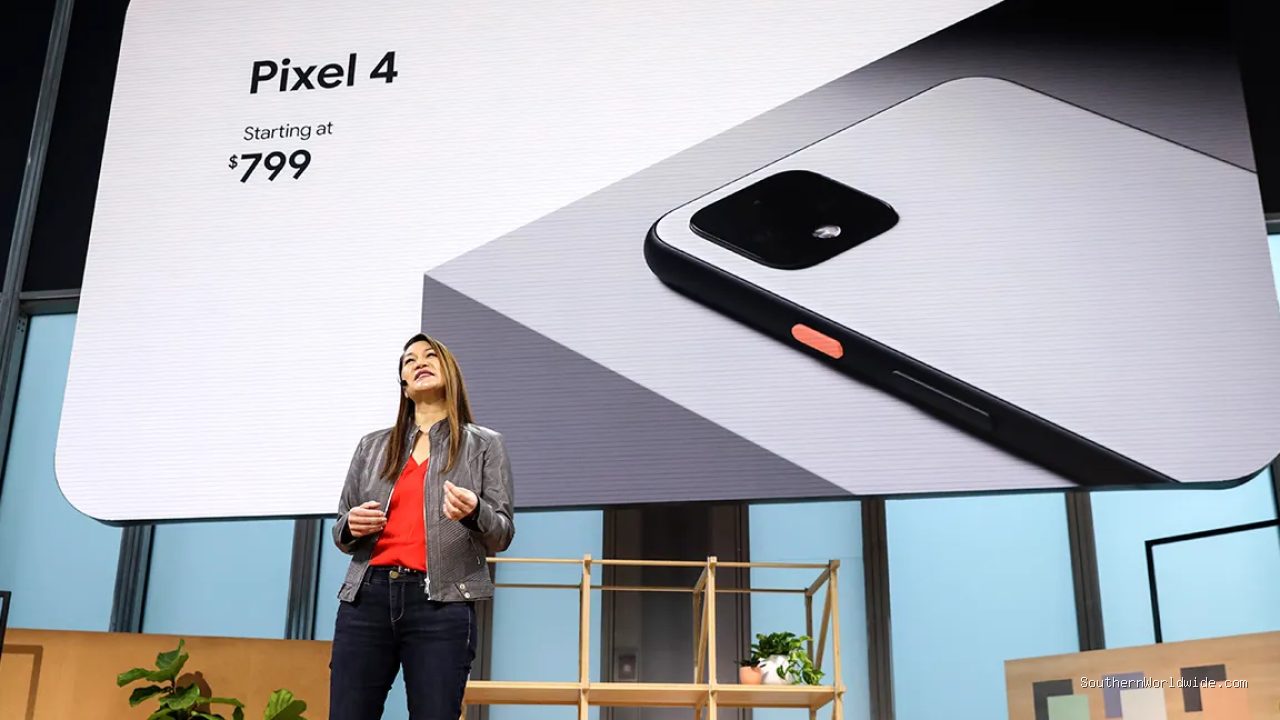
Google has indicated that UC San Diego is planning to establish a data center constructed from 2,000 Pixel smartphones, with an anticipated launch in the fall of 2026. The primary objective is to offer affordable cloud computing services to students and researchers, thereby diminishing the reliance on newly manufactured server hardware.
Consequently, the next phase for an old phone might not be its placement in a junk drawer, but rather its integration into a server rack.
Phone cluster computing involves repurposing retired smartphones by transforming their core hardware into a functional computing platform. The process commences with the disassembly of each phone down to its motherboard, which houses the processor, memory, and storage components. Parts such as the display, battery, cameras, and chassis are then removed.
This step is crucial because a complete smartphone is not suitable for deployment within a data center. Batteries can pose safety risks, and screens and cameras occupy unnecessary space. The motherboard, however, retains its significant computing value.
Following the extraction of the motherboard, researchers install a general-purpose Linux operating system. While Android itself is built upon Linux at its core, it is optimized for mobile applications and personal devices. A data center environment, conversely, requires a more adaptable system to handle cloud workloads effectively.
Subsequently, these phone motherboards can be organized into clusters, where numerous small boards collaborate to function as a collective of miniature servers.
The rapid advancement of artificial intelligence has led to an immense demand for computing power. Data centers require an increasing supply of chips, electricity, and cooling systems. Concurrently, billions of smartphones become obsolete worldwide each year.
This Google-backed initiative offers a novel perspective by exploring the possibility of deriving useful computing capabilities from hardware that has already been manufactured.
The project places a strong emphasis on embodied carbon, which refers to the emissions generated throughout a device’s lifecycle, from mining and manufacturing to shipping. These processes contribute significantly to its overall carbon footprint.
By reusing an existing phone motherboard, the project aims to mitigate some of the environmental impact associated with the production of new hardware. Google estimates that motherboards account for approximately half of a phone’s embodied carbon, making them the most valuable component to salvage.
It is important to note that simply connecting a collection of old phones to a rack does not automatically create a functional data center. The process necessitates meticulous disassembly, the implementation of new software, and a robust system for managing multiple boards simultaneously.
Google explains that the project utilizes containerized applications managed by Kubernetes, a system designed to orchestrate and coordinate tasks across a multitude of devices.
The phones are arranged into self-managing clusters, each comprising roughly 25 to 50 boards. Every board operates as an independent Linux machine, and collectively, they are capable of executing tasks that would typically be handled by traditional cloud servers.
While a single phone board cannot replicate the capabilities of a full-fledged server, which possesses significantly more processing cores, memory, and data center-grade hardware, it still offers sufficient resources for certain applications. Phone boards have fewer resources and stricter limitations. However, some computational tasks do not require immense processing power; they merely need enough capacity to run efficiently without wasting resources.
The technical viability of this approach is more robust than one might initially assume. Google asserts that the single-threaded performance of modern smartphone cores can rival or even surpass the per-core performance of some contemporary multicore servers.
In a comparative analysis, a 2023 Pixel Fold was benchmarked against an ASUS RS720A-E11 server using SPEC benchmarks. The Pixel Fold’s performance cores demonstrated superior results in numerous tests compared to the data center server’s core performance.
However, there is a crucial caveat: a smartphone board has a more limited memory capacity and fewer processing cores. It also lacks the advanced management tools and the robust hardware durability characteristic of servers.
Therefore, the project requires careful selection of appropriate workloads. UC San Diego is initially focusing on educational and research computing, which aligns well with the capabilities of smaller cloud instances often used for classroom tasks.
Google reports that early experiments indicated a 20-phone cluster could effectively support the peak submission rates for a class comprising over 75 students. Furthermore, the grading latency observed was lower than that of the default AWS backend used in the comparison.
UC San Diego plans to leverage the 2,000-phone cluster to support computer science courses and various research workloads. Google estimates that this deployment could accommodate approximately 100 classes concurrently.
The system is also described as providing computing power roughly equivalent to 50 servers, but at a significantly reduced cost compared to traditional solutions.
For academic institutions, this could represent a substantial financial advantage. Cloud computing expenses can escalate rapidly, particularly when a large number of students submit assignments simultaneously.
If a repurposed phone cluster can manage a portion of this workload, educational institutions may realize cost savings while simultaneously decreasing the demand for newly manufactured servers.
This initiative also presents researchers with an opportunity to evaluate phone-based computing at a larger scale. While a small laboratory demonstration might appear promising, a deployment involving 2,000 boards will provide more comprehensive insights into reliability, maintenance, and day-to-day performance.
While phone cluster computing shows considerable promise, it still faces significant hurdles to overcome. A smartphone is designed for personal use, not for continuous operation within a data center environment.
Data center servers are engineered for longevity, equipped with efficient cooling systems, rapid repair capabilities, and constant monitoring. Phone motherboards, on the other hand, originate from devices intended for everyday portability, such as pockets, backpacks, and kitchen counters.
This fundamental difference raises several critical questions. The motherboards might experience a higher rate of failure than anticipated. Additionally, cooling could become a challenge when thousands of small processors operate in close proximity.
Moreover, the labor involved in safely dismantling phones to extract batteries, screens, and other components before reusing the motherboards presents another consideration. Ultimately, cost will be the decisive factor.
If the expenses associated with disassembly, maintenance, and replacement become prohibitively high, this innovative concept may remain confined to the research laboratory.
Phone clusters will not be capable of replacing the powerful GPU systems essential for advanced AI training. Their suitability lies in managing smaller cloud tasks, educational tools, and research activities that fall within the operational limits of smartphone hardware.
Despite these limitations, there remains a substantial amount of useful work that can be accomplished. After all, not every cloud-based task necessitates the latest cutting-edge processor.
The global e-waste problem is escalating rapidly. Projections from the Global E-waste Monitor indicate that electronic waste could reach 82 million tonnes by 2030, while formal collection and recycling rates are expected to decline to 20%.
Old phones constitute a significant portion of this issue, as many are never properly recycled. They often end up forgotten in drawers, closets, or discarded with their valuable internal components still intact.
Even when a phone no longer seems useful to its owner, its processor, memory, and storage may still possess the capacity for further tasks.
This research does not suggest that old phones should be indiscriminately donated or discarded without proper precautions. Before recycling, donating, trading in, or selling an old phone, it is imperative to safeguard personal data.
Users should back up any information they wish to retain, then sign out of all accounts and securely erase the device.
Consider utilizing trade-in programs, certified refurbishers, or reputable electronics recycling initiatives. If a phone remains functional, purchasing refurbished devices can also extend their lifespan.
The key principle is to prevent old devices from becoming obsolete and forgotten. A phone languishing in a drawer provides no benefit to anyone.
The old phone residing in your drawer may possess more utility than it appears. Even if its battery is diminished or its camera feels outdated, the processor within might still hold significant value.
While it is unlikely that individuals will be sending their old phones directly to Google data centers in the immediate future, this project highlights a broader shift in how retired technology is perceived.
Instead of immediately recycling every old device or allowing it to accumulate dust, companies, educational institutions, and researchers may discover more intelligent methods for reusing components that are still functional.
There is also a valuable financial lesson embedded within this concept. If a current phone is performing adequately, there may be no immediate need to upgrade solely because a newer model has been released.
Opting for a battery replacement, a trade-in, or a refurbished device could result in cost savings while extending the operational life of perfectly good hardware.
Google and UC San Diego are currently exploring methods to transform retired Pixel phone motherboards into a low-carbon cloud computing platform. This initiative has the potential to grant old smartphones a second life while simultaneously reducing the demand for newly manufactured servers.
This is particularly significant as AI data centers continue to require escalating levels of computing power and electricity. The inaugural large-scale test is scheduled for the fall of 2026, involving a 2,000-phone data center at UC San Diego.
If successful, this cluster could provide support for students and researchers at a lower cost than conventional cloud infrastructure. However, this concept must first demonstrate its ability to withstand the rigors of daily operation.
Factors such as reliability, cooling efficiency, the labor involved in disassembly, and ongoing maintenance will ultimately determine whether phone cluster computing can evolve beyond its current research phase.
The most relatable aspect of this innovation lies in the common experience of having an old phone stored away. That forgotten device may seem obsolete, yet its processor might still possess sufficient power to contribute to cloud computing tasks.
Perhaps the future of computing will commence with the hardware that we have already overlooked.