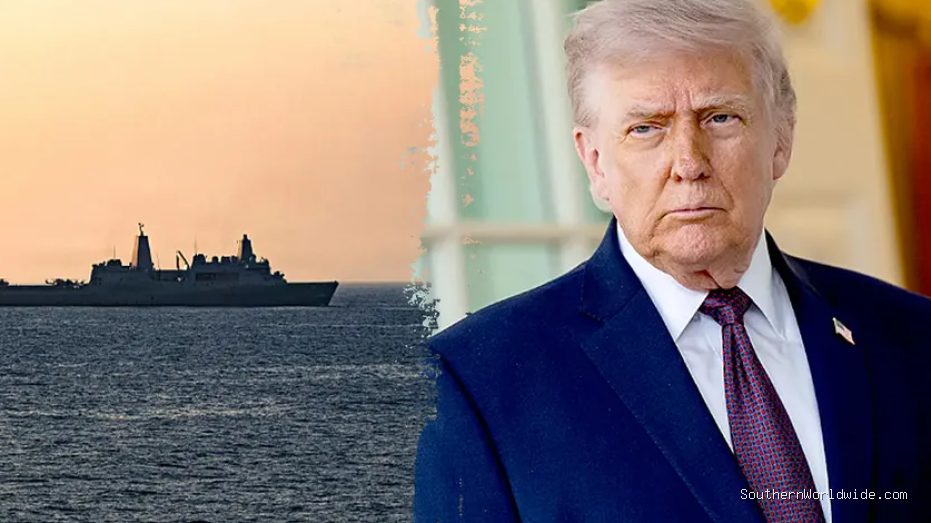
SouthernWorldwide.com – President Donald Trump has presented the recently signed Iran memorandum of understanding (MOU) as a significant achievement, claiming it normalizes relations between the two nations after a period of conflict.
However, according to the White House’s own statements, the agreement resolves only a fraction of the issues that were central to months of negotiations. Key matters such as sanctions relief, the release of frozen assets, and Iran’s nuclear program have been deferred to a subsequent round of talks.
“This is really just the first MOU and then we’re going to launch into the real technical discussions later this week,” a senior administration official informed reporters on Monday.
The memorandum, which was digitally signed by Trump and Vice President JD Vance on Sunday, initiates a 60-day period dedicated to technical discussions aimed at reaching a final agreement. A formal signing ceremony involving U.S. and Iranian officials, along with Pakistani and Qatari mediators, is scheduled for Friday. Nevertheless, even administration officials concede that the memorandum leaves many of the most contentious points unresolved.
“We’ll know over the next two to three weeks whether those understandings will turn into an actual agreement,” a senior administration official stated.
Nate Swanson, a former senior advisor on Iran policy for multiple administrations and now a senior fellow at the Atlantic Council, indicated that the memorandum appears to postpone rather than settle disputes concerning sanctions relief, Iran’s nuclear ambitions, and the future status of the Strait of Hormuz.
“It does not appear to resolve the core issues surrounding the mechanics of the Strait of Hormuz, Iranian nuclear concessions, or Iranian financial incentives and sanctions relief,” Swanson elaborated in an analysis published by the Atlantic Council.
This observation is particularly noteworthy given that U.S. and Iranian officials have been engaged in negotiations since the April ceasefire and had already announced a signed memorandum and an upcoming ceremony.
The President expressed optimism regarding the prospects of a final deal.
“I think it’s going to happen, fairly on time, but we’ve been both involved. I think they’re going to want to get it done. Iran wants to get it done. They have to get back to business. And the relationship is now normalized,” Trump commented during the G7 Summit held in Évian-les-Bains, France.
The administration has not yet publicly disclosed the text of the memorandum. However, officials have indicated that many of the issues that have been the focus of months of negotiations remain subject to future discussions. These include sanctions relief, frozen Iranian assets, and the fate of Iran’s existing stockpiles of enriched uranium.
“Here’s what it says: Iran will never have a nuclear weapon. That’s what it says. It won’t have one to buy, to develop. They will not have a nuclear weapon,” Trump stated to reporters on Tuesday.
Administration officials had announced on Monday that the text of the agreement would be released on either Tuesday or Wednesday.
Regarding what is perhaps the most contentious issue, White House officials insisted on Monday that no frozen Iranian assets have been released. This assertion contradicts reports from Iranian state-affiliated media suggesting that Iran could gain access to approximately $24 billion in blocked funds during the negotiation period.
“The very simple fact is, $0 of unfrozen assets have been released by the United States or any other country.”
The administration also confirmed that it will maintain its current military deployment in the region throughout the negotiations. This stance is contrary to Iranian accounts that suggest the framework includes provisions for a future reduction in U.S. forces in the vicinity of Iran.
“The plan is to keep the current force posture during the 60-day negotiations.”
Officials consistently emphasized that any concessions would be contingent upon verification rather than mere assurances.
“We’re still at the early phases where we’re building trust.”
“This memorandum does not mean trusting the enemy; it has been written with active distrust,” stated Iranian deputy foreign minister Kazem Gharibabadi, as reported by Iran’s state-affiliated Mehr News. “We will monitor the implementation of US commitments.”
The most immediate and discernible impact of the agreement appears to be the reopening of the Strait of Hormuz. This vital waterway facilitates approximately one-fifth of the world’s oil and liquefied natural gas shipments. Both sides have committed to maintaining the ceasefire while negotiations proceed. Oil prices experienced a decline to their lowest levels in three months following the agreement to lift the blockade and reopen the strait.
Administration officials repeatedly characterized the memorandum as a foundational framework that could potentially lead to sanctions relief, economic normalization, and a comprehensive resolution of Iran’s nuclear program, provided that negotiators can finalize a deal in the coming weeks.
“Nothing is on the table if it doesn’t come along with real performance.”
Iranian state-affiliated media outlets have described the framework as already encompassing commitments related to sanctions relief, access to roughly $24 billion in frozen assets, future reductions in U.S. military presence in the region, and a $300 billion reconstruction program. However, the White House has refuted key aspects of this portrayal.
“We don’t pay them — there was some statement. We’re going to spend $300 billion. No, we’re allowed to go and invest if we wanted to. Someday, in the future. We have no obligation whatsoever,” Trump remarked during the G7 Summit.
The conflicting descriptions highlight the significant number of unresolved issues.
“There will likely be a significant delta between the aspirations outlined in the MOU and what emerges in a final deal,” Swanson observed.
Some Republican members of Congress have already voiced concerns about potential discrepancies in the understanding of the agreement between Washington and Tehran.
“I think we’d all like to see the terms of the memorandum and hopefully end up with a real deal,” Senator Rick Scott of Florida told reporters on Capitol Hill on Tuesday.
“I don’t think there’s anybody in Congress that’s ever gonna support giving money to them,” he added.
“They ought pay for what it cost us to do this to bring them to their senses to stop killing us … I want to get reimbursed for the money we’ve had to spend to bring them to their senses. They’ve got plenty of oil, they can rebuild their own country.”
“I am pleased to hear the memorandum of understanding with Iran to allow the Strait of Hormuz to open has been agreed to. I will be watching closely the ensuing negotiations regarding Iran’s nuclear program and other matters. I am somewhat concerned that Iran’s view of the agreement seems different than what the American negotiating team is claiming.”