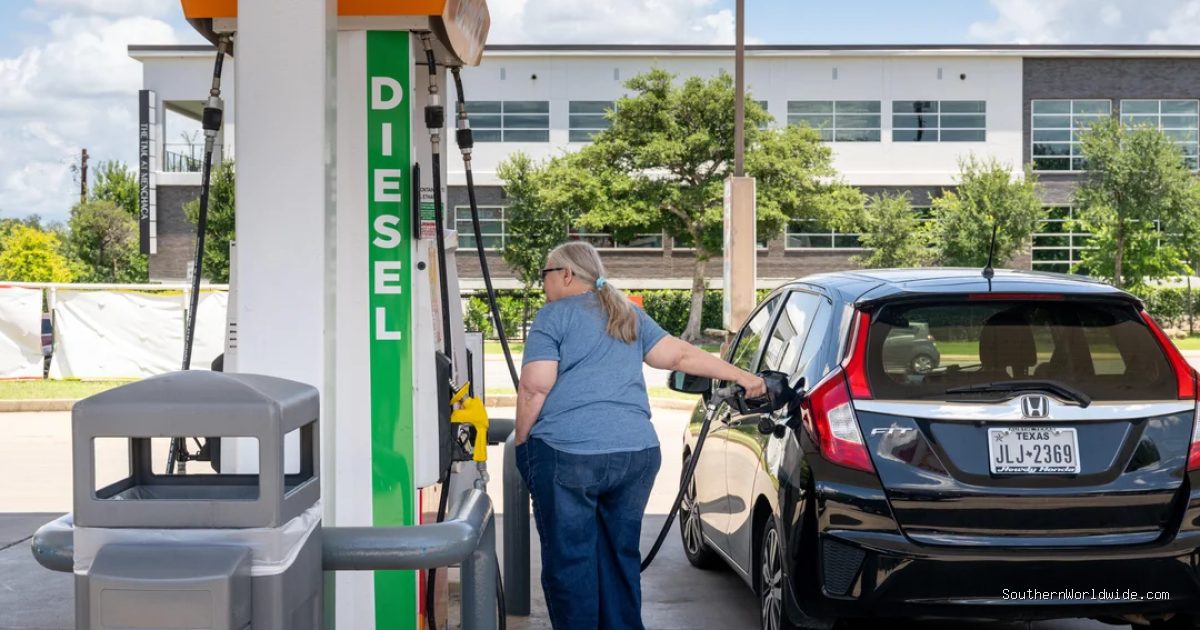
SouthernWorldwide.com – U.S. gasoline prices have dropped below $4 per gallon for the first time in nearly three months.
The national average price reached $3.99 on Thursday, marking the lowest point since March 30, according to AAA. This decrease follows a surge in prices that occurred as global oil costs escalated due to the conflict in Iran.
While gas prices remain over a dollar higher than before the war began, they have shown a downward trend in recent weeks. This is attributed to falling crude oil prices, fueled by expectations of a preliminary agreement between the U.S. and Iran to end the hostilities.
A memorandum of understanding between the two nations has been established to conclude the war. This agreement effectively reopens the Strait of Hormuz, a critical shipping lane that typically handles one-fifth of the world’s oil supply. The strait had been largely impassable since the war commenced on February 28, leading to the spike in oil and gas prices.
Commercial activity has resumed in the strait, with at least 10 vessels passing through after President Trump formally signed the accord on Wednesday.
In response to these developments, Brent crude, the international oil benchmark, saw a decrease of 1.4% on Thursday, settling at $78.46 per barrel. Similarly, West Texas Intermediate, the U.S. benchmark, fell by 2.2% to $75.10 per barrel.
Will Gas Prices Continue to Decline?
Patrick De Haan, a petroleum analyst at GasBuddy, indicated in a recent report that the national average for gasoline could continue its descent. This projection is contingent upon the absence of any significant setbacks and the ongoing positive trajectory of U.S.-Iran relations.
De Haan estimates that the price of regular gasoline could potentially dip below $3 per gallon by the end of 2026 or in early 2027. The exact timing of this potential decrease will largely depend on how the situation in the Middle East evolves.
“A factor that could accelerate this timeline is Iran being permitted to resume oil sales on global markets,” De Haan stated in an email to CBS News. “This could expedite the replenishment of global oil inventories.”