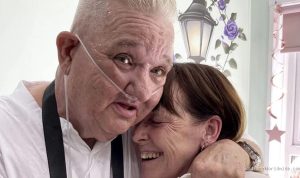
SouthernWorldwide.com – For those concerned about their risk of dementia, the fear is palpable, a sentiment echoed by Lauren Sprague. Her father’s stroke during her high school years marked the beginning of a gradual decline into memory loss and dementia, leading to his passing at a mere 63 years old.
“So, since I was 16 years old, pretty much every day of my life I worry, ‘Is today the day that the same thing could happen to me that happened to my dad?'” Sprague shared. “It’s an incredible fear to walk around with.”
She continued, “Every day of my children’s lives up until now, I’ve worried that that could be me.”
Her concerns were addressed by Dr. Jonathan Rosand, a neurologist at Massachusetts General Hospital in Boston. He often encountered patients asking, “Doctor, what can I do to take good care of my brain so that I don’t end up like my mother, my brother, my father?”
Dr. Rosand explained to Sprague that dementia risk could be significantly reduced by adopting healthier daily habits. These changes encompass dietary choices and the level of daily physical activity. He stated, “It turns out that these modifiable risk factors probably account for at least 40% of all dementia cases.”
A consensus among global experts indicates that approximately 40% to 45% of dementia cases could potentially be prevented or delayed by addressing 14 key modifiable risk factors. These include:
Read more : Alito temporarily reinstates FDA rule on mailing abortion pill
- Physical inactivity
- Smoking
- Excessive alcohol consumption
- Air pollution
- Traumatic brain injury
- Hearing loss
- Untreated vision loss
- High blood pressure
- Diabetes
- Obesity
- Low education attainment
- Social isolation
- High cholesterol
- Depression
Dr. Rosand noted that a prevalent belief is that a family history of dementia or Alzheimer’s means an inevitable fate. “But the truth is there’s so much we can do,” he emphasized.
While the importance of exercise and diet for brain health is not a new concept, Dr. Rosand and his team have developed an innovative tool to help individuals pinpoint the most beneficial lifestyle changes and their impact. This tool begins with a free online questionnaire known as the Brain Care Score.
“The Brain Care Score is a tool for any of us to use in our daily lives that lists out the modifiable risk factors for dementia, stroke and depression,” Dr. Rosand explained.
The Brain Care Score system assigns a higher score to healthier habits. Users can then select specific habits they wish to improve, guiding them on their next steps. Dr. Rosand highlighted, “It’s a guide to where you can go next. And in our work with patients, it really does give a choice, and a sense of freedom.”
A significant study published in June 2025 revealed a compelling correlation: a five-point increase in the Brain Care Score was associated with a 43% lower risk of developing heart disease and a 31% reduction in the incidence of common cancers, including lung, colorectal, and breast cancer.
This research underscores the interconnectedness of brain health and overall bodily well-being, demonstrating that what is beneficial for the brain positively impacts the entire body.
For Lauren Sprague and her husband, Scott, the journey to a healthier lifestyle began in the kitchen. They increased their intake of leafy greens and eliminated highly processed foods, which contributed one point to her score. They also prioritized spending more time outdoors, enhancing physical fitness and reducing stress, adding two more points.
Furthermore, Lauren incorporated activities like singing and creative pursuits into her routine, finding increased meaning, further stress relief, and a sense of purpose, which added another two points to her score.
Sprague expressed her gratitude, stating, “The Brain Care Score really gave me the prescription that I needed. And the wonderful thing about it is, it is a recommendation, but there is nuance, and it can be customized, which is wonderful.”
Dr. Rosand hopes that this accessible tool will be widely adopted. He conveyed, “The key message we want to convey with the Brain Care Score is, it is you. It is each of our viewers. It is everyone who wants to take a step forward. It’s up to you and you’re in control.”
For more information:
- Take the Brain Care Score (Global Brain Care Coalition)
- Understanding your Brain Care Score
- Dr. Jonathan Rosand, McCance Center for Brain Health at Massachusetts General Hospital
- Lauren Sprague
Story produced by Amol Mhatre. Editor: Emanuele Secci.