SouthernWorldwide.com – One aspect that is frequently overlooked, or simply not comprehended, is the immense hardship of being born into a segregated America and then coming of age precisely as the nation began to confront its racial atrocities in the 1960s.
For centuries, Black individuals endured slavery and subsequent segregation, perpetually denied the full rights guaranteed by American principles. They cultivated a distinct sphere within America, a parallel civilization comprising churches, schools, businesses, and communities, all established out of necessity and remarkable determination. Then, in the 1960s, a succession of civil rights victories unfolded.
The question arises: how does an oppressed populace transition into freedom, one of the most challenging yet profoundly rewarding states of existence? Amidst this liberation, which path leads forward effectively?
This was the destiny of Bob Woodson, who passed away on May 19, 2026, at the age of 89. Born Robert Leon Woodson on April 8, 1937, in Philadelphia, Pennsylvania, he hailed from a working-class family that experienced both hardship and hope.
His father passed away when Bob was still a child, and he and his four siblings were raised by their mother in the housing projects of South and later West Philadelphia. He witnessed firsthand the detrimental impact that fractured families, failing institutions, and street violence could have on a young life.
At 17, he left high school and enlisted in the Air Force, embarking on a lengthy journey that would eventually lead him to college, graduate school, and the forefront of the civil rights movement.
Bob actively participated in marches, organized efforts, and directed community development programs for the NAACP and various other organizations. However, the more arduous phase may have emerged after the civil rights victories were achieved.
It is often remarked that a victory opens a door, but the truly demanding work begins thereafter. Bob understood this reality more acutely than most. He diligently sought the correct path forward, collaborating with the National Urban League, serving as a resident fellow at the American Enterprise Institute, and exploring numerous organizations.
He found them all, in their own ways, to be insufficient. It wasn’t until 1981, armed with little more than a $25,000 grant and two decades of hard-earned experience, that he established what would become his life’s mission: the National Center for Neighborhood Enterprise. This organization was later renamed the Woodson Center.
What fueled Bob’s passion and illuminated his path was his unwavering commitment to connecting every member of his community to the American Dream. He used the phrase “his people” with ease and pride, as he clearly perceived the challenges they faced.
He believed they were being misled by detrimental ideas of dependency, promoted by Whites seeking personal racial redemption rather than genuine Black advancement. In Bob’s estimation, the liberal welfare policies that followed the Civil Rights movement had ensnared millions of low-income Black individuals in a cycle of dependency, while simultaneously enriching the elite class of professionals and politicians who managed their poverty.
Baca juga di sini: Dan Goldman's Trouncing of Trump Foes is Delicious
As he articulated in a 1995 essay published in The New York Times, he had “spoken out against a liberal agenda that has trapped millions of low-income blacks in a state of dependency and used the conditions of poor blacks to establish race-based policies that benefit middle- and upper-income blacks.”
Concurrently, Bob endeavored to build bridges with White individuals, but on equitable terms. Not through the imposition of guilt, nor through fostering dependency. He aimed to construct this bridge by invoking the American principles that he believed were rightfully and equally accessible to all.
I attended several events with him over the years, and he had a distinct ritual. He would survey the room, often populated by a mix of White attendees, and then, with a characteristic mischievous glint in his eye, declare: “I absolve every one of you. Not one of you is guilty. I absolve all of you of the racial sins of the past.”
Laughter would ensue. Yet, beneath this jest lay a profound and deliberate action. Bob understood, much like my father Shelby Steele has consistently argued, that the political left of the post-1960s era had sought to consolidate power by holding Whites accountable for past transgressions, not to achieve justice, but to maintain political leverage.
In doing so, they had inadvertently engineered a persistent divide between Black and White communities. By offering this humorous absolution, Bob was, on one hand, subtly mocking the left’s attempts to induce guilt in White individuals and, on the other hand, inviting them to step down from that burden and join him as equal human beings, acknowledging shared fallibility, capability, and the collective responsibility to build a better future.
Bob Woodson was a unifier in the most practical sense. He resolutely refused to succumb to the divisive racial politics that characterized much of the post-Civil Rights era. His primary focus was on identifying and implementing tangible solutions – solutions that were community-based, developed and managed by the very residents who lived there.
The Woodson Center provided training and support to over 2,600 leaders of faith-based and community organizations across 39 states, enabling them to secure more than ten times the funding that the center itself allocated. These were not abstract programs conceived by distant bureaucrats in Washington.
Instead, they represented practical answers forged by individuals intimately familiar with the challenges. And therein lay Bob’s unique insight: empower the right people, those closest to the problem, for they invariably possess the most effective solutions.
My father and Bob shared a long-standing connection dating back to the 1980s. They appeared on television together on multiple occasions, to the point where it became a minor inside joke in our household that if one were unavailable for an appearance, the other would readily step in.
I first had the pleasure of meeting Bob around 2016 through our mutual acquaintance, Beth Feeley. One of his initial propositions to me was his desire to collaborate on a book or media series that would spotlight the historical heroes of Black America. He wished to celebrate individuals like Frederick Douglass, Booker T. Washington, Ida B. Wells, Madam C. J. Walker, and Robert Smalls – figures who achieved success, thrived, and overcame immense obstacles against seemingly impossible odds.
He was deeply disheartened by what he perceived as a pervasive narrative of victimhood that had taken root among many young Black minds. During one of our early conversations, he shared a sentiment that has remained with me: “How can you do that to children? It’s abuse.”
He was profoundly correct. A people severed from their authentic heritage – a heritage defined by survival, triumph, and prosperity – are a people adrift without a compass. The narrative of victimhood was not only inaccurate but fundamentally corrosive. It served only the interests of Black elites and White liberals who propagated it.
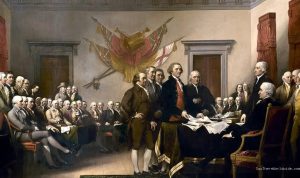
He soon initiated a project that evolved into 1776 Unites, a direct counterpoint to The New York Times’ 1619 Project. While the 1619 Project aimed to place slavery at the core of the American narrative and perpetuate the legacy of a racist America, the 1776 Unites project sought to rectify the historical record of America’s founding. It also illuminated the stories of Black individuals who achieved financial success despite systemic oppression, who established vital institutions, and who resolutely refused to be defined by the adversities they faced.
Bob’s objective was to instill seeds of possibility in young minds and eradicate the pervasive influence of fatalism. My most cherished memory of Bob originates from Ferguson, Missouri, where we invited him to be interviewed for “What Killed Michael Brown?” – the documentary my father and I produced.
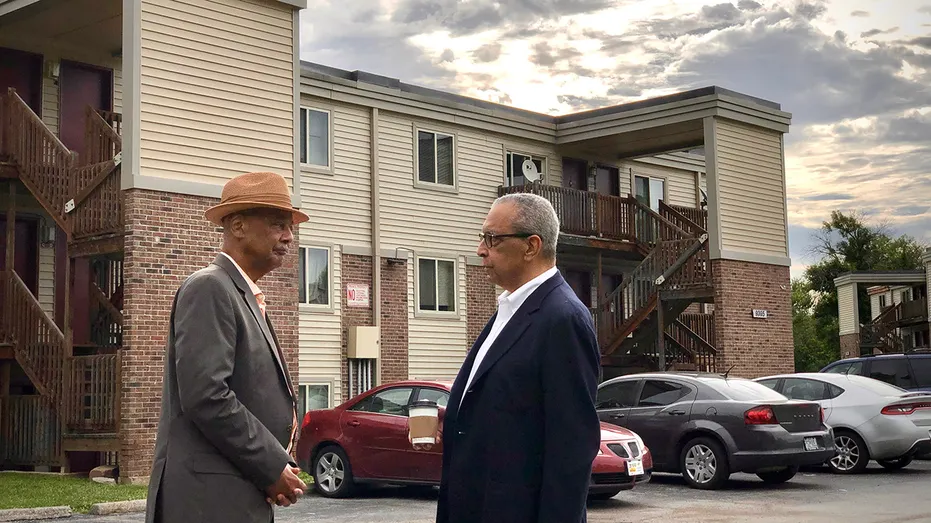
He met us in the hotel lobby, impeccably dressed in his signature brown suit and fedora. His style exuded an old-school Black elegance, reminiscent of the individuals I encountered growing up in San Francisco and Oakland during the 1980s. We then escorted him to Canfield Drive, to the precise location where Michael Brown had been fatally shot.
Bob paused, removed his fedora, and offered a prayer. Following this, we commenced the interview. He spoke with an unfiltered candor, delivering profound insights one after another. I recall contemplating the immense challenge of editing such a wealth of valuable information.
The moment that has indelibly stayed with me was when he paused and remarked that if Michael Brown had truly valued his own life, he would not have endangered it by charging Officer Darren Wilson in a manner that placed his life in mortal peril.
Bob articulated this with a subtle, melancholic smile – a smile that encapsulated both profound tragedy and the enduring spirit of hope. The tragedy lay in the choices a young man had made, leading to such a perilous risk. The promise resided in Bob’s clear articulation of the truth, thereby pointing toward a path of betterment.
He believed in the transformative power of truth to instigate change, asserting that only by confronting the full gravity of what had transpired could humanity begin to move towards improvement. His persistent question was: How do we restore value to life?
Bob Woodson is no longer with us. He was 89 years old, and he dedicated every one of those years to the struggle. We will never again see him and his distinctive fedora. However, his work remains unfinished, and the responsibility now falls upon us to carry it forward.
We must recount the unvarnished stories of America, encompassing its imperfections and its triumphs. We must never shy away from the truth, regardless of how unsettling it may be. We must endeavor to foster understanding and consistently reject the ideologies of dependency and victimhood.
We must focus on building from the ground up, in collaboration with the communities themselves, and extend an invitation to everyone, Black and White alike, to work together as equal human beings. This was Bob’s unique gift, and it now presents a challenge for us. May God bless Robert L. Woodson Sr. May we possess the fortitude to continue his vital work.