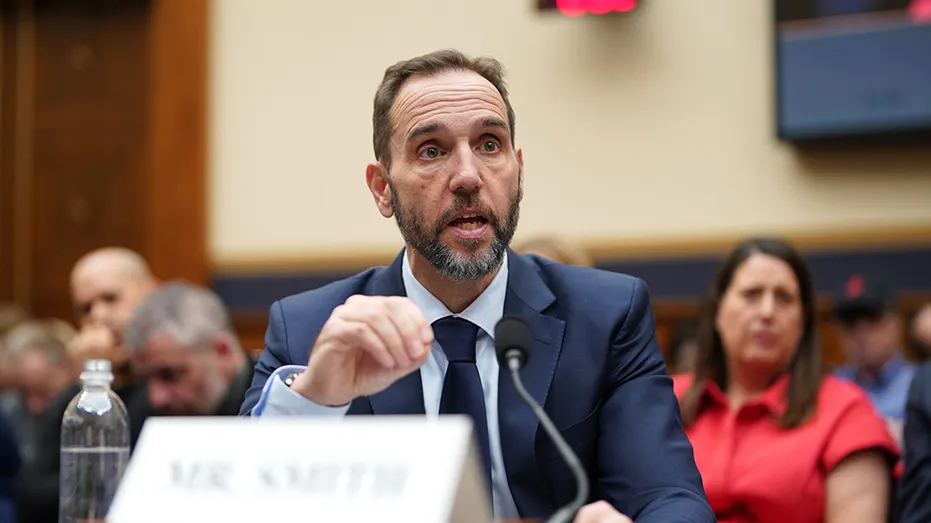
SouthernWorldwide.com – A former Justice Department prosecutor, Carmen Mercedes Lineberger, has been indicted for allegedly taking confidential Justice Department materials and then attempting to hide her actions.
Lineberger is accused of secretly transferring the final report from former Special Counsel Jack Smith and concealing the material under file names like “chocolate cake recipe” and “bundt cake recipe.” This situation has been humorously compared to a recipe for disaster, reminiscent of past attempts to fit all of President Joe Biden’s candles on a cake.
The case is particularly noteworthy due to a previous instance involving former FBI Director James Comey, who was also accused of secretly removing Justice Department material but was not prosecuted.
Lineberger, aged 62, from Port St. Lucie, Florida, faces four criminal charges. These include one felony count of obstruction of justice, one felony count of concealing government records, and two misdemeanor counts of theft of government property valued at less than $1,000.
According to the indictment, Lineberger allegedly altered the electronic file names of government records to conceal unauthorized transmissions of these documents to her personal email accounts. She reportedly used file names related to cake recipes to disguise her possession of the confidential information.
This development follows U.S. District Judge Aileen Cannon’s decision to block the public release of a report after the prosecution against President Donald Trump collapsed.
FORMER DOJ PROSECUTOR CHARGED WITH STEALING CONFIDENTIAL JACK SMITH INVESTIGATION DOCUMENTS ABOUT TRUMP
The Justice Department claims that Lineberger received a copy of Smith’s report before it was sealed by the court. Months later, she allegedly proceeded to transfer it to her personal email account, violating both the court order and Justice Department regulations.
Baca juga di sini: America's Wounds Heal Through Truth and Courage
Lineberger has pleaded not guilty to the charges and could face up to 20 years in prison for the obstruction charge, along with penalties for the other charges.
This case is significant for a couple of key reasons.
SPECIAL COUNSEL JACK SMITH REQUIRED TO SUBMIT TRUMP FINDINGS TO DOJ BEFORE LEAVING. WHAT HAPPENS NEXT?
Firstly, Jack Smith made a final move in dismissing the case against Trump, which left open the possibility of resuming his prosecution. Smith requested the dismissal of the indictment “without prejudice” and emphasized to the court that the department had previously “noted the possibility that a court might equitably toll the statute of limitations to permit proceeding against the President once out of office.” This suggests that Trump could potentially face prosecution after leaving office.
The motive behind Lineberger’s alleged transfer of the report remains unclear. One speculation is that it could have been a form of souvenir or trophy collection, which would be ironic given Smith’s suggestion that Trump might have transferred classified material for a similar sense of possessory thrill. Another possibility is the potential use of the material for a book. Finally, there might have been a desire to preserve evidence to prevent its destruction during the Trump administration or its possible release to the media.
The second notable aspect is the contrast with James Comey, who was accused of a similar, knowing removal of material but was never prosecuted.
JUSTICE DEPARTMENT CONSIDERS PURSUING NEW INDICTMENTS AGAINST JAMES COMEY, LETITIA JAMES: REPORT
While there was no court order governing the material Comey removed after his dismissal, it was unequivocally departmental material.
The Inspector General, Michael Horowitz, concluded that Comey had acted as a leaker and violated FBI policy in his handling of FBI memos. Horowitz found that Comey had taken the material as he was leaving the Bureau, including memos that contained the “code name and true identity” of a sensitive source.
Although Horowitz did not find evidence of classified information being disclosed, he determined that Comey engaged in “unauthorized disclosure of sensitive investigative information, obtained during the course of FBI employment, in order to achieve a personally desired outcome.” He further stated that Comey “set a dangerous example for the over 35,000 current FBI employees—and the many thousands more former FBI employees—who similarly have access to or knowledge of non-public information.”
GREGG JARRETT: THE GREAT COMEY CON: HOW ‘SAINT JAMES’ PLANS TO PUT TRUMP ON TRIAL INSTEAD
Comey later admitted to asking a friend, Columbia Law Professor Daniel Richman, to leak information from these documents to The New York Times.
While Comey is currently facing a weak criminal case concerning threats conveyed through beach shells, some observers viewed his actions in removing this material as a more serious transgression.
Comey has since authored books on “ethical leadership” and recently advised current FBI personnel to “hang on” and wait out Trump, stating, “In two and a half years, and then we can rebuild.”
The prospect of rebuilding the bureau in Comey’s image is a concerning one. The “good old days” under Comey allegedly saw agents launch a baseless Russian collusion investigation at the behest of the Clinton campaign and then lie to a secret court to obtain surveillance on Trump associates.
In the current legal landscape, it will be Lineberger, not Comey, who will face a jury for the alleged removal of confidential material.
For Lineberger, these types of charges are typically straightforward for prosecutors if they can demonstrate that the material was restricted and that she took deliberate steps to conceal the alleged theft. Although she gained access before the court order was issued, she allegedly transferred the material after the order and then hid it within files labeled as cake recipes. If these facts can be substantiated in court, prosecutors likely believe that Lineberger’s case is effectively concluded.