SouthernWorldwide.com – The conclusion of Stephen Colbert’s tenure on CBS’s “The Late Show” has been met with significant lamentation from segments of the media, particularly those aligned with a more liberal viewpoint. These reactions, as described by critics, highlight a perceived bias within late-night comedy, where hosts like Colbert are often viewed as crucial voices against political opposition.
The narrative surrounding Colbert’s departure paints a picture of a “national treasure” being lost, a sentiment echoed by Democrats who saw his show as a bastion of progressive thought. This perspective, however, is contrasted with an external view that characterizes “The Late Show” as a platform for partisan echo chambers, akin to a “leftist therapy session” or a Democratic Party meeting.
The disconnect in perception is stark. While supporters saw Colbert as a champion against a figure they found inconceivable to support, critics viewed him as smug and vicious. This dichotomy underscores the polarized nature of political discourse and how entertainment figures can become focal points for these divisions.
The media’s response to the show’s end was notably effusive. NBC’s “Today” show, for instance, offered what were described as “eulogies,” with entertainment reporter Chloe Melas praising the show’s “big moments” and “bigger laughs.” Co-anchor Savannah Guthrie’s comment about Colbert being a “devout Catholic” was also highlighted, though this was immediately challenged by critics who pointed to instances where Colbert had, in their view, mocked religious tenets.
Examples cited include Colbert’s past Comedy Central work, where he allegedly featured imagery mocking the Eucharist, and his recent interview with comedian Jim Gaffigan, where his response to a question about the afterlife was deemed un-Christian by some. These instances were presented as evidence that Colbert’s public persona and his religious affiliation were not as straightforward as portrayed by his admirers.
Baca juga di sini: Austin Theory Reflects on Injury as a "Low Moment" and Discusses Return to the Ring and New Look
The cancellation of “The Late Show” itself became a point of contention and speculation. While CBS maintained it was a “purely financial decision,” entertainment reporter Chloe Melas acknowledged that “questions swirled if it had anything to do with the show’s critical eye towards President [Donald] Trump.” This ambiguity fueled theories among those who viewed the show as a vehicle for political messaging.
These theories often involved the idea that corporate entities, like Paramount, might be influenced by political administrations, such as the Trump administration at the time of a proposed merger. The expectation from the left, according to this viewpoint, is that corporations should perpetually fund what is perceived as propaganda, regardless of financial viability, a point illustrated by referencing figures like Jeff Bezos.
The sentiment of loss was also articulated by other late-night figures, such as David Letterman. His interview on NBC, prompted by the end of Colbert’s show, revealed a strong sense of disappointment. Letterman, when asked about the implications for comedy in America, compared Colbert to Johnny Carson, suggesting a perceived similarity in their impact, a comparison that critics found questionable.
Letterman’s lament that “we’re losing a valuable perspective” and that Colbert’s departure was “a huge mistake” was framed by critics as part of a broader pattern of lamenting the perceived loss of a progressive voice. However, the article argues that the market is far from devoid of such voices, comparing the situation to a minor fast-food chain losing out to major competitors.
The article contends that there is an overabundance of “Trump-hating jokes” on television, with Colbert’s show contributing a significant portion. A study reportedly found that 87% of the political jokes on “The Late Show” targeted Trump and Republicans, a figure comparable to other late-night programs. This statistic is used to counter the idea that Trump “couldn’t take a joke,” suggesting he was subjected to a constant barrage.
The article revisits specific instances of Colbert’s commentary on Trump, including a 2017 remark that was interpreted as highly offensive and a reference to a “holster for Putin’s sex organ.” These examples are presented to illustrate the aggressive and often vitriolic nature of Colbert’s political humor, as perceived by his critics.
Colbert’s reactions to politically significant events involving Trump were also highlighted. His expressed excitement for impeachment hearings in 2019, his framing of the FBI raid on Mar-a-Lago as a “Christmas present” in 2022, and his glee over Trump’s indictment by Alvin Bragg in 2023, complete with a reference to eating ice cream from a baseball helmet and “saying Merry Christmas again,” are cited as evidence of his partisan engagement.
Further examples of Colbert’s “partisan moments” include his involvement in a Biden fundraiser and dancing with Chuck Schumer. These events are presented as further proof of his alignment with the Democratic Party.
In a more recent instance, Colbert’s commentary on ICE and Border Patrol agents, where he suggested they were less willing to show their faces than Nazis, was cited as an example of the “comedy” that figures like David Letterman would supposedly miss. This remark was met with backlash and described as an “obscene attack” by critics.
The article returns to NBC’s Chloe Melas, who, on Colbert’s final show, described it as “the end of an era, as one of television’s most respected figures steps away from the spotlight.” This characterization was again framed as originating from “the bubble,” implying an inability to understand why anyone would consider Colbert “Most Respected” or his work “noble.”
Within this “leftist bubble,” Colbert’s criticisms of the Trump administration were often labeled as speaking “the truth.” The article references NPR critic Eric Deggans, who recalled Colbert’s creation of “truthiness” on Comedy Central, a concept that prioritized gut feeling over factual accuracy. Deggans’ lament that the Colbert show was needed for “speaking truth to truthiness” is presented as an example of this perspective.
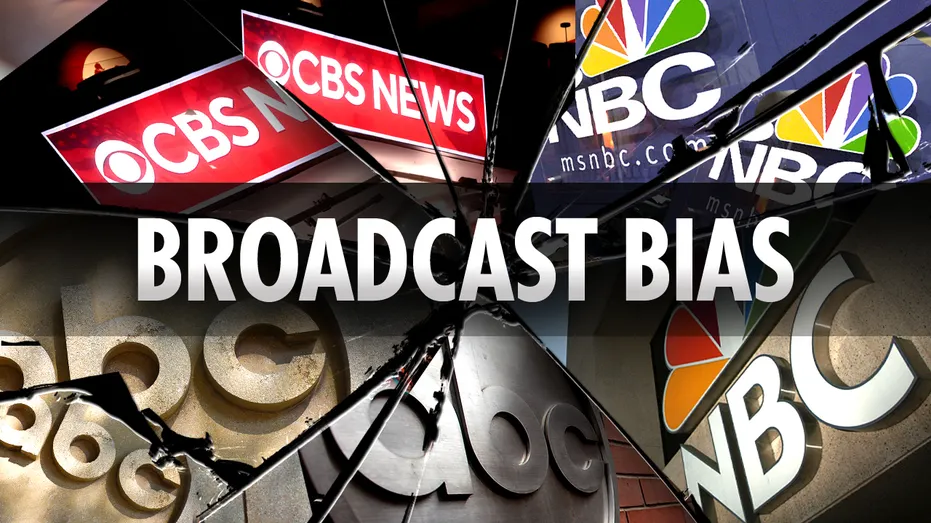
The piece concludes by suggesting that the news divisions of broadcast networks view late-night comedy shows as tools to reinforce their own narratives and to add a more aggressive edge to political discourse. While the Trump campaign might occasionally gain a soundbite or a chance for rebuttal in a news story, the article argues that late-night shows offer no such space, being characterized as consistently aggressive. Therefore, the departure of one such “aggressor” is seen as unlikely to cause a significant shift in the broader media landscape.