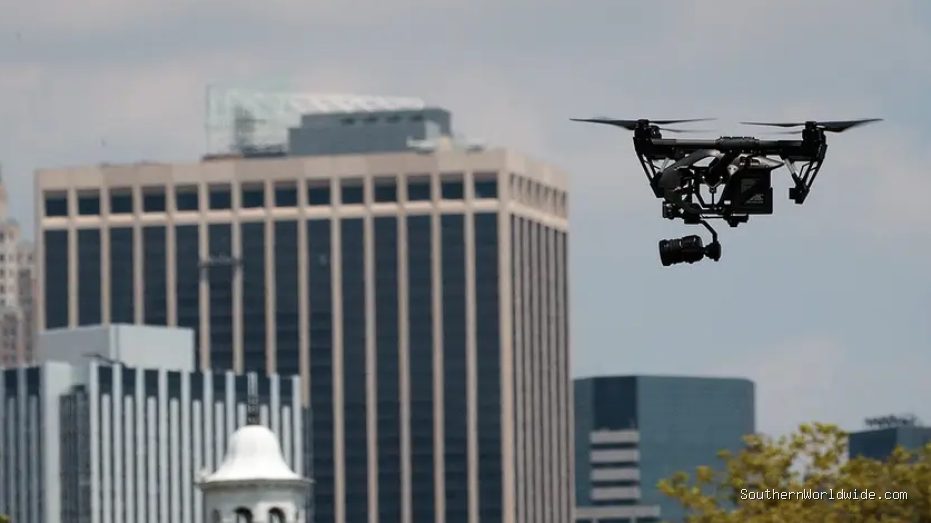
SouthernWorldwide.com – A bipartisan effort is underway in the U.S. to address concerns surrounding the widespread use of Chinese-manufactured drones by domestic law enforcement agencies.
Representative Pat Harrigan, a Republican from North Carolina and a member of key House Armed Services Committee subcommittees, is spearheading a legislative push to phase out these drones.
Harrigan described the current reliance on Chinese drones as “a strategic mistake,” highlighting the potential national security risks associated with them.
The proposed legislation, titled the “American Drone Manufacturing Dominance Act of 2026,” aims to provide a pathway for U.S. law enforcement to transition away from Chinese-made drones.
This initiative aligns with broader Republican efforts to reduce dependence on Chinese manufacturing in critical sectors.
Furthermore, the bill proposes making federal grant funding conditional on agencies not acquiring any foreign-made drones after January 1, 2027.
Senator Wicker has also voiced support for ending China’s dominance in the drone market through a “Made in America” revival.
In its current draft, the bill allocates $1.5 billion in federal funding. This funding, derived from Trump’s Section 301 tariffs, is intended to expedite the removal of Chinese-made drones.
It also aims to subsidize the development of a domestic drone manufacturing base, specifically for defense applications.
Harrigan emphasized that drones have emerged as a significant security concern, particularly in light of their demonstrated use in recent overseas conflicts and their rapidly advancing capabilities.
“One of the clearest lessons from Ukraine is that drones are no longer a niche capability; they’re a foundational part of modern warfare,” Harrigan stated.
The increasing sophistication and deployment of drones have prompted widespread restrictions on their use in many major U.S. cities.
For instance, Washington, D.C., has a complete ban on drone usage due to the Special Flight Rules Area (SFRA) regulations governing its highly restricted airspace.
Despite these restrictions, the deployment of drones has seen a notable increase in recent years.
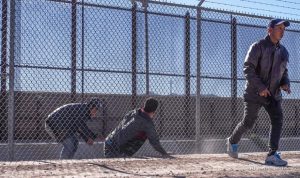
This rise is particularly evident in border security operations, where drones’ agility and speed enable border agents to monitor vast areas effectively.
A significant internal memorandum from 2020, authored by then-U.S. Border Patrol Chief Rodney Scott, signaled the Customs and Border Protection’s (CBP) intention to substantially expand drone utilization.
The memorandum explicitly stated that these unmanned technologies would achieve unprecedented levels of detection, response, and interdiction efficiencies.
These efficiencies, it noted, could not be matched by current CBP technological capabilities.
Local law enforcement agencies also rely on drones, often sourcing them from Chinese manufacturers like Da Jiang Innovations (DJI).
In Texas, for example, data from the Federal Aviation Administration (FAA) revealed a significant dependency on DJI drones.
In 2024, out of 966 drones registered to police and sheriff’s departments across the Lone Star State, an overwhelming 879 were manufactured by DJI.
Harrigan believes that the use of drones is an irreversible trend, with their applications continuing to expand.
However, he argues that as their deployment grows, lawmakers must prioritize American safety by fostering domestic manufacturing capabilities.
“If drones are going to play a central role in national security, public safety, and critical infrastructure, America needs to be able to build them here at home,” Harrigan asserted.
The timeline for when Representative Harrigan’s bill will be brought to the floor of the U.S. House of Representatives for consideration remains uncertain.