SouthernWorldwide.com – The discussion surrounding the expansion of the College Football Playoff to include 24 teams is far from over and is likely to persist for the foreseeable future.
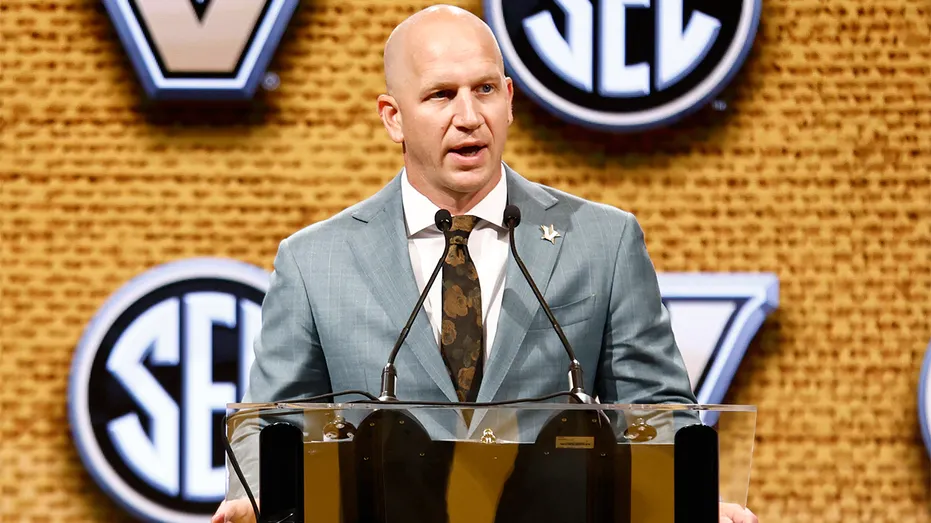
This ongoing debate was palpable even within the office of Vanderbilt head coach Clark Lea, as evidenced by the prevailing conversations on a recent Wednesday.
Ever since the College Football Playoff leaders concluded their meetings in Miami, which preceded Indiana’s historic national championship victory, the friction between the SEC and the broader college football landscape has escalated. The most recent discussions on this matter took place just outside of Dallas.
COACHES PUSH FOR 24-TEAM CFP, AS COLLEGE FOOTBALL HEADS TOWARDS PARTICIPATION TROPHY TERRITORY
At the heart of this complex issue lies a fundamental question: what should be the ideal size of the playoff field?
For several months, the SEC has maintained a strong stance in favor of a 16-team format, a model that also garners support from its television partner, ESPN.
Meanwhile, the Big Ten has advocated for a 24-team playoff. This proposal initially faced resistance from the ACC and Big 12, but opinions within those conferences have since begun to shift.
Such shifts in conference positions are not uncommon and are almost an inherent part of the job for conference commissioners.
However, the stakes are considerably higher in this particular instance. With mounting revenue-sharing challenges across college athletics and some institutions already resorting to cutting sports programs, expanding the playoff has emerged as a potential financial lifeline.
An increase in the number of participating teams directly translates to more games being played.
More games, in turn, create a greater volume of television inventory.
And a larger inventory of broadcast rights could potentially lead to increased revenue.
As the College Football Playoff embarks on its new six-year contract with ESPN, there is a specific number of teams that could effectively trigger additional bidding for broadcast rights.
According to industry sources, if the CFP were to approve a 14-team postseason, ESPN would retain the rights to these games and could continue to sub-license them to networks such as TNT or TBS.
BROADCAST INDUSTRY CEO SAYS CONSOLIDATION IS ‘ESSENTIAL’ TO COMPETE FOR NFL SOARING MEDIA RIGHTS PRICES
However, if CFP leaders were to agree to a 24-team format, or even a 16-team structure, this would open the door for networks like FOX, NBC, or CBS to enter the bidding process if they were willing to meet the financial demands.
This possibility stems from the contract signed between ESPN and the CFP, which allows the playoff to put the additional games resulting from a 24-team postseason onto the open market.
From an economic perspective, the more strategic move for ESPN might be to simply purchase the rights to the additional games in a 16-team playoff.
This is because the cost for networks like FOX or NBC to acquire the rights to just two extra matchups might not be deemed financially worthwhile.
Despite these financial considerations, it is not difficult to understand why multiple conferences would be inclined to support such an expansion.
As Vanderbilt head coach Clark Lea articulated this week in Nashville, the decision to expand the playoff is far more complex than simply adding more teams.
“The first thing that we need to focus on is when we end the season,” Clark Lea stated. “I think we have a real issue right now, and I think the issue is tied to TV contracts and dedicated time slots where we’re not competing with the NFL, and stuff like that which extends our season three weeks into January that absolutely undermines the integrity of what we’re trying to do as a sport.”
“Whatever we do next with the playoff, expansion is coming. We (SEC) all expected it for this year and it hit a hiccup. But, as expansion comes, it cannot come at the expense paying attention to the seasons end, and let’s be more reasonable at tying that.”
HAIL MARY IN LUBBOCK: BRENDAN SORSBY’S LAST SHOT AT BEATING NCAA GAMBLING ALLEGATIONS
As previously reported, a significant expansion of the playoff could potentially come with the stipulation that conference championship games would be eliminated.
While this might seem like a straightforward solution to some, it represents a much larger undertaking to implement, considering the substantial financial investments ESPN and FOX make in these championship games, with a combined reported value of $160 million for both.
“We’re going to have to let go of some traditional end of the year elements in college football,” Clark Lea remarked, while also indicating his belief that this would likely involve conference championships.
So, what would take their place?
“Somehow the playoff model is incorporated, right?” Lea proposed. “Otherwise, this (season) extends forever. I think we saw last year these ridiculous breaks in play, which I think ruins the competitive product on the field. I would be really interested to hear answers and to get people thinking towards those things.”
“How do we improve the product, tighten the season? Finishing closer to the semester ending, the portal window. Now all of the sudden we have a better product.”
INSIDE THE FIGHT: NIL ARMS RACE FUELING NEW PUSH FOR COLLEGE FOOTBALL PLAYOFF EXPANSION
The concept of reconfiguring SEC, Big Ten, ACC, or Big 12 championship weekend into play-in games for each conference is an idea that television networks such as ESPN and FOX have reportedly been discussing.
Given that these networks would be relinquishing a highly profitable game in terms of advertising revenue and viewership, any proposed substitute would need to be sufficiently compelling to warrant consideration.
However, if fans were given the choice between watching four teams compete in Atlanta, Indianapolis, Charlotte, or Dallas over a two-day period for a spot in the college football playoff, it is likely that this would be an easy sell to both networks and advertisers.
Dabo Swinney is right: Coaches might be right, but opinions don’t matter in College Football Playoff expansion fight
Even so, the process of deciding on a definitive path forward is by no means a simple task.
“Those decisions need to be made based on driving as much possible revenue and getting the best possible negotiation out of each game we have. So, to say 24 or 16 is really just to say as many teams as we can, while also not giving away the ability to negotiate what those games can bring to us.”
Ultimately, the desire is for the sport of college football to be positioned in the most advantageous way for the future, a sentiment echoed by coaches competing for playoff spots, such as Clark Lea.
“What we do when we start to participate in these conversations is we become fans. I know it’s way more complex than just adding as many teams as possible. This has got to be done in the best way to optimize our product, and to drive the revenue we need to sustain our sport.”
ONE DAY AFTER LANE KIFFIN MESS, STEVE SARKISIAN TORCHES OLE MISS FOR ‘BASKETWEAVING’ CLASSES IN OXFORD
While SEC Commissioner Greg Sankey appears to be the sole proponent of a 16-team format over a move to 24, some coaches within the conference are beginning to voice differing perspectives on what the future of the playoff should entail.
However, as previously discussed, coaches’ influence in these deliberations is somewhat limited.
Regardless of the outcome, the annual spring meetings in college football have gained significant importance over the past two years.
The Big Ten is scheduled to convene next week in Los Angeles, while the SEC is preparing for its meeting in Florida following Memorial Day.
Read more : North Carolina Teacher Slaying Renews Focus on Cooper's Criminal Justice Record Amid Senate Bid
Let the games continue.