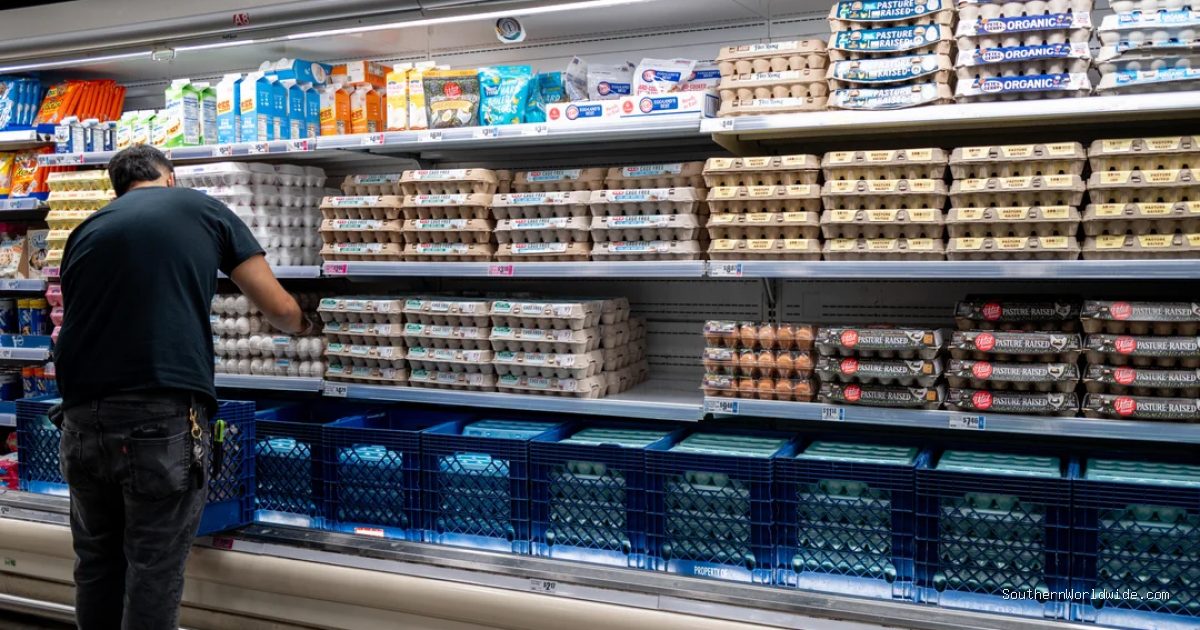
SouthernWorldwide.com – Three of the nation’s largest egg producers have reached a proposed settlement with the Department of Justice and over a dozen states, aiming to resolve allegations of price-fixing. This agreement stems from an investigation into claims that these companies colluded to artificially inflate egg prices.
The investigation, led by federal antitrust enforcers and state attorneys general, alleged that Cal-Maine Foods, Versova/Centrum, and Hickman’s Egg Ranch coordinated their actions. Their alleged aim was to manipulate daily egg price quotations between June 2022 and March 2025. This manipulation, if proven, would have led to increased prices for both retailers and consumers across the United States.
These companies play a significant role in the egg supply chain, providing eggs to grocery stores, restaurants, and other retailers nationwide. The Department of Justice highlighted the importance of this settlement in a statement released on Tuesday.
“We are proud that these settlements will keep egg prices competitive and keep money in the hands of consumers across the country,” stated Deputy Assistant Attorney General Nicole Sarrine of the Justice Department’s antitrust division. This sentiment underscores the perceived benefit of the agreement for the public.
As part of the settlement terms, the companies are required to donate a total of 53 million eggs. These eggs will be distributed to food banks and community organizations located in the states that are part of the settlement. Additionally, the companies will pay $3.3 million to these states. These terms were detailed in a complaint filed on June 29 by the Justice Department and the participating states.
The complaint specifically accuses Cal-Maine, Hickman’s, and Versova of engaging in a conspiracy. This conspiracy allegedly involved submitting bids designed to influence egg price quotations. The intention behind these actions was to create a false impression of higher demand than what actually existed in the market. This practice is particularly concerning because daily quotations from Urner Barry, a market reporting company, serve as a critical benchmark for the entire egg industry.
These benchmark prices significantly influence what retailers pay for eggs nationwide. The Justice Department emphasized the widespread impact of these quotations in its statement, noting that billions of eggs are sold annually with prices determined by Urner Barry’s reporting. The manipulation of these benchmarks could therefore have far-reaching economic consequences.
Cal-Maine Foods, which identifies itself as the largest egg producer and distributor in the U.S. and is based in Mississippi, has issued a statement denying any wrongdoing. The company characterized the allegations as “baseless.”
Versova, an Iowa-based company, also commented on the resolution. They expressed pleasure that the U.S. Department of Justice investigation has concluded without any finding or admission of wrongdoing on their part. This indicates their stance that they did not engage in the alleged misconduct.
The Justice Department indicated that the settlement, which still requires court approval, includes provisions designed to prevent the companies from communicating with competitors. The purpose of these restrictions is to deter future attempts to influence egg prices through coordinated actions.
The cost of eggs has been a significant concern for American consumers in recent years. Egg prices reached record high levels last year. This surge was largely attributed to an avian flu outbreak that severely impacted the nation’s poultry flocks. Currently, a carton of large Grade A eggs is selling for an average of $2.19. This represents a substantial decrease from the peak price of $6.23 recorded in March 2025, according to data from the Federal Reserve Bank of St. Louis.
In their defense, Cal-Maine Foods pointed to the avian flu outbreak and the COVID-19 pandemic as the primary factors driving egg price volatility. Versova also cited the bird flu as a contributing factor and stated that they are not responsible for setting prices.
“Egg farmers in the United States don’t set the wholesale price of eggs, which are a commodity product,” Versova stated. They further explained that most of their eggs are sold under grain-based contracts. This means that the prices their customers pay are directly influenced by the fluctuating costs of grain inputs used for hen feed.