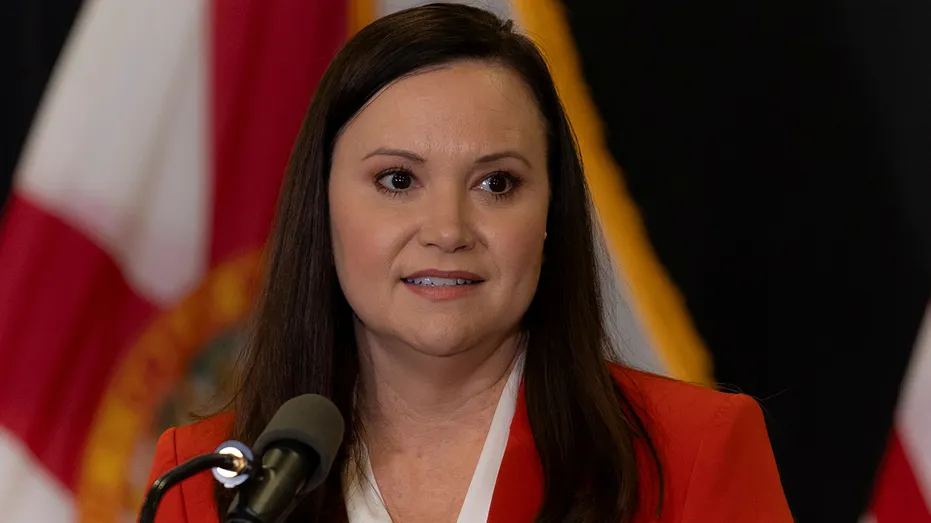
SouthernWorldwide.com – Florida Republican Senator Ashley Moody has been actively introducing and co-sponsoring a series of legislative proposals aimed at assisting the Trump administration in combating billions of dollars in fraud and theft of federal funds. This presents a significant opportunity for the Senate to take meaningful action.
Vice President JD Vance is leading the White House’s initiative, targeting a wide range of fraudulent activities, from Medicare fraud in Minnesota to fictitious hospice centers in Los Angeles. The sheer magnitude of the financial losses, amounting to billions upon billions of dollars, is truly staggering.
In March, Senator Moody, who previously served as Florida’s attorney general before being appointed to the Senate by Governor Ron DeSantis, introduced the Stop Fraud in Medicaid Act. This proposed law would empower Medicaid Fraud Control Units to broaden their investigations to include individuals receiving fraudulent claims, not solely those perpetrating the fraud.
Furthermore, she introduced the Punishing Health Care Fraudsters Act, which seeks to increase the penalties and fines associated with healthcare fraud. These legislative efforts demonstrate a comprehensive approach to tackling financial misconduct within critical sectors.
Adding to her legislative agenda, Moody has also put forth the No Aid For Ghost Students Act. This bill addresses a less publicized form of fraud where individuals submit fabricated or stolen identities to obtain federal student aid benefits. The article notes that these fraudsters exploit every avenue of the federal budget, much like a hunter utilizing every part of their quarry.
When asked about her strong focus on combating fraud, Senator Moody stated, “I’ve spent most of my career tackling fraud one way or another. As a prosecutor, judge, and as Florida’s attorney general, it was part of the job.” This reflects a long-standing commitment to upholding financial integrity.
Baca juga di sini: Platner Maintains 9-Point Lead Over Collins in New Poll
The article suggests that GOP leadership in the Senate would be wise to prioritize Moody’s anti-fraud bills, not just for floor debate, but to elevate them as a central theme in national discourse. Voters have expressed frustration with incumbent Republican senators for perceived inaction, and supporting Vance’s fight against fraud could help to alleviate these concerns.
Senator Moody emphasized the need for enhanced tools, stating, “VP Vance, our whole government, and state AGs need every tool available to go after scammers and fraudsters, and I’ve got the toolbox ready with a slew of legislative proposals to enhance prosecutorial efforts. Let’s get it done.”
Vice President Vance has accurately identified the primary victims of federal fraud as taxpayers who are defrauded and individuals who genuinely require the services being exploited. However, the article posits that Republicans have another compelling argument to make regarding the benefits of curbing fraud.
The immense scale of this fraud, with some estimates reaching hundreds of billions of dollars, means that its eradication would not only serve as justice against criminals but also represent a substantial financial windfall for federal revenues. This financial benefit could be a powerful selling point for the legislation.
The article speculates that the Senate might achieve success in areas where the Trump administration’s Department of Government Efficiency, led by Elon Musk, encountered obstacles. Given that the Senate is responsible for approving funding, its members should also be the ones safeguarding those funds.
For conservative voters nationwide who are concerned about funding individuals engaging in fraudulent activities, particularly those from foreign backgrounds, the article argues that Congress is their primary recourse. Once federal dollars are disbursed to certain states and cities, the article suggests that oversight and accountability often diminish, leading to wasteful spending and fraud.
The piece highlights instances in various states where, according to the author, the federal government has abdicated its responsibility to protect federal dollars from fraud. The implication is that some state governments have become complacent, allowing such activities to transpire unchecked.
A notable observation is that not a single Democratic state attorney general reportedly attended Vice President Vance’s meeting on combating fraud. Similarly, anti-fraud hearings in Congress are often characterized by the absence of Democratic members, suggesting a potential partisan divide on the issue.
The article identifies a significant challenge for Senate Republicans: the reluctance of Majority Leader John Thune to abolish the 60-vote filibuster threshold. This has led to perceptions that the party is not achieving tangible results. Thune’s strategy of highlighting Democratic opposition to Republican initiatives is described as an outdated tactic.
However, the article contends that the Save America Act, while a concern for voters, does not resonate as deeply as the pervasive issue of fraud, which many American voters feel profoundly. The argument is that tangible issues like fraud, often perpetrated by foreign nationals, carry more emotional weight with the electorate.
While Democrats might find reasons to oppose specific provisions of the Save America Act, the article suggests that opposing efforts to combat fraud, particularly when it involves specific groups, would be politically detrimental. The implication is that such a stance would be perceived as being lenient towards fraudsters.
Since President Trump’s tenure, most significant conservative achievements have been attributed to him personally, such as border security and efforts to reform Washington D.C. The article notes that congressional involvement in these successes has been limited, with the exception of a major legislative package. However, this situation could change.
The article concludes by urging Senate Republicans to join Vice President Vance in his fight against fraud. Senator Moody’s legislative proposals are presented as a concrete and immediate pathway for the Senate to actively engage in this critical endeavor.