SouthernWorldwide.com – In a rapidly evolving technological landscape, the conversation surrounding Artificial Intelligence (AI) often oscillates between its potential to revolutionize industries and the pervasive fear of widespread job displacement. However, a closer look at recent developments and expert opinions suggests a more nuanced reality, where AI might be a catalyst for job creation rather than outright elimination.
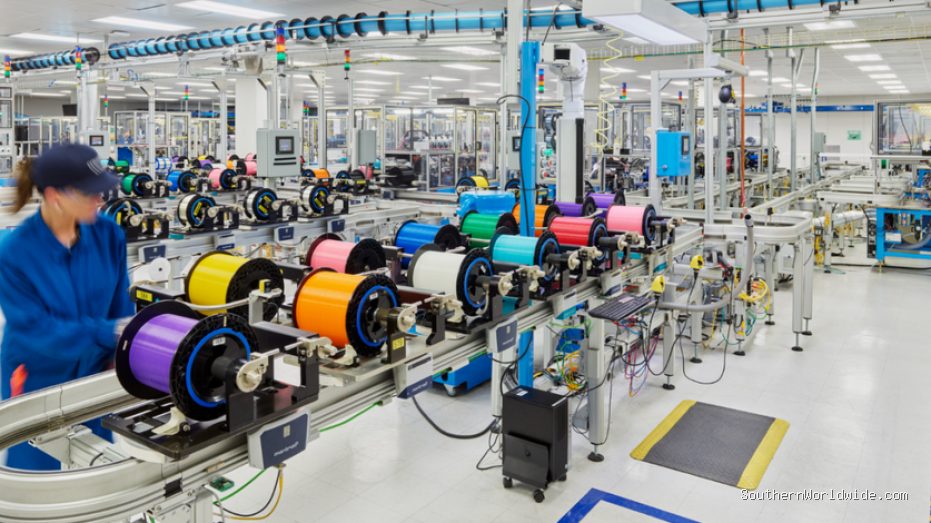
One of America’s oldest manufacturers, Corning, a company with a legacy predating significant technological milestones like the Model T and the Wright brothers’ first flight, is at the forefront of this discussion. Corning’s long history is deeply intertwined with innovation, a trait that continues to define its trajectory in the modern era. The company’s perspective on AI is particularly noteworthy, offering a grounded view from an industry that has witnessed numerous technological shifts throughout its existence.
Corning’s stance is that AI is not merely a tool for automation but a force that can actively create new employment opportunities. This view challenges the prevailing narrative that automation inevitably leads to a net loss of jobs. Instead, it suggests that as AI integrates into manufacturing processes, it opens doors for new roles requiring different skill sets, thereby transforming the job market rather than shrinking it.
Beyond the industrial sector, AI’s impact is also being felt in more personal and heartwarming ways. The story of a missing kitten named Lucy, who was eventually reunited with her family, highlights AI’s potential in everyday situations. The kitten had gone missing, and despite initial searches, its whereabouts remained unknown. The family’s anxiety grew as Lucy missed her dinner, an unusual occurrence for the pet.
However, through a combination of circumstances and perhaps even AI-assisted search efforts, Lucy was found. The narrative implies that AI played a role in her safe return, underscoring its versatility and ability to contribute to welfare and safety, even in the most unexpected contexts. This digital rescue narrative offers a glimpse into how AI can be a positive force in individual lives.
On a larger economic and geopolitical scale, AI is also intertwined with significant manufacturing advancements. President Donald Trump recently announced that Taiwan is set to double the size of its chipmaking plants under construction in Arizona. This development is expected to significantly boost the U.S. share of the chip market, potentially reaching 50% by the end of his term.
The expansion of chipmaking facilities is a critical step in bolstering domestic technological capabilities and reducing reliance on foreign supply chains. AI plays a crucial role in the advanced manufacturing processes required for chip production, indicating a symbiotic relationship between AI development and the growth of high-tech industries.
In a related move, the Trump administration has lifted export restrictions on two of Anthropic’s advanced artificial intelligence models. This decision came after Anthropic collaborated with the Commerce Department on a national security review. The lifting of these restrictions signifies a growing recognition of AI’s strategic importance and the need to foster its development while ensuring national security interests are met.
The automotive industry is also experiencing the impact of AI, albeit with some adjustments. Ford, for instance, has found it necessary to rehire experienced human engineers. This decision comes after AI tools, initially intended to address quality issues in the automaker’s production processes, did not fully meet expectations. This situation suggests that while AI can offer significant benefits, human expertise remains indispensable, particularly in complex problem-solving and quality control.
The potential of AI in healthcare is also becoming increasingly apparent. New research from UC Berkeley indicates that a routine heart test, an electrocardiogram (ECG or EKG), may hold warning signs for sudden cardiac death that have been overlooked by doctors for years. Researchers have trained an AI model to analyze ECGs and identify patterns associated with this deadly risk.
This breakthrough could lead to earlier detection and intervention, potentially saving countless lives. It exemplifies how AI can augment human diagnostic capabilities, leading to more accurate and timely medical assessments. The study, published in Nature, underscores the transformative power of AI in medical research and practice.
Amidst these developments, a new report is challenging the prevalent “doomsday” fears surrounding AI. The report argues that artificial intelligence has the potential to unleash one of the most significant productivity booms in American history. However, it cautions that premature or overzealous regulation from Washington could stifle this potential growth.
The report advocates for a balanced approach, one that encourages innovation while establishing necessary safeguards. The idea is to harness AI’s power for economic advancement without impeding its development through overly restrictive policies. This perspective emphasizes the need for a forward-thinking regulatory framework that supports technological progress.
Adding to this optimistic outlook, a Nobel Prize-winning economist has warned against the self-fulfilling prophecy of AI-induced job destruction. Robert Shiller, who shared the 2013 Nobel Prize in Economics, argued in an essay for The New York Times that the panic over AI’s impact on the job market is not a new phenomenon. He suggested that persistent negative predictions could, in fact, lead to outcomes that confirm those fears.
Shiller’s perspective highlights the psychological and social dimensions of technological change. He implies that a more constructive and proactive approach, focusing on adaptation and reskilling, might be more beneficial than succumbing to widespread anxiety. His insights suggest that societal perception and reaction can significantly influence the actual impact of new technologies.
In a different sector, Apple has begun increasing prices for some of its products, with AI-related costs being a significant contributing factor. Select iPads, MacBooks, HomePod speakers, and Apple TV devices are now subject to higher prices than initially indicated. While the iPhone was not included in this latest price adjustment, analysts are cautioning that this might change in the future.
The rising costs associated with AI chips and components are a clear indicator of the increasing investment and demand for AI-powered technologies. This trend further reinforces the idea that AI is not just a theoretical concept but a tangible driver of economic activity and product development, influencing consumer prices and market dynamics.
The ongoing discourse surrounding AI, from its role in manufacturing and healthcare to its economic implications and potential societal impact, paints a complex picture. While challenges and concerns remain, the prevailing sentiment among many experts and industry leaders is that AI represents a powerful force for innovation and growth, capable of creating new opportunities and enhancing human capabilities, provided it is managed thoughtfully and strategically.
YouTube
X
FOX Business
Fox Weather
Fox Sports
Tubi
Fox Nation