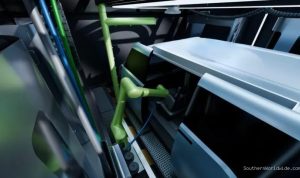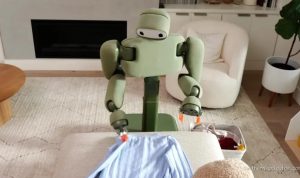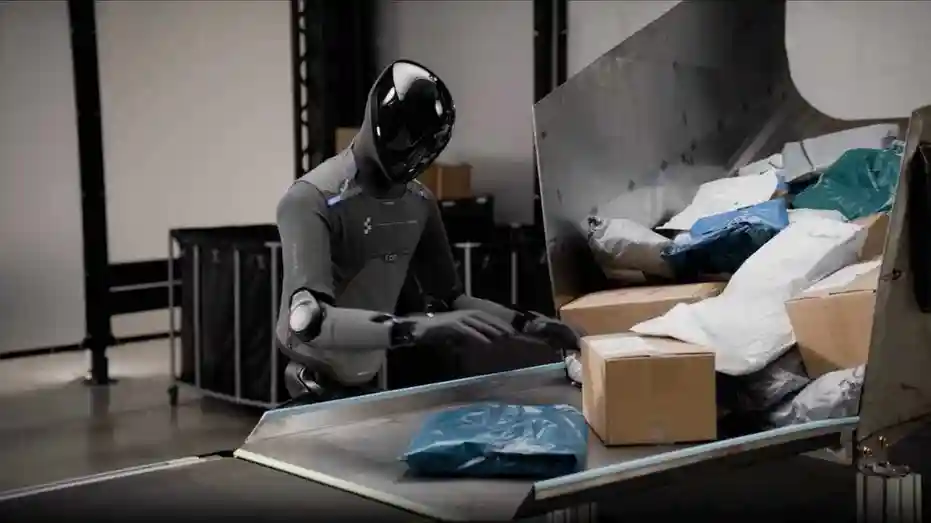
SouthernWorldwide.com – Humanoid robots are now taking on new roles in the retail sector, specifically within the behind-the-scenes operations of a major retail company. Figure AI has entered into a commercial agreement with Catalyst Brands, the parent company of well-known retailers such as JCPenney, Aéropostale, Brooks Brothers, Eddie Bauer, Lucky Brand, and Nautica.
The initial deployment of these robots will commence at Catalyst’s Distribution Logistics Center located in Reno, Nevada. This means the robots will not be interacting with customers on the store floor or performing tasks like folding clothes. Their current assignment is focused on warehouse and supply chain operations.
However, this development has sparked concerns among many. The introduction of humanoid robots into any workplace naturally leads to questions about the future of human employment. These concerns are valid and warrant careful consideration.
THE AI-POWERED ROBOT ARMY THAT PACKS YOUR GROCERIES IN MINUTES
Catalyst Brands has stated that Figure’s humanoid robots will be instrumental in enhancing their supply chain processes. The collaboration aims to leverage these robots for repetitive and physically demanding tasks such as sorting and packing. This initial phase targets warehouse work, which can often lead to physical strain for human employees over time. In Reno, the robots will first support Catalyst’s Joey Pouch sorting system, a technology that aids in computerized induction, sorting, and packing within the facility. It is also noted that the Reno site received a significant infrastructure upgrade, costing $40 million, in 2024.
“As we invest in and scale our portfolio, this collaboration with Figure shows how emerging technologies can modernize our operations while strengthening our workforce,” stated Marc Rosen, CEO of Catalyst Brands. He further explained that by automating routine tasks, their human associates can dedicate their efforts to more valuable work, thereby improving customer service across all their brands.
It is crucial to reiterate that this initiative is currently confined to warehouse operations, not the retail floor. This distinction is important, especially given that some public reactions have implied a more direct entry into stores. The announcement specifically points to warehouse functions as the starting point. Nevertheless, warehouse jobs are legitimate employment opportunities, which is precisely why this partnership is drawing considerable attention.
Catalyst Brands manages a diverse portfolio of major retail brands and oversees an extensive retail network. Figure AI has also characterized this agreement as a significant step towards the widespread adoption of humanoid robots, although the exact number of robots to be deployed has not yet been disclosed.
There is also a financial connection underpinning this collaboration. Brookfield, an investor in Figure AI, also holds an interest in Catalyst Brands. Figure AI has indicated that this marks the first commercial partnership between Figure and a company within Brookfield’s portfolio.
Should the robots perform successfully in the Reno facility, there is a strong possibility that the companies will explore further applications of this technology across their broader operations.
AI LAYOFFS MAY BE BACKFIRING ON COMPANIES
Several critical details are missing from this announcement. The precise number of robots Figure AI will deploy remains unknown. The exact start date for their integration into the workforce has not been specified. Furthermore, the nature of Catalyst’s arrangement with Figure—whether it involves purchasing, leasing, or a robots-as-a-service model—is unclear. The companies have also not provided information regarding the potential impact on human roles.
Figure AI has stated that the robots will be integrated into Catalyst’s distribution facility and will primarily handle physically demanding tasks. However, the announcement does not elaborate on the specific day-to-day job functions these robots will undertake.
The absence of this specific information naturally fuels speculation and anxiety. Online discussions have reflected both of these reactions. Some individuals have interpreted the news as robots directly entering retail stores, while others express a broader concern about robots potentially displacing human jobs.
The apprehension surrounding this deal extends beyond a single company. Employees have already witnessed companies utilizing AI to reduce costs, curb hiring, and restructure their teams. The introduction of physical robots into environments where humans are responsible for lifting, sorting, packing, and moving products represents a distinct shift.
Figure AI and Catalyst Brands maintain that the robots will manage routine tasks, enabling human associates to transition to higher-value responsibilities. While this sounds promising, employees may perceive it differently. They may question who will receive retraining and, more critically, who might be replaced. Companies must address these concerns directly. If humanoid robots are to become a more common feature in workplaces, employees are entitled to clear and transparent answers.
JOBS THAT ARE MOST AT RISK FROM AI, ACCORDING TO MICROSOFT
Warehouse work is inherently physically demanding. Employees routinely lift heavy boxes, move products, perform repetitive motions, and face pressure to maintain speed, especially during peak order periods. This reality is driving retail companies to actively explore automation solutions.
Figure’s value proposition is that its humanoid robots can be integrated into existing infrastructure designed for human workers, negating the need for extensive facility redesigns. In theory, these robots can step into specific roles and alleviate the burden of repetitive tasks.
For retailers, this could translate into faster product movement and reduced physical strain on their human workforce. It could also provide crucial support during busy shopping seasons when distribution centers experience immense pressure.
The next significant indicator will be whether Catalyst chooses to expand the robot program beyond its Reno operations. A limited rollout might serve as a pilot for evaluation. However, a broader deployment would signal a more substantial transformation in how retailers manage their product logistics.
Close attention should be paid to details concerning the number of robots, their specific job duties, and the impact on the human workforce. These specifics will offer the most clarity. Additionally, the language companies use when discussing their employees is important. If they claim robots will help workers transition to better roles, they must provide concrete explanations of how this will be achieved. Employees deserve more than just marketing slogans.
While these robots may begin their tenure in a warehouse setting, the eventual ramifications could extend to workers, shoppers, and product pricing.
For consumers, the potential benefits are readily apparent. If robots contribute to faster product movement, stores might experience fewer stockouts. Online orders could also be processed and shipped more efficiently from warehouses.
The situation for workers is more complex. Companies often assert that robots will handle the most arduous tasks, freeing up humans for more fulfilling roles. While this sounds appealing, workers require more than mere assurances. They need access to training, clear communication, and certainty about whether a robot is intended as a collaborator or a replacement.
For the broader public, this raises a fundamental question: Are we comfortable with retailers employing humanoid robots if it leads to faster or cheaper shopping experiences? Or should companies be obligated to demonstrate that human involvement remains a central component of their operations?
The agreement between Figure AI and Catalyst Brands underscores the rapid integration of humanoid robots into our workplaces. Currently, these robots are being deployed in distribution centers, not on the shop floors of JCPenney. This distinction is significant. Nevertheless, the overarching concern persists: Will these machines assist human workers or gradually render them obsolete? Automation can indeed reduce strenuous physical labor, but it can also generate considerable anxiety when companies fail to provide direct and honest answers. Humanoid robots are poised to become a commonplace element of retail warehouse operations. The true test will be whether companies implement them in a manner that benefits their human employees, rather than viewing people as merely a cost to be minimized.
Would you choose to shop with a retailer that utilizes humanoid robots in its warehouses, or would that give you pause? We welcome your thoughts by writing to us at CyberGuy.com.