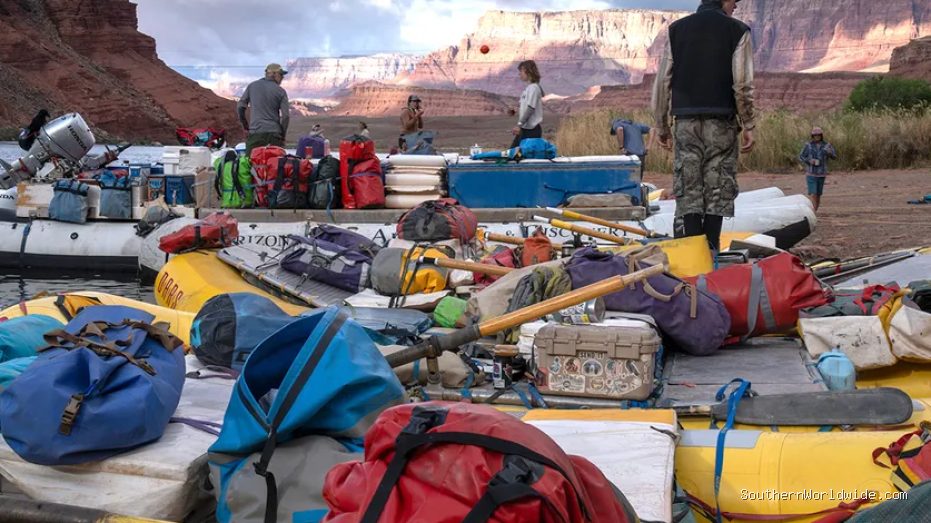
SouthernWorldwide.com – The National Park Service (NPS) has initiated an investigation following reports of a mysterious illness affecting several rafters on separate trips within the Grand Canyon in recent weeks.
Multiple individuals took to social media last week to share their experiences, describing a cluster of unexplained illnesses that have left medical professionals searching for definitive answers. The affected rafters reported undertaking two-week trips, with some journeys commencing as early as mid-May, and developing symptoms after their return home.
Park officials are now spearheading the inquiry as rafters detail severe and painful symptoms, as reported by Paddling Magazine.
The NPS Office of Health and Safety is collaborating with public health partners to identify potential sources of these illnesses. Visitors who have participated in a Grand Canyon river trip this year and experienced similar symptoms are urged to contact the office via email at publichealthprogram@nps.gov.
Online discussions have been rife with speculation regarding the potential causes, with some healthcare professionals and other individuals offering possible explanations. These include mosquito-borne illnesses such as dengue fever and chikungunya.
According to a post in the Facebook group “Grand Canyon Private Boaters,” four individuals became ill after a group of sixteen embarked on a two-week rafting trip in mid-June.
In a post dated July 1, a user named Steven King outlined a range of symptoms experienced by group members, including fever, chills, fatigue, and pneumonia. He noted that some individuals suffered more severe complications, such as fluid accumulation in the lungs and loss of consciousness.
“One person briefly lost consciousness in their doctor’s office, then was subsequently hospitalized,” King stated.
King also described another individual who developed what he termed “cobblestoning,” an infection or a condition resembling cellulitis, on a bruised area of their shin. This condition reportedly felt like a broken bone.
“X-ray doesn’t show a break, and it doesn’t seem to be healing at all but rather getting worse,” he commented.
He mentioned that some individuals have been taking additional precautions due to the uncertainty surrounding the cause of the reported illnesses.
“One person started receiving the rabies vaccine in an abundance of caution even though they are not really showing symptoms of rabies specifically,” the user added.
King reported that the group did not encounter any ticks during their trip but did observe mosquitoes on several evenings while in the canyon.
Separately, Matthew Wappett recounted a similar experience. He reported visiting the emergency room with a swollen knee and “bone-crushing” joint pain after a two-week trip in mid-May. Wappett also confirmed experiencing mosquito bites during the rafting expedition.
“We slept out every night and did get some mosquito bites,” Wappett shared in a post on July 2.
An infectious disease epidemiologist reportedly informed Facebook user Dan Squire that the illnesses could potentially be linked to mosquito-borne viruses like dengue fever or chikungunya.
“Based on the symptoms and the reports of mosquito bites (together with the lack of GI symptoms and no reports of tick bites), it’s sounding viral and symptoms are a good match for both Dengue and Chikungunya. (Hanta should also be ruled out),” Squire wrote, referencing his friend’s assessment.
Squire further noted that while dengue and chikungunya are less common in the U.S. compared to other global regions, Arizona does have mosquitoes capable of transmitting both viruses.
“If someone who had been exposed to these viruses (like during international travel) went into the canyon while still carrying the virus, they could have transmitted to local mosquito populations,” Squire elaborated.
The healthcare professional also suggested that medical practitioners might face challenges in identifying the cause if patients do not disclose recent international travel, potentially leading to delays in testing for specific viruses.
“People reporting symptoms like this, but without recent international travel, are highly unlikely to be tested for these viruses in Arizona,” Squire concluded.