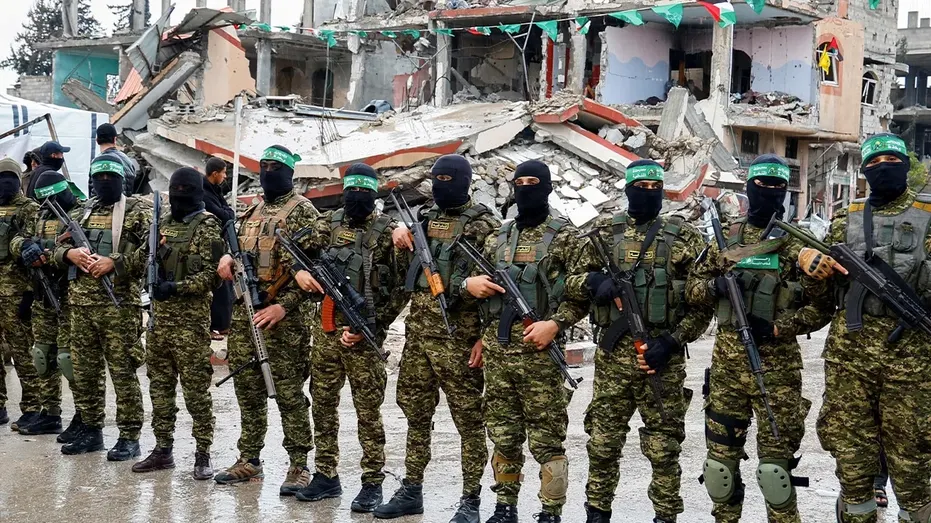
SouthernWorldwide.com – Just before the celebrations for Eid al-Adha, a significant Muslim holiday, commenced in Gaza, an Israeli airstrike targeted a building in Gaza City. This strike resulted in the death of Mohammed Odeh, who had recently been appointed as the head of Hamas’s military wing, according to Israeli officials. Hamas later confirmed his death.
Reports from regional media indicated that members of Odeh’s family also perished in the airstrike. Despite this, Gaza’s markets were reportedly full just two hours later.
This stark contrast highlights a growing disconnect, as described by many Gazans and analysts, between Hamas leadership and civilians who are weary from nearly three years of conflict. This war has, according to the Hamas-run Gaza Health Ministry, claimed the lives of over 70,000 Palestinians. These figures do not differentiate between civilians and combatants and have led to the displacement of most of Gaza’s population.
Oueis stated that “With the deaths of its leaders and the collapse of strong centralized command, Hamas is turning into a smaller militia competing with other armed groups operating in Gaza.” He added, “Hamas is now fighting for survival.”
In a joint statement released on Tuesday, Israeli Prime Minister Benjamin Netanyahu and Defense Minister Israel Katz identified Odeh as “one of the architects of the October 7 massacre.” They noted that Odeh had replaced senior commander Izz al-Din al-Haddad only days prior to his death.
Netanyahu and Katz issued a stern warning, stating, “Sooner or later, Israel will reach all of them.”
Within Gaza, several residents interviewed by Jusoor News expressed that they no longer perceived the deaths of Hamas leaders as personal losses.
“Of course we didn’t feel anything when Haddad, Sinwar, or others were killed,” a Gazan activist and former political prisoner shared with Jusoor News during an on-camera interview, his face obscured for his safety.
The activist was referencing Izz al-Din al-Haddad, the Hamas military commander whom Israel announced it had killed in May, and Yahya Sinwar, the former Hamas leader and a principal architect of the October 7, 2023, attacks, who was reportedly killed by Israeli forces in southern Gaza in October 2024.
Read more : FCC Robocall Crackdown May Reshape Phone Privacy
“Ordinary people are the ones who paid the price, not the leaders who made reckless decisions without thinking,” the activist asserted.
“As a result, Gaza today is almost completely destroyed,” he continued. “There are families who have lost everything, while the remaining leaders abroad and inside continue to gamble with our lives constantly.”
A journalist based in Gaza echoed this sentiment of frustration.
“When we heard about the killing of Izz al-Din Haddad or others, we were not affected,” the journalist said. “What is even more painful is that the children of the leaders live outside Gaza, in Turkey and Qatar, driving luxury cars and living comfortable lives, while people here have almost gone back to the Stone Age.”
Another journalist from Gaza and a human rights advocate told Jusoor that Hamas had inflicted as much harm on Palestinians as it had on Israelis.
“I do not see the deaths of the leaders as losses for the Palestinians, because we ordinary people are the ones who paid the price,” the advocate stated. “Honestly, Hamas did not only hurt the Israelis — they hurt us as well.”
Concurrently, Israeli analysts are cautioning that the repeated assassinations do not necessarily signal an imminent collapse of Hamas.
“Almost nobody remains from the core group that planned and led the October 7 attack,” one analyst observed.
However, he pointed out that Odeh himself was largely considered a second-tier figure before the war, rather than an obvious successor to Hamas’s historical military leadership.
“The people replacing them are far less experienced, less capable and far less charismatic,” Milshtein commented.
Despite these losses, he argued that Hamas continues to maintain functioning chains of command and ideological cohesion.
“People know they are likely going to die, and they still compete for these leadership positions,” he stated.
The ongoing discussion about Hamas’s future unfolds as international endeavors to shape a postwar political landscape for Gaza gain momentum.
Nickolay Mladenov, appointed as the High Representative for Gaza under the Board of Peace initiative, unveiled the key components of a proposed 15-point “Roadmap to Complete the Implementation of President Trump’s Gaza Comprehensive Peace Plan.”
This proposal includes a phased disarmament process for Hamas, security reforms overseen by international bodies, and the establishment of “one authority, one law, one weapon” within Gaza.
“Gaza cannot recover while armed groups simultaneously operate as governing authorities,” Mladenov wrote in his social media outline of the proposal.
For numerous Gazans, weary from years of war, displacement, and destruction, the deaths of Hamas leaders now seem to carry less emotional weight than the prospect of the conflict finally concluding.
“Gaza cannot remain hostage to the idea of permanent war while civilians alone pay the entire price,” one activist concluded.