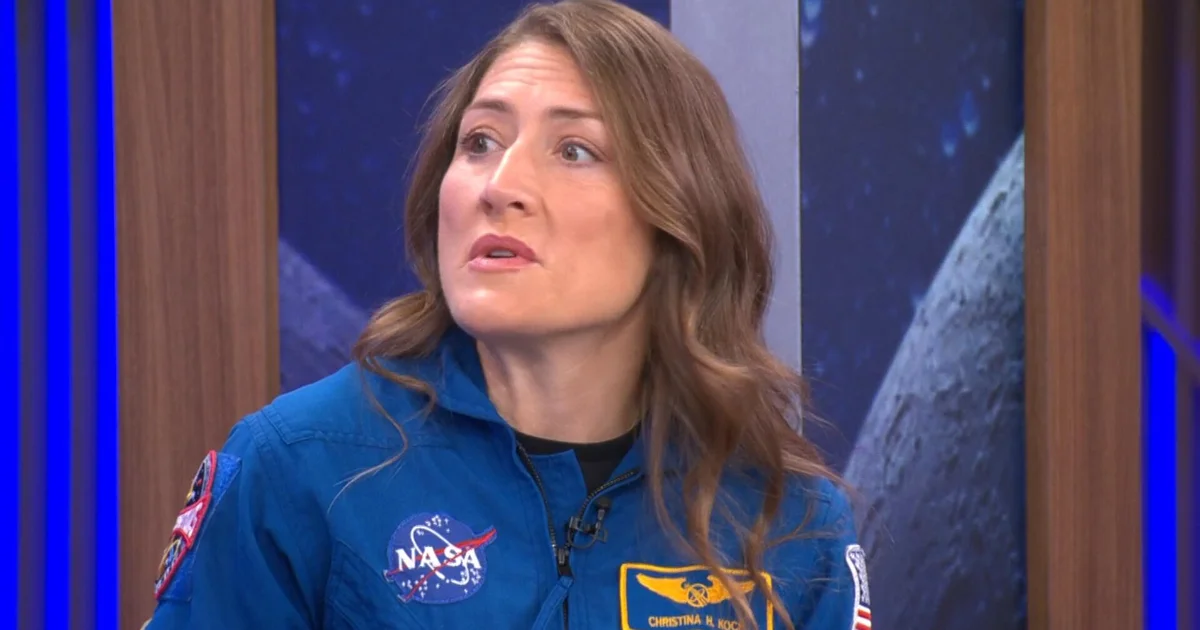
SouthernWorldwide.com – Christina Koch, an astronaut slated for the Artemis II mission, recently shared insights into how this upcoming lunar voyage will differ significantly from her previous experiences aboard the International Space Station (ISS).
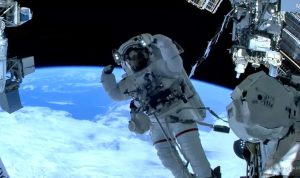
Koch, who holds the record for the longest single spaceflight by a woman, has spent a cumulative total of 328 days in space across two missions. Her time on the ISS was characterized by routine scientific experiments, maintenance tasks, and the unique challenges of living and working in microgravity for extended periods.
The ISS orbits Earth at an altitude of approximately 400 kilometers, providing a relatively stable and familiar environment for astronauts. The station’s infrastructure is well-established, and the daily operations are largely predictable, albeit demanding.
In contrast, the Artemis II mission, scheduled for launch in 2024, is designed to send a crew of four astronauts on a journey around the Moon. This mission represents a significant leap beyond low Earth orbit, pushing the boundaries of human space exploration further than any mission since the Apollo era.
Koch highlighted that the Artemis II mission will involve a much longer transit time compared to trips to the ISS. The journey to the Moon and back will span several days, requiring astronauts to adapt to different physiological and psychological conditions.
The spacecraft for Artemis II, the Orion capsule, is also a stark contrast to the ISS. Orion is a more advanced and robust vehicle, designed specifically for deep space travel. It will provide life support and propulsion capabilities necessary for the journey to the Moon and return to Earth.
One of the key differences Koch pointed out is the increased radiation exposure in deep space. Outside the protective bubble of Earth’s magnetosphere, astronauts will be exposed to higher levels of cosmic and solar radiation, necessitating enhanced shielding and monitoring measures.
The psychological aspects of the mission will also be different. While the ISS offers a view of Earth, Artemis II will provide astronauts with a unique perspective of the Moon and the vastness of space. This change in environment could have profound psychological effects.
Koch emphasized the importance of the Artemis program in paving the way for future lunar surface missions and eventual human exploration of Mars. Artemis II is a crucial step in testing the systems and procedures required for these ambitious long-duration voyages.
Her experience on the ISS has provided her with invaluable skills and knowledge in spacecraft operations, scientific research, and teamwork. These skills will be essential as she embarks on this historic mission to the Moon.
The Artemis II crew will perform a flyby of the Moon, testing Orion’s capabilities and ensuring the safety of the spacecraft for future missions that aim to land astronauts on the lunar surface.
Koch’s transition from the relatively contained environment of the ISS to the deep space challenges of the Artemis program underscores the evolving nature of human spaceflight. Her insights offer a compelling glimpse into the future of lunar exploration.
The mission is expected to last approximately 10 days, a significant duration for a single mission compared to the typical 6-month stays on the ISS.
The preparation and training for Artemis II have been rigorous, focusing on the specific demands of deep space travel, including navigation, emergency procedures, and lunar environment simulation.
Koch’s perspective is particularly valuable given her extensive experience with long-duration spaceflights.
Her comments serve to highlight the immense technological and human challenges that lie ahead as humanity ventures further into space.
The Artemis program aims to establish a sustainable human presence on the Moon, serving as a stepping stone for future missions to Mars.
Koch’s role in this program is critical, representing a new era of lunar exploration and scientific discovery.
Her ability to adapt and excel in different space environments is a testament to the dedication and expertise of NASA astronauts.
The upcoming mission is anticipated to capture the public’s imagination and inspire a new generation of scientists and engineers.
The success of Artemis II will be a significant milestone in humanity’s ongoing quest to explore the cosmos.
Koch’s readiness for this new frontier is evident, drawing upon her profound experience with the International Space Station.
Read more : John Ternus to Replace Tim Cook as Apple CEO
Her insights into the differences between ISS missions and the Artemis program provide a clear picture of the advancements and challenges in space travel.
The Artemis II mission is more than just a journey; it’s a critical testbed for technologies and strategies necessary for sustained human presence beyond Earth.
Koch’s unique position as a veteran ISS astronaut and an Artemis II crew member allows her to offer a truly comparative perspective on these monumental endeavors.
Her words emphasize the continuous evolution of space exploration, moving from orbital research to deep space exploration.
The difference in scale, duration, and environment between the ISS and the Moon mission is substantial, requiring a different mindset and skillset from the astronauts.
The Artemis program signifies a return to lunar exploration with a long-term vision, unlike the shorter Apollo missions.
Koch’s role is vital in validating the systems that will support astronauts on these extended voyages.
Her understanding of the psychological impact of isolation and confinement on the ISS will be crucial in managing the crew’s well-being during the longer Artemis II journey.
The mission’s success hinges on meticulous planning, cutting-edge technology, and the resilience of its astronaut crew.
Christina Koch’s insights are invaluable for understanding the complexities and excitement of humanity’s next giant leap into space.
The Artemis II mission is set to be a landmark event, pushing the boundaries of what is possible in human spaceflight.
Her perspective helps demystify the differences between missions in low Earth orbit and those venturing towards the Moon.
The Artemis program represents a concerted effort to build capabilities for future deep space exploration.
Koch’s experience provides a vital bridge between current space operations and the future of lunar and Martian exploration.
The journey to the Moon will test human adaptability and technological prowess in unprecedented ways.
Her comments underscore the significant scientific and operational distinctions between the ISS and the Artemis missions.
The Artemis II mission is not just about reaching the Moon, but about learning how to live and work there, and ultimately, how to travel to Mars.
Koch’s deep understanding of spaceflight dynamics will be instrumental in the success of this pioneering mission.