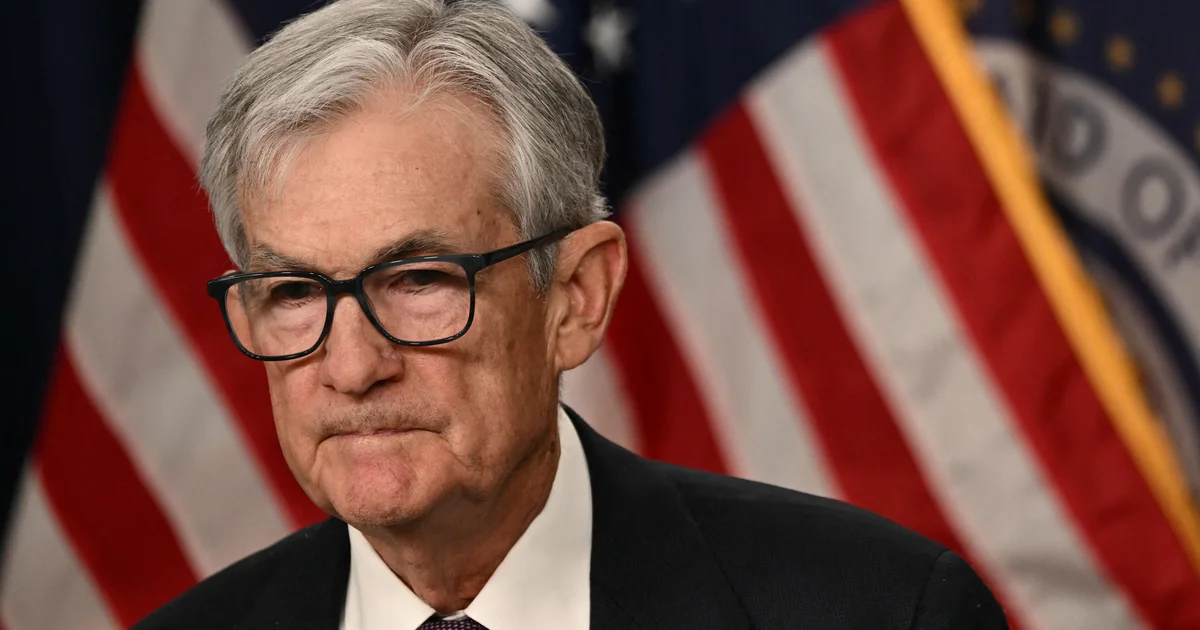
SouthernWorldwide.com – As Jerome Powell concludes his tenure as Federal Reserve chair, his legacy is being shaped by his navigation of significant economic challenges and his steadfast defense of the institution’s independence.
Powell’s leadership during a period marked by pandemic-induced disruptions and the highest inflation in four decades has been widely acknowledged by economists. They credit his pragmatic approach for guiding the economy through a turbulent era.
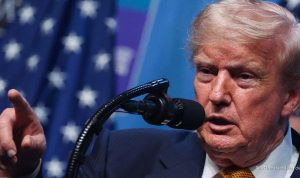
His commitment to the Federal Reserve’s autonomy, especially in the face of legal challenges and pressure from former President Trump, is expected to be a defining aspect of his legacy.
“His enduring legacy will be that he protected the Fed’s independence at a time of unprecedented challenges,” stated David Wessel, a senior fellow at the Brookings Institution and author of “In Fed We Trust: Ben Bernanke’s War on the Great Panic.”
Wessel further commented that Powell’s leadership assured the public of a trustworthy individual at the helm of a crucial economic institution.
Mark Zandi, chief economist at Moody’s Analytics, praised the Fed’s performance under Powell for managing monetary policy effectively through a difficult period, largely achieving its dual mandate.
However, Zandi highlighted that Powell’s most significant contribution might be his determined efforts to preserve the Fed’s independence towards the end of his term.
Powell is set to hand over the chairmanship to Kevin Warsh, a former Fed official appointed by former President Trump. In an unusual move, Powell will continue as a Federal Reserve governor, citing ongoing legal risks to the institution from the Trump administration.
The Trump Factor: From Support to Scrutiny
Initially, when President Trump nominated Powell in February 2018 to succeed Janet Yellen, he lauded Powell’s “wisdom and leadership to guide our economy.”
However, Trump’s sentiment shifted as the Fed began raising interest rates in 2018 to curb potential economic overheating. This change foreshadowed more aggressive criticism from Trump, who later described Powell with terms like “numbskull” and “complete moron.”
The economic downturn caused by the 2020 pandemic, which led to a sharp rise in unemployment, became a primary focus. Powell led the Federal Open Market Committee (FOMC) through emergency meetings that March, resulting in a near-zero benchmark rate to stabilize the labor market.
“Powell kept the economy resilient throughout the pandemic and, in combination with robust fiscal policy through COVID-era stimulus legislation, supported workers when they needed it most,” noted Liz Pancotti, managing director of policy and advocacy at Groundworks.
Powell’s Most Significant Misstep
The initial economic fallout from the pandemic evolved into a severe challenge: inflation reaching levels not seen since the early 1980s. This surge in prices significantly impacted Americans, shifted the political landscape, and is widely considered Powell’s most significant error as Fed chair.
In 2021, as prices began to climb, Powell initially characterized the inflation as “transitory,” attributing it to temporary factors like supply chain disruptions rather than deeper structural issues like labor shortages or low interest rates.
Hesitant to tighten monetary policy and potentially slow economic growth, Fed officials delayed interest rate hikes until March 2022. By then, the Consumer Price Index had already surged to an annual rate of 8.5%.
Economists believe this delay represented a missed and costly opportunity for Powell.
“His record on inflation is very mixed, given that we’ve been overshooting the target for the last several consecutive years,” commented Adam Crisafulli, head of investment research firm Vital Knowledge. He acknowledged that external factors like COVID, fiscal policies, and geopolitical conflicts played a role, but noted that historical assessments often simplify such complexities.
Tim Duy, chief economist at SGH Macro Advisors, suggested that Powell’s caution in raising rates reflected the Fed’s emphasis on the employment aspect of its dual mandate, which requires balancing stable prices with maximum employment.
Duy pointed out that over the past five years, the Fed has struggled to achieve both objectives concurrently.
“Inflation has remained above target for more than five years, while unemployment has stayed low for most of that period,” he observed.
An Improbably Soft Landing
With inflation at a 40-year high in 2022 and the labor market under strain, economists widely feared a recession.
However, Powell and the Fed managed to engineer a “soft landing.” This involved raising interest rates sufficiently to curb inflation without triggering a significant increase in unemployment, a feat considered remarkable given the Fed’s historical tendency to inadvertently cause recessions.
Instead of a severe economic downturn, the U.S. economy continued to grow, unemployment reached a 50-year low, and inflation began to decline.
“Navigating the COVID-driven inflation shock without triggering a recession and maintaining — if not enhancing — the Fed’s inflation-fighting credibility is, in my view, Powell’s greatest success,” stated Michael Luzzetti, chief U.S. economist at Deutsche Bank.
Despite this success, inflation has not yet returned to the Fed’s 2% annual target, a goal Powell reiterated remains a primary focus in his final press conference.
Trump 2.0
Powell, reappointed by President Joe Biden in 2022, faced further supply shocks during former President Trump’s second term. The administration’s tariffs raised concerns about their impact on inflation and economic growth.
Subsequently, the Iran war caused oil prices to escalate, contributing to the highest inflation rate in nearly three years. The Consumer Price Index in April reached an annual rate of 3.8%, the highest since May 2023.
“Powell’s leadership of the FOMC will likely be remembered as pragmatic, disciplined and unusually adaptive during one of the most volatile macroeconomic periods in decades,” said Greg Daco, chief economist of EY-Parthenon. He added that this flexibility helped the Fed manage uncertainty while preserving its credibility and underscoring institutional independence.
Alongside these economic challenges, Powell also contended with unprecedented attacks on the Fed’s independence from the Trump administration. Trump had labeled Powell a “lousy” Fed chair, criticized his interest rate policies, and initiated legal actions.
In January, the Department of Justice launched a criminal investigation into Powell concerning the Federal Reserve’s building renovations. Powell viewed this probe as a ploy to pressure the Fed into lowering interest rates, aligning with Trump’s desires.
Although the Justice Department has since dropped the investigation, Powell announced last month that he would remain as a Fed governor. In this capacity, he will be one of 12 voting members of the FOMC, and his experience as a former chair is expected to maintain his significant influence on monetary policy discussions.
Read more : Oklahoma Sues Roblox Over Child Safety
“Powell’s ultimate story isn’t yet known,” Crisafulli concluded. “If he preserves monetary independence, that will be the opening line of his obituary — not the, at best, mixed track record of inflation during his tenure.”