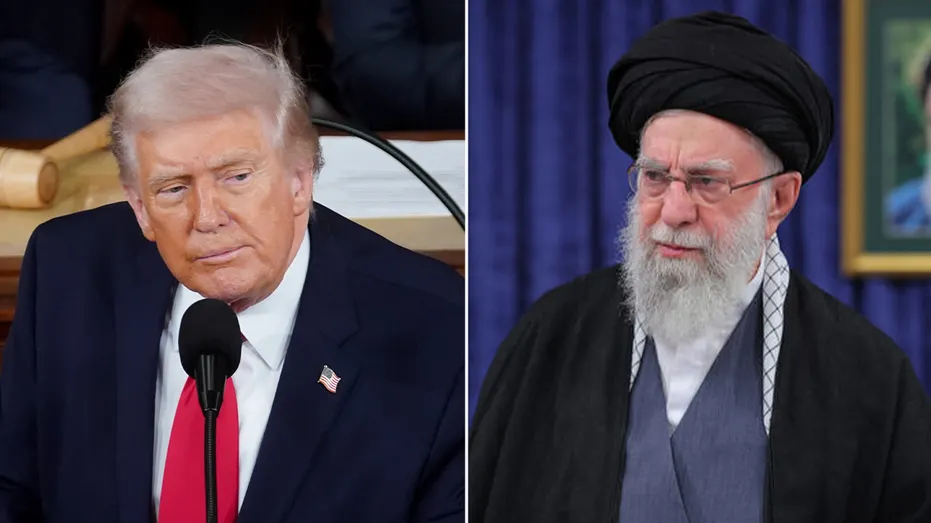
SouthernWorldwide.com – New details emerging from Iran’s top diplomat regarding the strike that killed Supreme Leader Ali Khamenei offer some of the most concrete evidence to date of the precise and strategic nature of the joint U.S.-Israeli operation, dubbed Operation Epic Fury. Counterterrorism experts highlighted this on Sunday.
The account, disclosed by Iranian Foreign Minister Abbas Araghchi in a recent television interview, also underscores what analysts perceive as a key characteristic of President Donald Trump’s national security strategy: executing a decapitation strike against a hostile regime while simultaneously providing an avenue to de-escalate and end the conflict.
“Well, the building we were sitting in was targeted, but the wing we were in remained intact while the other wing of the building was destroyed,” Araghchi stated during an interview broadcast on June 4th by Al Mayadeen, a television network based in Lebanon and supported by Hezbollah.
Although Araghchi survived the February 28th strike because he was in a different section of Khamenei’s compound when the attack occurred, he proceeded to describe how Khamenei was in his office and how others managed to survive the incident.
BEFORE-AND-AFTER SATELLITE IMAGERY OFFERS A RARE LOOK AT DAMAGE INSIDE IRAN
“In the Arabic version of his statement, Araghchi mentions he was in a separate wing of the compound, engaged in a briefing with another official, and that his wing remained unharmed while the leader’s office was destroyed,” explained Mohammed.
Araghchi further informed the interviewer that he had a scheduled meeting that day with an official at the compound concerning the Geneva negotiations. He added that, based on the typical operational flow, Khamenei “had to be present in his office.”
Mohammed, who directs the Antisemitism Research Initiative within the Program on Extremism at George Washington University, commented that if Araghchi’s account is accurate, it represents Iran’s clear acknowledgment of U.S. strategic capabilities.
“They did not flatten an entire building; they targeted one wing and left the adjacent one standing. This exemplifies President Trump’s entire doctrine in a single strike – he is not seeking an occupation war, but rather demonstrating that the United States can precisely strike at the heart of a hostile regime and then offer a path toward resolution,” Mohammed stated.
DOZENS OF TOP IRANIAN REGIME OFFICIALS, SUPREME LEADER KILLED IN ISRAELI STRIKES
The daylight strike on the compound of the elder Khamenei was executed by Israeli jets. The site was targeted with 30 precision-guided munitions, complemented by Sparrow air-launched ballistic missiles.
Military officials confirmed that a carefully sequenced strike resulted in the deaths of Khamenei, aged 86, along with Defense Minister Amir Nasirzadeh, IRGC Commander Mohammed Pakpour, and numerous high-ranking security officials.
Trump confirmed U.S. involvement in Khamenei’s killing through a social media post at the time of the event.
“He was unable to evade our intelligence and highly sophisticated tracking systems, and, working closely with Israel, there was not a thing he or the other leaders killed alongside him could do,” the president wrote in his post.
“Iran received the most unambiguous message an adversary can receive – we can reach your leader in his own office, and here is the off-ramp,” Mohammed observed. “A rational state would take this exit. Tehran chose the opposite path. They fired on Israel, killed a civilian in Bahrain, struck targets in Kuwait, Qatar, and the United Arab Emirates, and closed the Strait of Hormuz, triggering a global energy crisis. The precision strike was a U.S. operation. The subsequent months-long conflict was a choice made by Iran.”
Following the transition in leadership, Ali Khamenei’s son, Mojtaba Khamenei, assumed the role of Iran’s new supreme leader.
IRAN’S NEW SUPREME LEADER IS ‘HIS FATHER ON STEROIDS,’ EXPERTS WARN OF HARDLINE RULE
He has since been involved in covert discussions with the U.S. while publicly maintaining a confrontational stance.
“In Arabic, Araghchi refers to the new leader as ‘the young Khamenei in place of the elderly Khamenei.’ This language evokes a monarchy, not a republic of clerics,” Mohammed noted. “They are essentially reinterpreting religious doctrine publicly to accommodate a son who lacks the requisite religious standing, who was injured in the same strike, and who subsequently disappeared for several weeks. A revolution that came to power by overthrowing a monarchy is now passing the leadership from father to son.”
“The true narrative here is not that Iran is powerful,” Mohammed continued. “It was shown the precision of American military capability, and an exit was offered, yet it chose to escalate the conflict instead.”