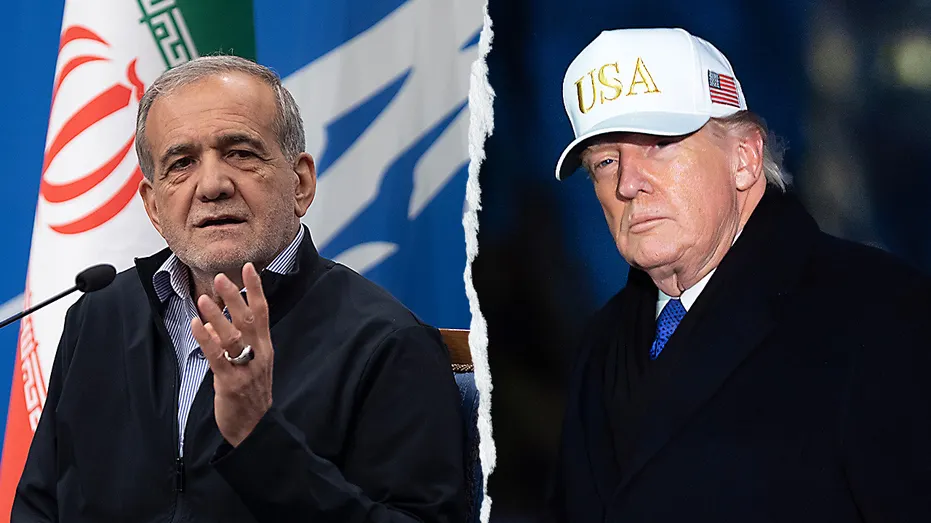
SouthernWorldwide.com – Iranian President Masoud Pezeshkian has invoked a potent wartime symbol from the Iran-Iraq War era, indicating Tehran’s steadfastness against the United States and Israel across the region. This strategic signaling comes at a critical juncture in diplomatic efforts, with U.S. President Donald Trump suggesting a deal to end the ongoing conflict is “largely negotiated.”
Trump has presented a clear ultimatum: either a “great and meaningful” agreement will be signed, or the U.S. will withdraw from negotiations entirely. While Iran has indicated some common ground with Washington on certain aspects of the potential deal, it has also emphasized that a final agreement is not imminent, and discussions on the remaining details are still ongoing.
The Iranian leader’s significant remarks were made on May 24, coinciding with the anniversary of the 1982 recapture of Khorramshahr from Iraqi forces. This event holds deep ideological significance for the Islamic Republic, symbolizing national resistance and defiance against invasion.
In an X post, President Pezeshkian declared, “Khorramshahr today is Iran, the Persian Gulf, and the Strait of Hormuz.” He further elaborated that “resistance, self-sacrifice, and repelling aggression are rooted in the culture of this land.”
Analysts interpret this invocation as a deliberate move to tap into one of the most profound ideological touchstones of the Islamic Republic. The battle for Khorramshahr is widely seen as a representation of national resilience, the sacrifices of civilians, and an unwavering stance against aggression.
Dr. Omar Mohammed, director of the Antisemitism Research Initiative Program on Extremism at George Washington University, highlighted the strategic timing of Pezeshkian’s statement. He noted that the reference to the Iran-Iraq War is precisely the point of the message.
May 24th commemorates the liberation of Khorramshahr, a southwestern city that Saddam Hussein’s forces captured early in the war. Iranian forces eventually recaptured the city after months of intense urban warfare.
Read more : Will Ospreay Confident He Can Lead AEW with World Championship Victory
Mohammed explained that Pezeshkian is effectively framing the current confrontation within the context of the 1980-1982 defensive war. This narrative positions Iran as the attacked party, with ordinary citizens expected to stand and fight. The message emphasizes “resistance, sacrifice, repelling aggression” as the inherent cultural response.
The analyst further pointed out that certain phrases used by Pezeshkian evoke the imagery of volunteer and Basij fighters confronting a professional invading army. He also identified Pezeshkian’s reference to the Strait of Hormuz as a common Iranian tactic for escalating tensions.
Mohammed stressed that invoking the Strait of Hormuz within a wartime mobilization framework, even rhetorically, serves as a deliberate and significant signal. It is not merely casual commentary.
According to Mohammed, the “Khorramshahr frame” represents the deepest strategic register available to the Iranian regime. It is the symbolic language they employ to convey a sense of existential threat rather than a manageable crisis.
The director elaborated that Pezeshkian’s X post, originating from the presidential account, is intended to convey a “high-stakes message.” This framing is a clear indicator of Iran’s internal posture and resolve.
In essence, Mohammed concluded, the reference to Khorramshahr signifies a declaration: “we are being invaded and we will not negotiate.” This signals a firm and uncompromising stance in the face of perceived aggression.