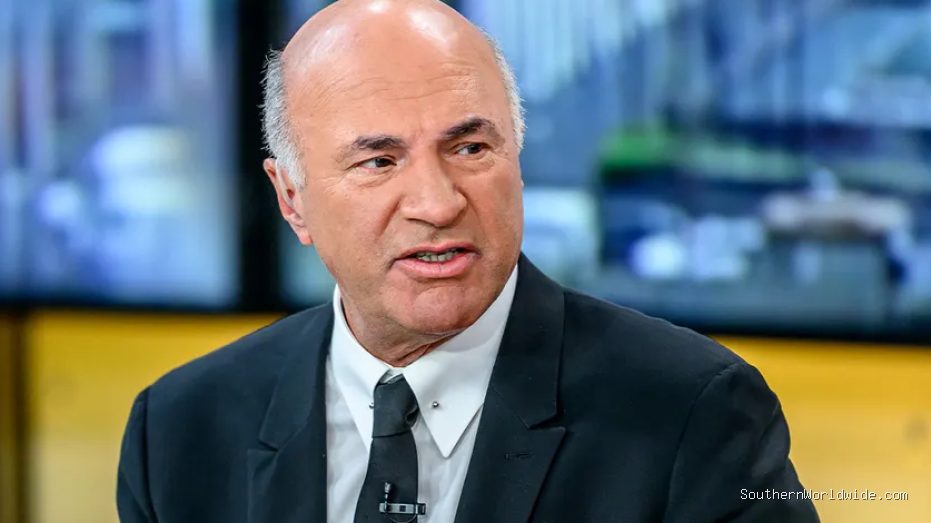
SouthernWorldwide.com – Kevin O’Leary, a prominent investor and television personality, has issued a stark warning that China is gaining the upper hand in the artificial intelligence (AI) race due to the slowdown in data center production across the United States.
Data centers are crucial for the advancement of AI, serving as the physical infrastructure that supports the immense computational power and storage capabilities required for AI development. However, O’Leary points to increasing opposition and regulatory hurdles in the U.S. that are impeding the construction of these vital facilities.
He highlighted that China is actively investing in and improving its power grid infrastructure, which is essential for supporting the massive energy demands of data centers. This strategic focus, O’Leary argues, positions China to accelerate its AI development, potentially leaving the U.S. behind.
“The country that has the best AI will have the best economy and the best defense, the best military, and win all the wars because it’s going robotically,” O’Leary stated, emphasizing the geopolitical and economic implications of AI dominance.
The construction of data centers in the U.S. faces opposition from various groups concerned about their environmental impact, particularly regarding water usage and energy consumption. These concerns have led to local protests and regulatory challenges, slowing down project timelines.
In contrast, former President Donald Trump has advocated for the acceleration of data center development. His administration previously signed an executive order aimed at reducing regulatory burdens and fast-tracking the permitting process for data center infrastructure.
However, some lawmakers have raised alarms about the rapid expansion of data centers and the potential risks associated with AI. Senators Bernie Sanders and Representative Alexandria Ocasio-Cortez introduced legislation proposing a moratorium on new AI data center construction until a comprehensive framework is established to address the societal implications of AI.
“Congress has a moral obligation to stand with the American people and stop the expansion of these data centers until we have a framework to adequately address the existential harm AI poses to our society,” Ocasio-Cortez remarked, prioritizing societal well-being over immediate economic gains.
Despite these concerns, proponents argue that data centers create significant economic opportunities, including job creation and community development. They believe that hindering data center construction could have negative repercussions for economic growth and technological competitiveness.
Adding to the urgency, Nvidia CEO Jensen Huang noted that China’s ability to construct data centers significantly outpaces that of the U.S. He pointed out that while building a data center in the U.S. can take approximately three years, China can erect facilities like hospitals in a weekend, illustrating a stark difference in construction speed and efficiency.
O’Leary warned that this disparity in development speed could lead to China gaining a substantial advantage in AI, potentially impacting U.S. national security and economic stability.
While the U.S. currently possesses a greater number of operational data centers than China—over 4,000 compared to just over 300, according to Statista as of April—O’Leary cautioned that this lead could diminish if the U.S. continues to slow down its development efforts.
The debate over data center development in the U.S. highlights a critical juncture in the global AI race, with significant economic, technological, and national security implications at stake.