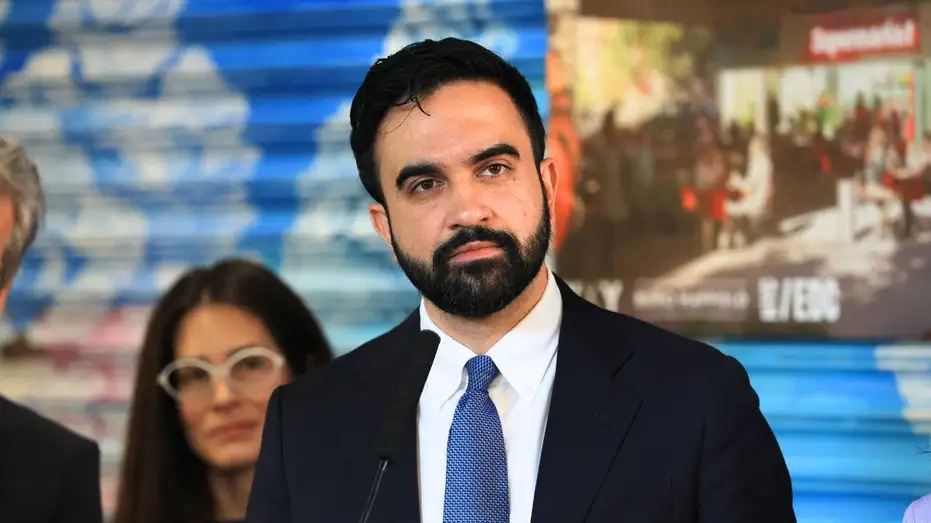
SouthernWorldwide.com – New York City Mayor Zohran Mamdani’s recent overtures to powerful Wall Street figures have drawn criticism, particularly from those who view his past rhetoric as anti-billionaire. This shift comes after months of Mamdani advocating for higher taxes on the wealthy and corporations.
The mayor’s meetings with JPMorgan Chase CEO Jamie Dimon and Goldman Sachs CEO David Solomon highlight a growing unease within the business community. They are concerned that Mamdani’s progressive agenda, which includes increased taxes on the affluent, might conflict with the financial sector’s vital role in the city’s economy.
New York City’s significant influence on national banking, investing, and corporate headquarters means that any financial instability in the city could have nationwide repercussions. Business leaders are closely watching these developments.
Adam Lehodey, an expert from the Manhattan Institute, suggested that Mamdani’s engagement with Wall Street indicates a recognition that New York requires the support of businesses and wealthy investors to fund its progressive initiatives. He emphasized that alienating these key players is not a viable solution for the city’s problems.
“Simply alienating them isn’t going to solve any of New York’s problems,” Lehodey stated.
Lehodey further argued that the city cannot finance ambitious progressive goals, such as universal childcare and subsidized housing, without robust tax revenues and a thriving private sector. He warned that a strategy focused solely on taxing the wealthy could exacerbate New York’s economic difficulties by discouraging investment.
“It’s a good thing that he’s meeting with them, but now he needs to follow up and deliver something substantive,” Lehodey commented. “The current tax-the-rich strategy is only going to worsen the problems unless he follows up and says, ‘Let’s look at what we can do to make it easier to invest in New York State and New York City.’”
Mamdani’s efforts to engage with the financial elite have also extended beyond the top banking executives. Citadel, the hedge fund founded by Ken Griffin, stated that Griffin “welcomes thoughtful, serious conversations about the policies that can grow the city’s economy and create more opportunity for all New Yorkers.” However, they also cautioned that “reckless political theater serves no purpose.”
Griffin himself has clashed with Mamdani over proposed taxes targeting the ultra-wealthy and concerns about rising crime. These issues have mirrored the tensions that previously led Griffin to relocate his business and significant capital away from Chicago.
Jeff Bezos, the founder of Amazon and the world’s fourth-richest person, publicly supported Griffin, criticizing Mamdani’s rhetoric towards wealthy business leaders. Bezos accused politicians of employing an “age-old technique” of “picking a villain and pointing fingers.”
“It isn’t right… to stand in front of Ken Griffin’s house and act like he is some kind of villain,” Bezos told CNBC. “Ken Griffin isn’t a villain, he hasn’t hurt anybody, he’s not hurting New York, in fact quite the opposite.”
While Bezos acknowledged that discussions about increasing taxes on top earners are valid, he expressed disapproval of what he termed the “vilification” of wealthy Americans. He argued that excessive government spending, rather than insufficient tax revenue, is the primary cause of the nation’s fiscal challenges.
These developing tensions highlight the complex challenge facing the mayor of the nation’s financial hub. Wall Street and high-income earners are crucial sources of New York City’s tax revenue, even as progressive activists advocate for a more significant redistribution of wealth.
Nicole Huyer, a senior policy analyst at The Heritage Foundation, characterized Mamdani’s meetings with Dimon and Solomon as an attempt to mend strained relationships with the city’s business community following his “tax the rich” campaign rhetoric. She cautioned that policies perceived as hostile to corporations and wealthy taxpayers could accelerate the departure of businesses and capital from New York, citing Ken Griffin’s move to Florida as an example.
Huyer added that “pitching class warfare and then pivoting to court Wall Street executives risks appearing politically performative.”