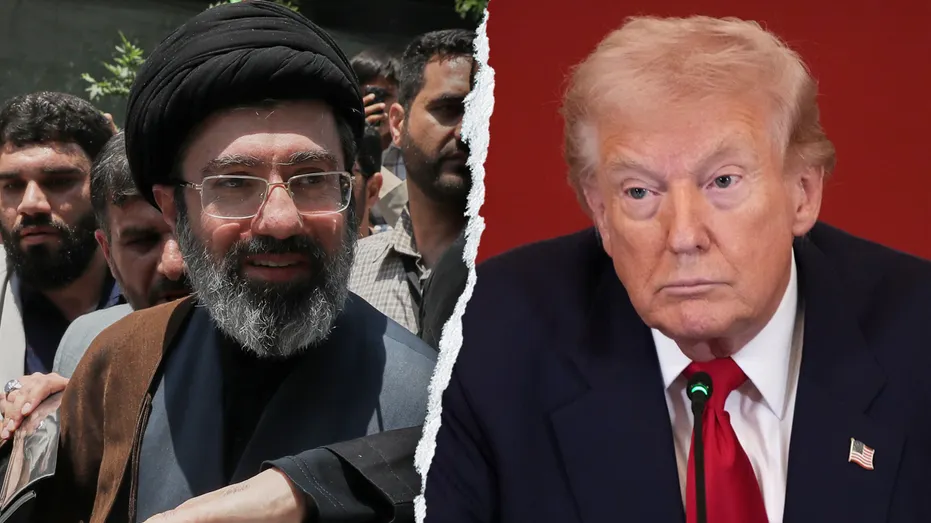
SouthernWorldwide.com – Counterterrorism experts have stated that Iran’s supreme leader, Mojtaba Khamenei, would need to approve any final agreement with the U.S. via clandestine courier networks while remaining in hiding due to his status as a “designated target.”
This unprecedented arrangement, they contend, signifies that Washington is engaged in high-stakes negotiations with a completely unseen counterpart. The potential memorandum would be signed by a regime leader and a “designated target” who is unable to publicly reveal his identity.
“The courier system used for messaging is not transitional. It is the operating system of his rule.”
IRAN’S SUPREME LEADER RUNS ‘STATE WITHIN A STATE’ THROUGH SECRET 4,000-PERSON NETWORK, REPORT SAYS
“Any deal the United States signs will have to be designed for a permanently invisible counterparty whose enforcement depends on his continued survival. That is not arms control as it has been conventionally understood. It is a memorandum signed under American military pressure, with a regime whose leader cannot show his face.”
These remarks were made by Dr. Omar Mohammed, director of the Antisemitism Research Initiative Program on Extremism at George Washington University, following explanations from Secretary of State Marco Rubio to reporters in India regarding the delays in the deal.
“It’s just the response,” Rubio stated. “I mean, when you get down on some of these things, you’ve got to hear back, and it takes the Iranians — takes them a little while longer to get back,” he elaborated.
“That is Secretary Rubio confirming the courier latency on the record,” Dr. Mohammed commented. “Rubio is describing a structural feature of negotiating with a supreme leader no one can locate.
IRAN’S KHAMENEI STAYS AWAY FROM TALKS AS JD VANCE SAYS DYNAMIC MAKES DIPLOMACY ‘MUCH MORE COMPLICATED’
“Mojtaba is in hiding, messages are moving by courier, and responses are arriving days late.
“Rubio just confirmed the symptom, and the administration is being honest about the problem. The question is whether the framework can be designed to survive it,” Dr. Mohammed asserted.
Khamenei has reportedly been in hiding for nearly three months amidst escalating tensions with the U.S.
Read more : BP Replaces New Chair Amidst Conduct Concerns
He went into hiding shortly after a strike on February 28th, which reportedly killed his father, and amidst reports that he himself was severely injured.
According to Defense Secretary Pete Hegseth, he was wounded in Operation Epic Fury, described as “wounded and likely disfigured.” His wife and son were also casualties of the same strike.
“Officials at the highest levels of the Iranian government do not know where he is,” Dr. Mohammed stated, implying that all information he receives is outdated and his responses are significantly delayed.
These observations come as Iran and the United States continue negotiations aimed at reaching an agreement to end the conflict that commenced on February 28th.
IRAN’S SUPREME LEADER MOJTABA KHAMENEI ‘MISFUNCTIONING,’ NOT CONTROLLING REGIME: SOURCES
“If there’s going to be a deal, we’re going to have to work through that. But this is, you know, it’s either going to be a good deal or there isn’t going to be one,” Rubio remarked on Tuesday.
A senior administration official indicated that the U.S. is prepared to ease sanctions if Iran agrees to substantial concessions on uranium enrichment. The issue of frozen Iranian assets has also emerged as a significant obstacle.
Iran stated on Monday that an agreement with the United States was not imminent, despite reported progress toward a framework in the ongoing talks.
Iran’s Foreign Ministry spokesman, Esmaeil Baghaei, emphasized that the focus of the discussions remained on ending the conflict on all fronts, including in Lebanon, and that a potential memorandum of understanding did not include specific details regarding the management of the Strait of Hormuz.
“The real question for Washington is not how fast the framework can be signed,” Dr. Mohammed added.
“It is also what enforcement looks like when the counterparty’s signature comes through a courier.”