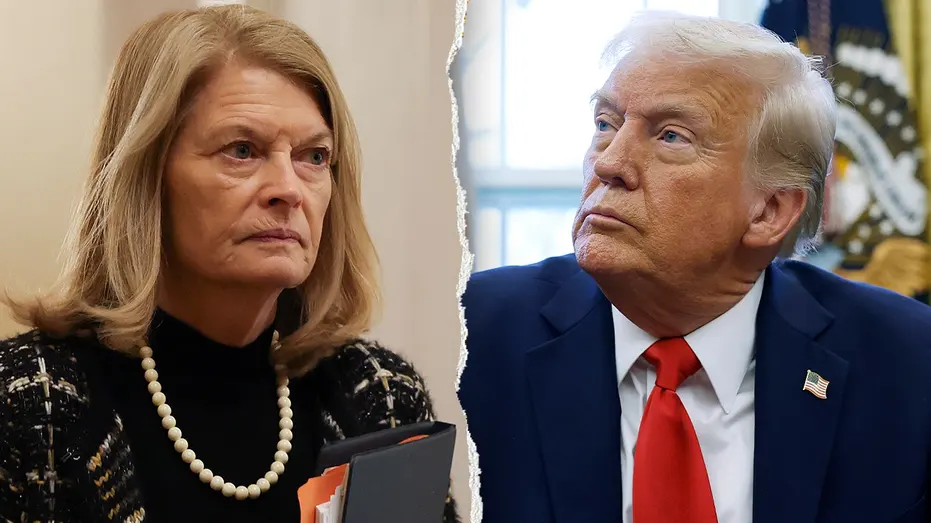
SouthernWorldwide.com – Senator Lisa Murkowski, a Republican from Alaska, has once again deviated from President Donald Trump’s stance, this time by siding with Democrats on a vote concerning war powers in Iran.
The Senate was remarkably close to limiting President Trump’s war-making authority regarding Iran. This vote represented one of the most significant attempts by Senate Democrats to reassert Congress’s constitutional role in matters of war.
The near success was largely attributed to Senator Murkowski, a Republican known for her independent decision-making. Her vote came after Congress had already passed the statutory deadline for either authorizing or halting the President’s actions in Iran.
Murkowski stated that she had hoped for more clarity from the administration regarding their next steps, but had not received the necessary information. This lack of clarity prompted her to support advancing a measure that would allow for a discussion on war powers responsibilities.
She emphasized that the current situation was different from previous votes on the matter, indicating a shift in her perspective based on the evolving circumstances and the administration’s communication, or lack thereof.
Murkowski’s voting record is often guided by a core principle: how a particular piece of legislation will impact her home state of Alaska. This approach has shaped her decisions on various significant issues.
This decision-making style was evident last year when she cast the deciding vote on a major legislative package championed by the President. This bill was considered his most substantial legislative achievement during his second term.
However, Murkowski described that vote as an “agonizing” decision. She revealed that she only reached that conclusion after securing a series of concessions and benefits for Alaska.
She explained that she had to weigh the overall impact, prioritizing the interests of her constituents. Murkowski acknowledged that the bill was not perfect and expressed her hope that the House of Representatives would further refine it.
Murkowski had anticipated that the Senate and the House would engage in a conference committee to improve the bill. However, this collaborative process did not materialize, and the House passed the package shortly after the Senate, adhering to the President’s July 4 deadline.
Just a few weeks later, Murkowski broke ranks with Trump and other Republicans. She opposed a bill that aimed to significantly cut funding for public broadcasting and certain international aid programs deemed “woke” by the administration.
As an appropriator, Murkowski voiced her concern that the administration was dictating legislative priorities from the White House rather than engaging in a collaborative legislative process. She felt that Congress was being instructed on how to execute specific directives.
Read more : Progressive Candidate Challenges Democrat in Race Against GOP Incumbent Rep. Mike Flood
“I don’t accept that,” she stated at the time, signaling her disapproval of this top-down approach to policymaking.
Earlier this year, she also opposed President Trump’s actions concerning Venezuela. She joined Democrats in a procedural vote that initially aimed to block the administration’s policy. However, this resolution was later overturned following intense lobbying efforts from the White House and senior Trump officials.
Similar to her reasoning on the Iran war powers vote, Murkowski pointed to the lack of a clear “meaningful end state” provided by Trump officials regarding Venezuela. The administration had argued that the Venezuelan government was cooperating after the capture of Nicolás Maduro.
Furthermore, Murkowski once again found herself at odds with the President on the Safeguarding American Voter Eligibility (SAVE) America Act. This piece of legislation focused on voter identification and citizenship verification.
Murkowski signaled her opposition to the voter ID bill weeks before Republicans formally introduced it for debate on the Senate floor. She had prepared her resistance in advance of the campaign.
Murkowski recalled that when congressional Democrats proposed broad election reform legislation in 2021, all Republicans unanimously opposed it. Their objection was based on the principle that such a bill would federalize elections, a concept they have long resisted.
“Not only does the U.S. Constitution clearly provide states the authority to regulate the ‘times, places, and manner’ of holding federal elections, but one-size-fits-all mandates from Washington, D.C., seldom work in places like Alaska,” she stated, emphasizing the importance of states’ rights and the unique needs of Alaska.
Perhaps Murkowski’s most significant break from President Trump occurred shortly after the January 6, 2021, riots on Capitol Hill, as he was preparing to leave office.
Murkowski was among a small group of Republicans who voted to convict Trump during his second impeachment trial.
“If months of lies, organizing a rally of supporters in an effort to thwart the work of Congress, encouraging a crowd to march on the Capitol, and then taking no meaningful action to stop the violence once it began is not worthy of impeachment, conviction, and disqualification from holding office in the United States, I cannot imagine what is,” Murkowski stated at the time, clearly articulating her reasons for voting to convict.