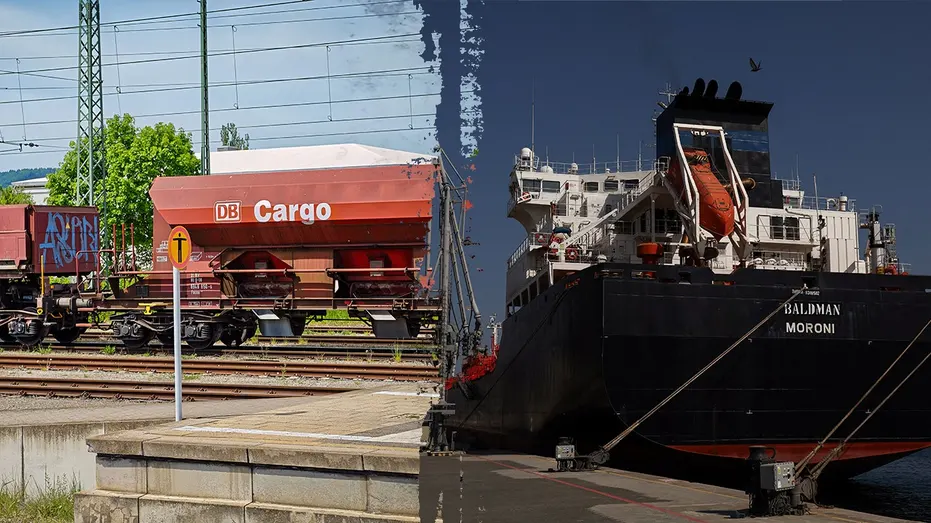
SouthernWorldwide.com – The United States is attempting to cripple Iran’s economy through maritime blockades, but a burgeoning rail corridor with Chinese involvement offers Tehran a viable alternative that Washington finds difficult to dismantle without risking a broader conflict.
As trade volume between China and Iran escalates along an overland route, placing it beyond the reach of American naval forces, this situation highlights a fundamental weakness in the U.S. strategy: while maritime pressure is potent, its influence does not fully extend across the Eurasian continent.
According to reports from Bloomberg, cargo trains operating from central China to Iran have seen a significant increase, moving from approximately one train per week prior to the blockade to one every three to four days. This surge underscores the emergence of a crucial alternative channel for Iran as it seeks to mitigate the impact of maritime pressure.
This rail corridor traverses several sovereign nations, including Kazakhstan and Turkmenistan. This multi-country route makes it considerably more challenging to disrupt compared to the shipping lanes situated in the Persian Gulf.
CHINA-LINKED ROUTE EXPOSED AFTER US SEIZES IRAN-BOUND SHIP WITH SUSPECTED DUAL-USE CARGO
Read more : AI data centers could soon float on ocean waves
Any direct intervention against this overland network carries the significant risk of escalating the conflict and intensifying tensions with Beijing. China has, over several years, made substantial investments in developing trade routes specifically designed to circumvent maritime chokepoints heavily controlled by the U.S. Navy.
This confluence of geographical realities, diplomatic considerations, and the potential for escalation helps to elucidate why Washington has predominantly concentrated its efforts on maritime interdiction rather than attempting to block overland trade routes.
Experts, however, point out that the rail corridor’s capacity remains limited in its ability to compensate for Iran’s primary oil exports.
One estimate suggests that “maybe like 1% of the exports that Iran would typically be pushing out through Hormuz could go over land.”
Max Meizlish, a former Treasury official with a focus on sanctions policy, similarly characterized the rail corridor as “a drop in the bucket compared to Iran’s traditional oil exports over maritime transit routes.”
TRUMP WARNS CHINA OF ‘STAGGERING’ 50% TARIFF IF CAUGHT SUPPLYING MILITARY AID TO IRAN
Despite these limitations, analysts caution that the route presents strategic risks that extend beyond its current scale.
Meizlish articulated concerns that the rail network “provides a pathway for China to supply Iran with critical dual-use goods or just military logistical infrastructure” that is beyond the reach of U.S. naval enforcement capabilities.
Similar concerns were raised, including the potential for the movement of “parts for drones” and “missile precursor chemicals.”
Nevertheless, it is emphasized that the corridor is not capable of supporting large-scale economic or military transfers.
The issue, as explained, is one of capacity: “Can you sustain the Iranian war-fighting effort solely with cargoes from China or from its other Eurasian neighbors? And I think the answer is really no.”
In summation, while the rail corridor does not represent an economic lifeline for Iran, it signifies a broader geopolitical shift. China is actively constructing trade networks designed to counteract U.S. pressure at sea and to test the boundaries of Washington’s willingness to enforce its strategic objectives.