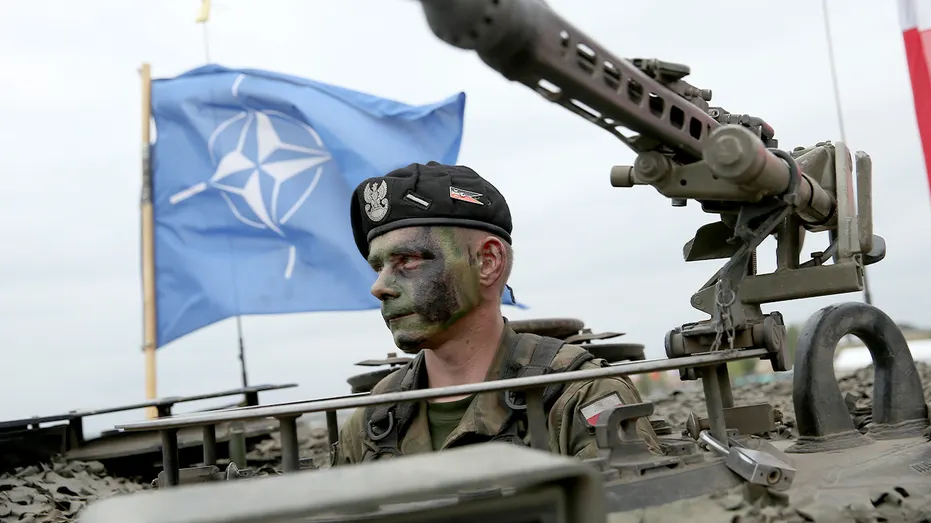
SouthernWorldwide.com – For over three decades, the United States has shouldered the majority of NATO’s military burden, while many European allies consistently spent less on defense than Washington desired.
This imbalance persisted through the end of the Cold War, across multiple U.S. administrations, and despite continuous discussions about equitable burden-sharing. It is only in recent years, spurred by Russia’s 2022 invasion of Ukraine and renewed pressure from President Donald Trump, that many NATO members have begun to significantly increase their defense expenditures.
The question remains: why did this disparity endure for so long?
Defense analysts point to a confluence of factors, including post-Cold War optimism, domestic political priorities, and the perception of a robust American defense umbrella that led much of Europe to believe it could reduce its own military spending without compromising its security.
The dissolution of the Soviet Union further solidified this mindset. With the primary threat that NATO was established to counter effectively gone, European governments opted to leverage a “peace dividend.” This involved redirecting resources away from their militaries and towards domestic priorities.
Between 1992 and 1999, defense spending among European NATO members saw a decline of 22%. This established a pattern of underinvestment that would continue for decades, even as the United States maintained its troop presence in Europe and continued to serve as the alliance’s ultimate security guarantor.
As defense budgets shrank, many European governments expanded or maintained their social welfare systems. These programs, including healthcare, pensions, and higher education, consumed an increasing portion of public funds. Deeply ingrained in domestic politics, these social initiatives often proved more politically resilient to cuts than military spending.
With the U.S. continuing to provide the bulk of NATO’s military strength, many European governments faced little immediate pressure to alter their spending habits. Critics of the alliance’s spending imbalance argued that American taxpayers were effectively subsidizing European security, allowing allies to allocate more public resources to their domestic agendas.
Read more : Trump Expands Turkey Ambassador's Diplomatic Reach in Middle East
This situation fostered what some defense analysts term a “moral hazard.” Because the U.S. commitment to NATO was perceived as unwavering, allies felt they could reduce their own military investments without facing significant repercussions.
Over time, this dynamic became self-perpetuating. As European militaries downsized, many allies became increasingly reliant on American capabilities. This included crucial areas like logistics, intelligence, missile defense, strategic airlift, and nuclear deterrence.
NATO Secretary-General Mark Rutte highlighted this reliance in early 2026, stating, “We are still having a strong, conventional U.S. presence in Europe, and, of course, the nuclear umbrella as our ultimate guarantor.”
American dissatisfaction with burden-sharing is nearly as old as NATO itself. As early as 1953, President Dwight D. Eisenhower cautioned European allies that “the American well can run dry,” urging them to take on a greater share of the alliance’s defense responsibilities. This issue resurfaced repeatedly over subsequent decades, with successive administrations seeking increased European contributions to collective defense.
This concern persisted well beyond the Cold War. In a candid farewell speech in Brussels in 2011, then-Secretary of War Robert Gates issued a stark warning about a “dim if not dismal future” for NATO if European governments continued to underinvest in their militaries. Gates cautioned that American lawmakers and taxpayers would exhibit “dwindling appetite and patience” for bearing a disproportionate share of the alliance’s defense costs.
Despite decades of warnings, the underlying incentives remained largely unchanged. Washington consistently reaffirmed its commitment to NATO and maintained a substantial military presence on the continent, thereby reducing the impetus for allies to rapidly increase their defense spending.
The issue gained renewed urgency following Russia’s annexation of Crimea in 2014. This event prompted NATO to establish a benchmark of 2% of GDP for defense spending among its members. While spending gradually increased thereafter, progress remained inconsistent across the alliance.
“Nations slowly began going to that. But it’s been slow,” noted Townsend. For years, disputes over burden-sharing followed a predictable script: American officials urged greater spending, European leaders pledged improvements, and NATO continued its heavy reliance on U.S. military power.
According to Townsend, the catalyst that finally broke this cycle was a combination of Russia’s escalating aggression and Trump’s willingness to challenge long-standing assumptions within the alliance. “What really woke everyone up were two things,” Townsend stated. “One was the 2022 invasion by Putin the second time. And then the second was Trump.”
Unlike previous presidents, Trump openly questioned the U.S. obligation to defend allies that failed to meet their defense spending commitments. During his first term and in his subsequent return to office, Trump asserted that NATO members were exploiting American taxpayers and suggested that U.S. protection should not be unconditional.
Regardless of whether European leaders perceived Trump’s approach as pressure, a warning, or a negotiating tactic, it fundamentally altered the assumptions that had guided the alliance since the Cold War’s conclusion. It also accelerated a debate that had been simmering for decades.
This shift culminated at NATO’s summit in The Hague, where allies agreed to a new objective: to allocate 5% of GDP to defense and defense-related investments by 2035. This agreement represented a significant departure from NATO’s established 2% benchmark and reflected a growing consensus that the alliance faced a far more perilous security environment than that which emerged after the Soviet Union’s collapse.
The agreement also signaled that many allies had arrived at the same conclusion that American presidents had voiced for decades: the post-Cold War era of reduced military spending was definitively over.
However, analysts caution that rebuilding military capabilities is a far more intricate process than simply increasing budgets. Europe continues to depend on the U.S. for essential capabilities, including air defense, logistics, intelligence, and defense industrial capacity, according to Townsend. Even with increased financial commitments, translating these investments into tangible military readiness will require years.
John Byrne of Concerned Veterans for America emphasized that the challenge extends beyond equipment and spending levels. Conducting large-scale coalition military operations demands years of institutional knowledge and leadership experience—qualities that cannot be acquired overnight. “You can buy equipment,” Byrne remarked. “You can’t instantly buy command experience.”