SouthernWorldwide.com – Nutella is currently enjoying what internet users are hailing as the most significant free advertising opportunity in history, thanks to a recent NASA mission.
A jar of the popular chocolate-hazelnut spread has achieved an extraordinary level of fame, not just by venturing into space, but by becoming a viral sensation.
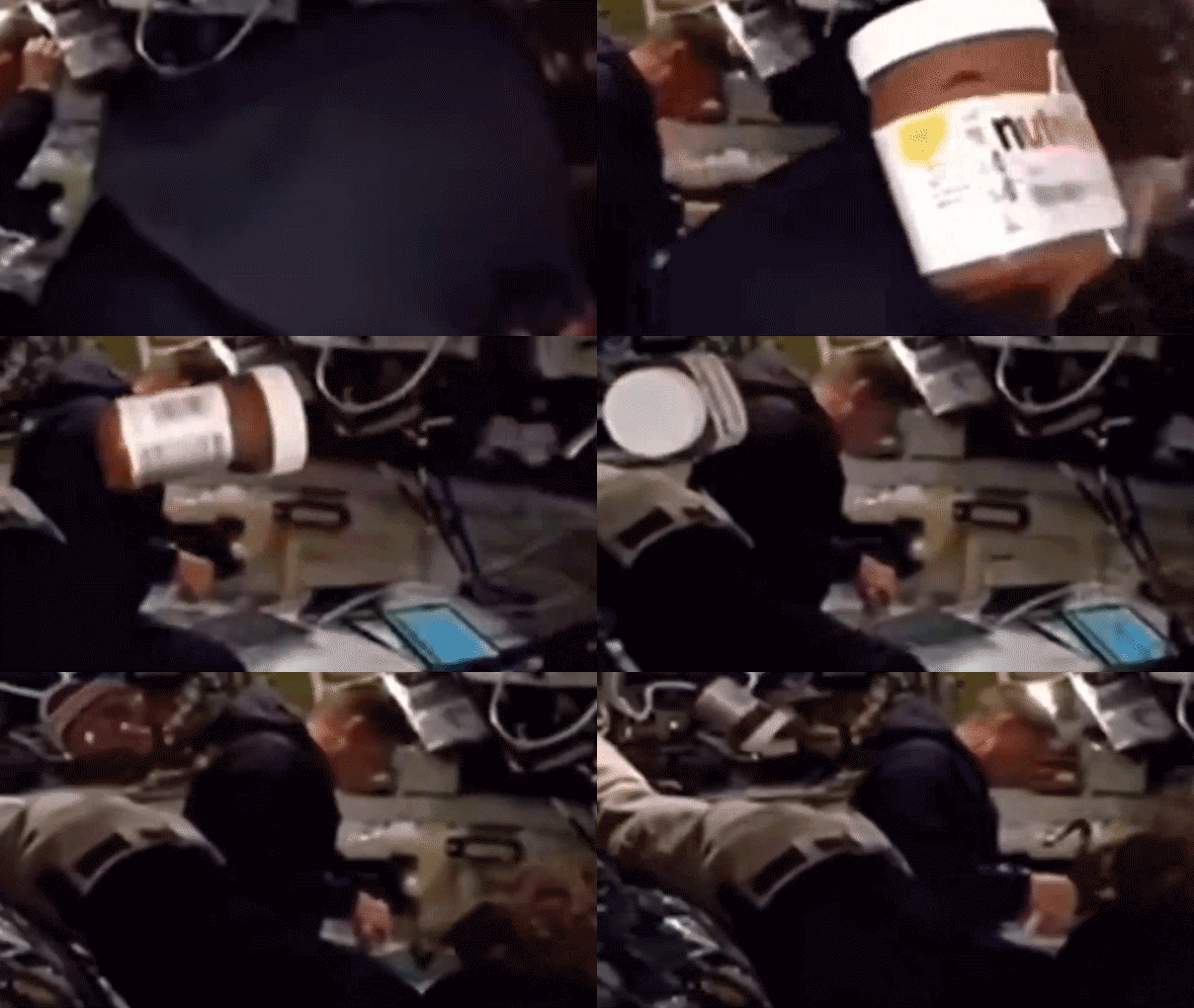
The unexpected moment occurred aboard NASA’s Artemis II mission. A tub of Nutella was seen floating out of the spacecraft’s kitchen area, appearing almost as if it were intentionally placed for a photoshoot. In the zero-gravity environment, the jar drifted, rotated, and presented itself with the label facing forward, perfectly framed. The resulting shot was so pristine it looked as though it had been professionally storyboarded.
Within hours, the video clip spread rapidly across social media platforms. Many users expressed their amazement, noting that no marketing team on Earth could have orchestrated such a perfect and impactful advertisement.
One user humorously commented, “The greatest free advert in history.”
Read more : iPhone Tracking: Is Apple Spying on You?
Another account chimed in, “Nutella may have just got the greatest ad… ALL FOR FREE!”
A third user added, “Nutella just got the most bada– free ad in maybe human history.”
The brand’s marketing team took notice of the viral clip. Nutella shared the video of this serendipitous advertising moment, accompanied by the caption: “Honored to have traveled further than any spread in history. Taking spreading smiles to new heights.” The post, which included spaceship and heart emojis, had garnered nearly 200,000 views by Monday evening.
NASA’s Kennedy Space Center also joined in the lighthearted moment. In a post on X, they wrote, “Enjoying sweet treats while our Artemis crew takes sweet photos of the Moon!”
The prominent display of the chocolate spread occurred approximately four minutes before the Artemis II crew made history on Monday. They surpassed the Apollo 13 mission’s 1970 record for the furthest distance from Earth, which was 248,655 miles.
The Artemis II crew successfully reestablished communication with mission control following a planned 40-minute communication blackout. This occurred as their Orion spacecraft passed behind the far side of the Moon on Monday.
During this blackout period, the astronauts were the most isolated humans in history. Simultaneously, they achieved their closest approach to the Moon, situated at roughly 4,057 miles above its surface.
After reestablishing contact around 7:25 p.m. ET, the mission continued with another remarkable event. The astronauts witnessed a rare solar eclipse from their vantage point near the Moon. They captured images of the Sun’s corona and multiple planets during this flyby.
The crew is now expected to take four days to return to Earth. The capsule is scheduled for a splashdown in the Pacific Ocean, near San Diego, on April 10. This return marks nine days after their launch from Florida.
The Artemis II crew consists of four astronauts: Commander Reid Wiseman, pilot Victor Glover, and mission specialist Christina Koch, all from NASA, and mission specialist Jeremy Hansen from the Canadian Space Agency.