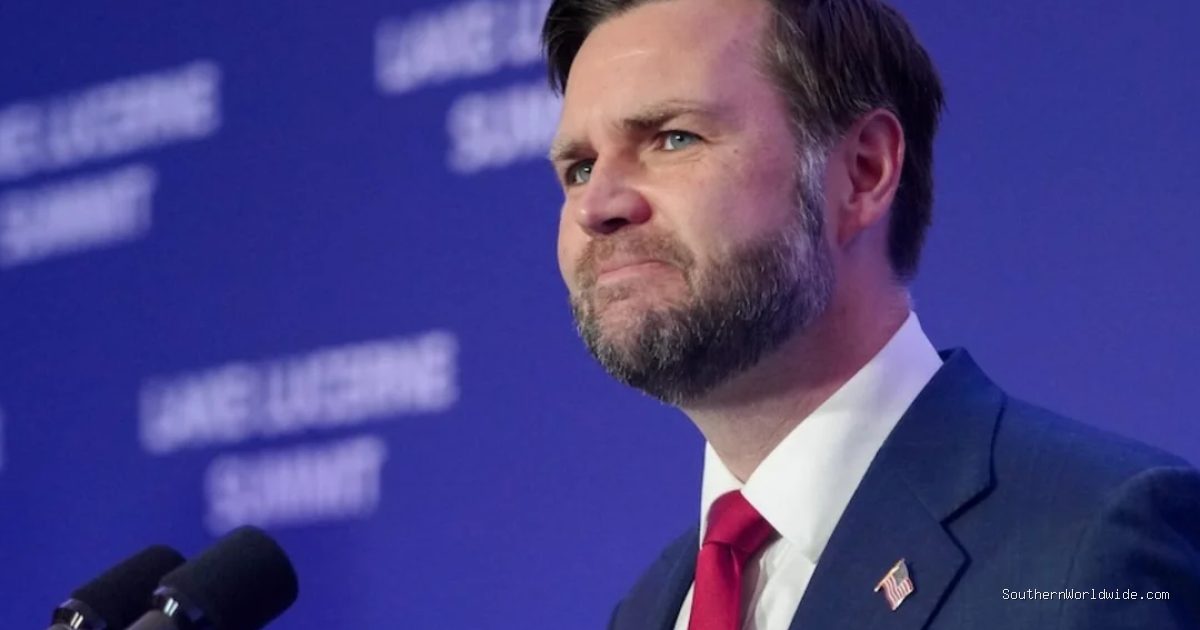
SouthernWorldwide.com – Oil prices experienced a decline on Monday, influenced by statements from Vice President JD Vance indicating progress in negotiations between the United States and Iran concerning a potential deal.
Jennifer Sor, a markets reporter for Business Insider, provided further insights into the situation.
The market’s reaction suggests that any perceived step towards de-escalation or resolution between the two nations can have a significant impact on global oil supply expectations.
Details regarding the specifics of the progress or the nature of the deal were not immediately available, but the market interpreted Vance’s comments as a positive development.
This positive sentiment contributed to a cooling of oil prices, which had previously been elevated due to geopolitical tensions in the Middle East.
The Organization of the Petroleum Exporting Countries (OPEC) and its allies, including Russia, have been closely monitoring the situation as it directly affects their production strategies and market share.
A potential agreement between the U.S. and Iran could lead to the easing of sanctions on Iranian oil, thereby increasing global supply.
Conversely, a lack of progress or further escalation could have pushed prices higher.
Vice President Vance’s role in these diplomatic efforts underscores the administration’s focus on stabilizing global energy markets.
His comments are seen as a key indicator of the current state of U.S.-Iran relations and their potential impact on the broader geopolitical landscape.
Markets often react swiftly to such signals, reflecting the immediate implications for supply and demand dynamics.
The price of Brent crude, the international benchmark, saw a noticeable drop following the news.
Similarly, West Texas Intermediate (WTI) crude, the U.S. benchmark, also experienced a downturn.
This synchronized movement highlights the interconnectedness of global oil markets.
Traders and analysts will be looking for more concrete information to confirm the extent of the progress and the timeline for any potential deal implementation.
The stability of oil prices is crucial for the global economy, affecting everything from transportation costs to inflation rates.
Jennifer Sor’s analysis likely delved into the technical aspects of the price drop and what it signifies for market trends.
The energy sector, in particular, is highly sensitive to geopolitical developments.
The U.S. has historically sought to manage its relationships with major oil-producing nations to ensure energy security and price stability.
Iran’s oil production capacity, if brought back to full potential, could significantly alter the supply equation.
The Biden administration has made diplomatic engagement a cornerstone of its foreign policy, particularly in regions critical to global energy flows.
Vice President Vance’s participation in these talks indicates a high level of engagement from the U.S. executive branch.
The market’s reaction on Monday serves as an initial gauge of the perceived success of these diplomatic overtures.
Further developments will be closely watched by investors, policymakers, and consumers alike.
The potential impact on inflation is also a significant consideration, as energy costs are a major component of consumer price indices.
Jennifer Sor’s reporting would typically include expert commentary on how these price movements align with broader economic forecasts.
The strategic importance of the Strait of Hormuz, a key chokepoint for oil transport, is always a background factor in U.S.-Iran relations.
Any perceived reduction in risk associated with this waterway would be viewed positively by the market.
The coming days and weeks will be critical in determining whether the progress signaled by Vice President Vance translates into tangible changes in oil supply and pricing.
Market participants will be analyzing economic data, geopolitical statements, and supply reports to form a clearer picture.
The role of technology in oil exploration and production also plays a part in long-term supply stability, but short-term price movements are heavily influenced by these immediate geopolitical factors.
The impact on renewable energy initiatives is also an area of interest, as sustained high oil prices can accelerate the transition to alternative energy sources.
Conversely, lower oil prices might reduce the urgency for such transitions.
The commentary from Jennifer Sor would likely have provided a nuanced view of these complex interdependencies.
The administration’s stated goal of a more stable and predictable energy market is directly tested by these ongoing diplomatic efforts.
The market’s response on Monday indicates a degree of optimism, but sustained price stability will depend on the confirmation and implementation of any agreements reached.
The global economic recovery is also a factor, as increased demand can support higher oil prices, while a slowdown could dampen them.
The interplay between geopolitical events and economic fundamentals continues to shape the energy landscape.
Vice President Vance’s role highlights the multifaceted approach the U.S. is taking to address these challenges.
The market will remain vigilant for further updates that could either reinforce or contradict the positive sentiment generated by his remarks.
The role of financial markets in pricing in future expectations is a key aspect of understanding commodity movements.
The comments from JD Vance are a significant data point in this ongoing analysis.
Jennifer Sor’s reporting aims to provide clarity on these market dynamics for the audience.
The broader implications for international trade and security are also tied to the stability of oil prices.
The U.S. strategy appears to be focused on leveraging diplomacy to achieve both economic and security objectives.
The market’s reaction is a testament to the significance of the U.S.-Iran relationship in the global energy context.
Further analysis from experts like Jennifer Sor will be crucial in interpreting the evolving situation.
The drop in oil prices on Monday reflects a market that is sensitive to any signs of reduced geopolitical risk in the Middle East.
The focus now shifts to the substance and execution of any potential deal that may emerge from these diplomatic discussions.
The administration’s commitment to dialogue is evident, and its success will be measured in part by the market’s response.
The economic implications of fluctuating oil prices are far-reaching.
Vice President Vance’s statement is a key development in this ongoing narrative.
Jennifer Sor’s insights will be vital in understanding the market’s interpretation of these events.