SouthernWorldwide.com – As the popularity of GLP-1 drugs continues to climb, significant weight loss associated with these medications has been linked to a growing number of cosmetic concerns, according to surgeons.
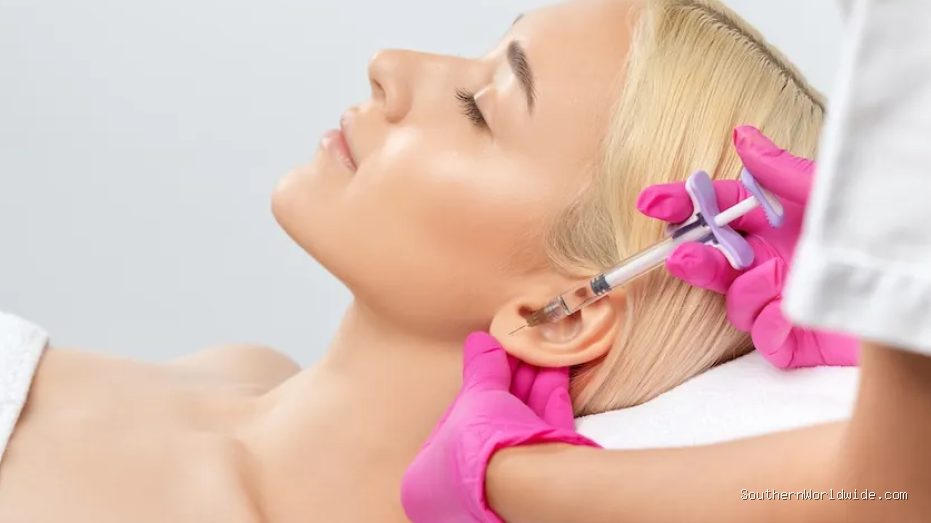
Some surgeons are reporting an increase in patients seeking treatments for what they are calling “Ozempic earlobes.” These are described as earlobes that appear thinner, longer, or more saggy after the loss of facial fat.
Facial plastic surgeon Dr. Sachin S. Parikh explained that the use of semaglutides, the active ingredient in drugs like Ozempic, causes fat loss throughout the body, including the small fat pads in the earlobes.
Dr. Parikh emphasized that semaglutides do not harm ear tissue or affect hearing. Therefore, any interventions for “Ozempic earlobes” are purely cosmetic.
Potential treatments for this condition may include dermal fillers, fat transfer, laser treatments, or surgical earlobe reduction.
Dr. Mohammed Asif, from Duly Health and Care in Naperville, Illinois, noted that while he hasn’t personally seen a rise in ear surgeries, he has observed an increase in other procedures related to weight loss induced by GLP-1 drugs.
These procedures include panniculectomies, which are skin removal surgeries often referred to as “Ozempic skin removal,” and abdominoplasties, commonly known as tummy tucks.
“In my practice, I’ve seen a significant surge in breast lifts, panniculectomies (skin removal surgery), abdominoplasties (tummy tucks), brachioplasties (arm lifts) and thighplasties due to weight loss,” Dr. Asif stated.
He also mentioned that the healing and recovery process for these procedures is generally less complicated and more manageable compared to the recovery from bariatric surgery for weight loss.
This smoother recovery is attributed to the gradual weight loss achieved over time with GLP-1 medications.
Another common complaint associated with these weight-loss drugs is “Ozempic breast,” according to Dr. Michael Omidi, a plastic surgeon in Beverly Hills.
Dr. Omidi explained that when individuals, particularly younger women, lose fat too rapidly, it can lead to a loss of volume in the breasts. Since breasts are composed of fat, glandular tissue, and skin, the skin and supporting ligaments may not always retract at the same pace as the weight loss.
This can result in breasts that appear saggy and deflated.
Dr. Samuel Golpanian, also a plastic surgeon in Beverly Hills, has observed dozens of patients, both men and women, seeking treatments for “Ozempic butt” following significant weight loss.
He explained that such rapid and substantial weight loss can cause the skin to lose elasticity and not tighten quickly enough to accommodate the body’s changes.
The buttocks contain a considerable amount of fat, and when this volume diminishes rapidly, it can lead to a flatter and saggier appearance.
Dr. Kristy Hamilton, a Houston-based surgeon and member of the American Society of Plastic Surgeons (ASPS), concurs that a growing number of patients are seeking skin-tightening procedures after experiencing substantial weight loss with GLP-1 drugs.
“We’re absolutely seeing more of those patients, and I expect that trend to continue,” Dr. Hamilton said in an ASPS report.
She added that when people lose significant amounts of weight, such as 100 pounds, it is highly likely to result in excess skin.
The ASPS has identified several body-contouring procedures that are most frequently performed after significant weight loss.
Experts suggest that maintaining adequate protein intake and engaging in resistance training can help minimize the loss of lean muscle mass that often accompanies rapid weight loss. This, in turn, could help reduce some of the cosmetic concerns.
Dr. Golpanian underscored the importance of consuming sufficient protein.
He advised that even though appetite suppression can make it challenging, it is crucial to consume at least 110 grams of protein daily while taking a GLP-1 drug.
“Also, I say this to my patients all the time: You have to lift weights to keep your muscles from atrophying. Strength training can help build muscles and preserve your glutes,” Dr. Golpanian recommended.